
AI Inference Explained: What Happens When an AI Model Generates an Answer?
Introduction
ನೀವು ChatGPTಗೆ ಒಂದು ಪ್ರಶ್ನೆ ಕೇಳಿದಾಗ, ಉದಾಹರಣೆಗೆ “ನನ್ನ businessಗೆ ಯಾವ AI tools ಉಪಯುಕ್ತ?” ಎಂದು ಕೇಳಿದರೆ, ಕೆಲವೇ ಕ್ಷಣಗಳಲ್ಲಿ ನಿಮಗೆ ಒಂದು structured answer ಸಿಗುತ್ತದೆ. ಅದೇ ರೀತಿ, ನೀವು AI image generatorನಲ್ಲಿ prompt ಕೊಟ್ಟಾಗ ಅದು ಹೊಸ image ಸೃಷ್ಟಿಸುತ್ತದೆ. AI coding assistantಗೆ code ಬರೆಯಲು ಹೇಳಿದರೆ ಅದು programming suggestions ನೀಡುತ್ತದೆ.
ಆದರೆ ಇಲ್ಲಿ ಒಂದು ಮುಖ್ಯವಾದ ಪ್ರಶ್ನೆ ಇದೆ: AI modelಗೆ ನೀವು prompt ಕೊಟ್ಟ ನಂತರ, ಅದು answer ಅನ್ನು ಹೇಗೆ generate ಮಾಡುತ್ತದೆ?
ಈ processನ ಹಿಂದಿರುವ ಪ್ರಮುಖ concept AI model Inference.
AI model ಅನ್ನು train ಮಾಡುವಾಗ, ಅದು ದೊಡ್ಡ ಪ್ರಮಾಣದ dataನಿಂದ patterns ಮತ್ತು statistical relationshipsಗಳನ್ನು ಕಲಿಯುತ್ತದೆ. Training ಮುಗಿದ ನಂತರ, model ಹೊಸ input ಸ್ವೀಕರಿಸಿ prediction ಅಥವಾ output ನೀಡುವಾಗ inference ನಡೆಯುತ್ತದೆ. Chatbotನಲ್ಲಿ text generate ಮಾಡುವುದು, image recognitionನಲ್ಲಿ object ಗುರುತಿಸುವುದು, recommendation systemನಲ್ಲಿ ಮುಂದಿನ product suggest ಮಾಡುವುದು ಮತ್ತು speech recognitionನಲ್ಲಿ audio ಅನ್ನು text ಆಗಿ ಪರಿವರ್ತಿಸುವುದು—all these involve inference.
AI model Inference ಎಂದರೆ ಕೇವಲ “AI ಉತ್ತರ ಕೊಡುವುದು” ಅಷ್ಟೇ ಅಲ್ಲ. Input processing, numerical computation, model weights, token prediction, memory usage ಮತ್ತು hardware execution ಮುಂತಾದ ಹಲವು ಹಂತಗಳು ಇದರೊಳಗೆ ಬರುತ್ತವೆ.
ಈ concept ತಿಳಿದುಕೊಳ್ಳುವುದರಿಂದ AI tools ಹೇಗೆ ಕೆಲಸ ಮಾಡುತ್ತವೆ, ಏಕೆ ಕೆಲವು answers ವೇಗವಾಗಿ ಬರುತ್ತವೆ, ದೊಡ್ಡ modelsಗೆ ಹೆಚ್ಚು computing resources ಏಕೆ ಬೇಕಾಗುತ್ತವೆ ಮತ್ತು AI model inference cost ಹೇಗೆ ನಿರ್ಧಾರವಾಗುತ್ತದೆ ಎಂಬುದನ್ನು ಅರ್ಥಮಾಡಿಕೊಳ್ಳಬಹುದು.
ಈ ಲೇಖನದಲ್ಲಿ AI model Inference ಎಂದರೇನು, trainingನಿಂದ ಅದು ಹೇಗೆ ಭಿನ್ನವಾಗಿದೆ, LLM ಒಂದು answer ಅನ್ನು ಹೇಗೆ generate ಮಾಡುತ್ತದೆ, GPU ಮತ್ತು memoryಯ ಪಾತ್ರ ಏನು, inference speed ಮತ್ತು cost ಮೇಲೆ ಯಾವ ಅಂಶಗಳು ಪರಿಣಾಮ ಬೀರುತ್ತವೆ ಎಂಬುದನ್ನು practical examples ಜೊತೆಗೆ ತಿಳಿದುಕೊಳ್ಳೋಣ.
Table of Contents
- AI model Inference ಎಂದರೇನು?
- AI Training ಮತ್ತು AI model Inference ನಡುವಿನ ವ್ಯತ್ಯಾಸ
- AI Model ಒಂದು Answer ಹೇಗೆ Generate ಮಾಡುತ್ತದೆ?
- AI model Inferenceನ 7 ಪ್ರಮುಖ ಹಂತಗಳು
- Tokens, Context Window ಮತ್ತು Model Weights
- GPU, CPU ಮತ್ತು Memoryಯ ಪಾತ್ರ
- AI model Inferenceನ ಪ್ರಮುಖ Types
- AI model Inference Speed ಮತ್ತು Cost ಮೇಲೆ ಪರಿಣಾಮ ಬೀರುವ ಅಂಶಗಳು
- Cloud Inference vs On-Device Inference
- AI model Inferenceನ Practical Applications
- AI model Inferenceನ Limitations ಮತ್ತು Challenges
- Developers ಮತ್ತು Businessesಗೆ AI model Inference ಏಕೆ ಮುಖ್ಯ?
- Frequently Asked Questions
- Conclusion
1. AI model Inference ಎಂದರೇನು?
AI model inference ಎಂದರೆ ಈಗಾಗಲೇ train ಆಗಿರುವ AI model ಅನ್ನು ಹೊಸ input process ಮಾಡಲು ಮತ್ತು ಅದಕ್ಕೆ ತಕ್ಕ output generate ಮಾಡಲು ಬಳಸುವ ಪ್ರಕ್ರಿಯೆ. ನೀವು ChatGPTಗೆ prompt ಕೊಟ್ಟಾಗ, AI model ಆ input ಅನ್ನು analyse ಮಾಡಿ context ಅರ್ಥಮಾಡಿಕೊಳ್ಳುತ್ತದೆ ಮತ್ತು response ಅನ್ನು ಹಂತ ಹಂತವಾಗಿ generate ಮಾಡುತ್ತದೆ. ಈ ಪ್ರಕ್ರಿಯೆಯಲ್ಲಿ tokens, model weights, computing hardware ಮತ್ತು inference speed ಪ್ರಮುಖ ಪಾತ್ರ ವಹಿಸುತ್ತವೆ. ಈ guideನಲ್ಲಿ AI model inference ಹೇಗೆ ಕೆಲಸ ಮಾಡುತ್ತದೆ, model trainingನಿಂದ ಇದು ಹೇಗೆ ಭಿನ್ನವಾಗಿದೆ ಮತ್ತು ಇದರ performance ಹಾಗೂ cost ಮೇಲೆ ಯಾವ ಅಂಶಗಳು ಪರಿಣಾಮ ಬೀರುತ್ತವೆ ಎಂಬುದನ್ನು ತಿಳಿಯೋಣ.
ಇದನ್ನು ಸರಳವಾಗಿ ಅರ್ಥಮಾಡಿಕೊಳ್ಳಲು ಒಂದು ಉದಾಹರಣೆ ತೆಗೆದುಕೊಳ್ಳೋಣ.
ನೀವು ಒಂದು AI image recognition modelಗೆ ಬೆಕ್ಕಿನ ಫೋಟೋ ನೀಡುತ್ತೀರಿ. Model ಆ imageನ visual patternsಗಳನ್ನು process ಮಾಡಿ, ಅದು ಬೆಕ್ಕಾಗಿರುವ ಸಾಧ್ಯತೆ ಹೆಚ್ಚು ಎಂದು predict ಮಾಡುತ್ತದೆ. ಇಲ್ಲಿ model ಹೊಸದಾಗಿ train ಆಗುತ್ತಿಲ್ಲ. ಈಗಾಗಲೇ ಕಲಿತ information ಬಳಸಿಕೊಂಡು prediction ನೀಡುತ್ತಿದೆ. ಇದೇ inference.
ಅದೇ ರೀತಿ, ನೀವು ChatGPTಗೆ “AI inference ಅನ್ನು ಸರಳವಾಗಿ explain ಮಾಡಿ” ಎಂದು prompt ನೀಡಿದರೆ, language model ನಿಮ್ಮ input ಅನ್ನು process ಮಾಡಿ text output generate ಮಾಡುತ್ತದೆ.
Inferenceನಲ್ಲಿ modelನ learned parameters ಸಾಮಾನ್ಯವಾಗಿ ಸ್ಥಿರವಾಗಿರುತ್ತವೆ. ಆದರೆ output ಪ್ರತಿಯೊಂದು inputಗೆ ಅನುಗುಣವಾಗಿ ಬದಲಾಗಬಹುದು. ಕೆಲವು AI systemsನಲ್ಲಿ inference ಸಮಯದಲ್ಲೇ ಹೆಚ್ಚುವರಿ search, tool calls ಅಥವಾ retrieval ನಡೆಯಬಹುದು; ಆದರೂ underlying modelನ ಸಾಮಾನ್ಯ inference process ಮತ್ತು model training ಎರಡೂ ಬೇರೆ ಹಂತಗಳಾಗಿವೆ.
AI model Inferenceಗೆ ಕೆಲವು ಉದಾಹರಣೆಗಳು
- Chatbot: ನಿಮ್ಮ ಪ್ರಶ್ನೆಗೆ text answer generate ಮಾಡುವುದು.
- Image recognition: Imageನಲ್ಲಿ person, vehicle ಅಥವಾ animal ಗುರುತಿಸುವುದು.
- Speech recognition: Audio ಅನ್ನು text ಆಗಿ convert ಮಾಡುವುದು.
- Recommendation systems: Userಗೆ ಸೂಕ್ತವಾದ video, product ಅಥವಾ content suggest ಮಾಡುವುದು.
- Fraud detection: Transactionನಲ್ಲಿ suspicious pattern ಇದೆಯೇ ಎಂದು predict ಮಾಡುವುದು.
- AI image generation: Prompt ಮತ್ತು modelನ learned representations ಆಧರಿಸಿ image generate ಮಾಡುವುದು.
ಈ ಎಲ್ಲಾ systems ಒಂದೇ architecture ಬಳಸುವುದಿಲ್ಲ. ಆದರೆ ಹೊಸ inputನಿಂದ prediction ಅಥವಾ output ಸೃಷ್ಟಿಸುವುದು inferenceನ ಸಾಮಾನ್ಯ ಲಕ್ಷಣವಾಗಿದೆ.
2. AI Training ಮತ್ತು AI model Inference ನಡುವಿನ ವ್ಯತ್ಯಾಸ
AI Training ಮತ್ತು AI model Inference ಒಂದೇ ಪ್ರಕ್ರಿಯೆಯ ಎರಡು ಹೆಸರುಗಳಲ್ಲ. ಇವುಗಳ ಉದ್ದೇಶ ಮತ್ತು computational workload ವಿಭಿನ್ನವಾಗಿವೆ.
AI Training ಎಂದರೇನು?
Training ಸಮಯದಲ್ಲಿ model ದೊಡ್ಡ datasetನಿಂದ patterns ಕಲಿಯುತ್ತದೆ. Neural networkನಲ್ಲಿ parameters ಅಥವಾ weights update ಆಗುತ್ತವೆ. Training algorithm prediction errors ಅನ್ನು ಅಳೆಯುತ್ತದೆ ಮತ್ತು modelನ parametersಗಳನ್ನು adjust ಮಾಡಿ training objective ಸುಧಾರಿಸಲು ಪ್ರಯತ್ನಿಸುತ್ತದೆ.
ಉದಾಹರಣೆಗೆ, image classification modelಗೆ ಸಾವಿರಾರು labeled images ನೀಡಬಹುದು. Training ಸಮಯದಲ್ಲಿ model ವಿವಿಧ visual featuresಗಳನ್ನು ಕಲಿಯುತ್ತದೆ. Training ಮುಗಿದ ನಂತರ ಆ learned parametersಗಳನ್ನು inferenceಗಾಗಿ ಬಳಸಬಹುದು.
AI model Inference ಎಂದರೇನು?
Inference ಸಮಯದಲ್ಲಿ trained model ಹೊಸ input ಅನ್ನು process ಮಾಡಿ output ನೀಡುತ್ತದೆ. ಸಾಮಾನ್ಯ predictionಗೆ model weights ಅನ್ನು ಪ್ರತಿ requestನಲ್ಲೂ retrain ಮಾಡುವುದಿಲ್ಲ.
ಉದಾಹರಣೆಗೆ, training ಸಮಯದಲ್ಲಿ model cat ಮತ್ತು dog imagesಗಳ ನಡುವಿನ patterns ಕಲಿತಿದ್ದರೆ, inference ಸಮಯದಲ್ಲಿ ಹೊಸ image ಅನ್ನು process ಮಾಡಿ ಅದು cat ಅಥವಾ dog ಆಗಿರುವ prediction ನೀಡಬಹುದು.
Training vs AI model Inference Comparison
| Feature | AI Training | AI model Inference |
|---|---|---|
| Main purpose | Modelಗೆ patterns ಕಲಿಸುವುದು | ಹೊಸ inputಗೆ output ನೀಡುವುದು |
| Input | Training data | User prompt, image, audio ಅಥವಾ ಇತರ input |
| Model weights | Training ವೇಳೆ update ಆಗುತ್ತವೆ | ಸಾಮಾನ್ಯವಾಗಿ ಸ್ಥಿರವಾಗಿರುತ್ತವೆ |
| Computation | Backpropagation ಮತ್ತು weight updates ಸೇರಿದಂತೆ ಹೆಚ್ಚು workload ಇರಬಹುದು | Prediction ಅಥವಾ generationಗೆ forward computation |
| Frequency | Training runs ಅಥವಾ fine-tuning ಹಂತಗಳಲ್ಲಿ | Model ಬಳಸುವ ಪ್ರತಿಯೊಂದು request ಅಥವಾ predictionನಲ್ಲಿ |
| Typical hardware | High-performance GPUs ಅಥವಾ accelerators | CPU, GPU, NPU ಅಥವಾ cloud accelerators |
| Example | Large language model train ಮಾಡುವುದು | ChatGPT response generate ಮಾಡುವುದು |
ಒಂದು ಪ್ರಮುಖ nuance ಇದೆ: ಕೆಲವು systems online learning ಅಥವಾ continual learning ಬಳಸಬಹುದು. ಆದರೆ ಸಾಮಾನ್ಯ deployed chatbotನಲ್ಲಿ user prompt ಕೊಟ್ಟ ಪ್ರತಿಯೊಂದು ಬಾರಿ base model weights update ಆಗುವುದಿಲ್ಲ.
ಒಂದು Practical Analogy
Training ಅನ್ನು driving ಕಲಿಯುವುದಕ್ಕೆ ಹೋಲಿಸಬಹುದು. ನೀವು driving lessons, road rules ಮತ್ತು practice ಮೂಲಕ skill develop ಮಾಡುತ್ತೀರಿ. Inference ಅನ್ನು ಆ skill ಬಳಸಿ ಹೊಸ roadನಲ್ಲಿ car drive ಮಾಡುವುದಕ್ಕೆ ಹೋಲಿಸಬಹುದು.
ಈ analogy ಸಂಪೂರ್ಣ technical equivalence ಅಲ್ಲ, ಆದರೆ training ಮತ್ತು inference ನಡುವಿನ ಉದ್ದೇಶದ ವ್ಯತ್ಯಾಸವನ್ನು ಅರ್ಥಮಾಡಿಕೊಳ್ಳಲು ಸಹಾಯ ಮಾಡುತ್ತದೆ.
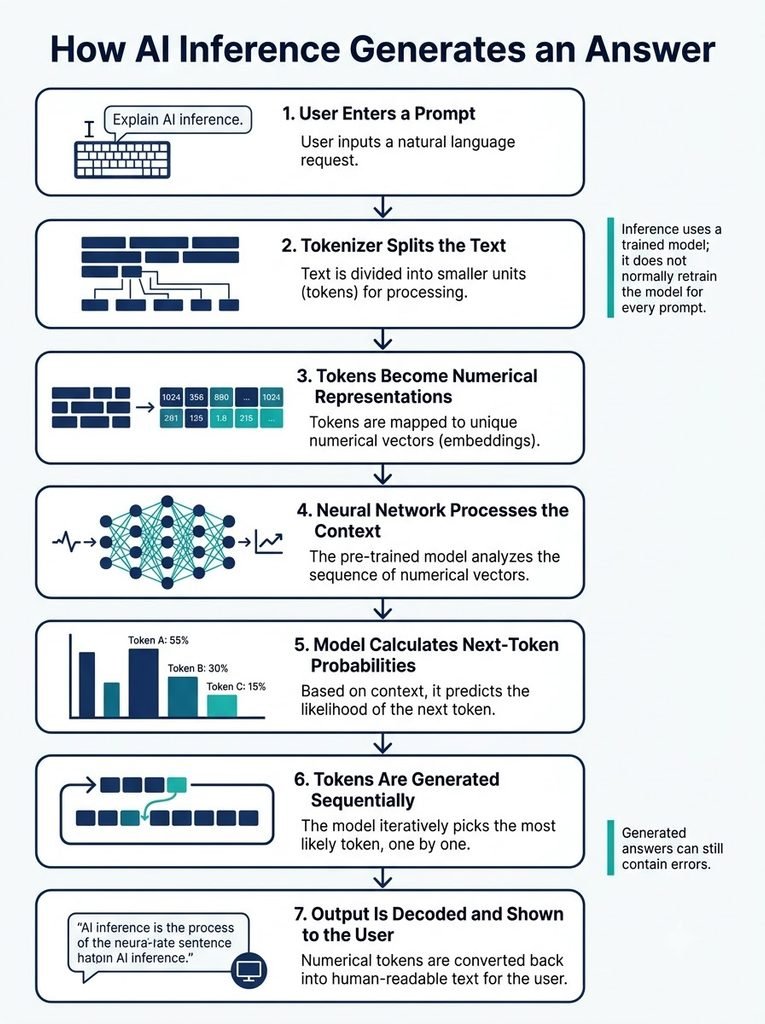
3. AI Model ಒಂದು Answer ಹೇಗೆ Generate ಮಾಡುತ್ತದೆ?
ಈಗ ChatGPT ರೀತಿಯ Large Language Model (LLM) ಹೇಗೆ response generate ಮಾಡುತ್ತದೆ ಎಂಬುದನ್ನು ನೋಡೋಣ.
ನೀವು prompt ನೀಡುತ್ತೀರಿ:
“AI model inference ಎಂದರೇನು? ಒಂದು practical example ಕೊಡಿ.”
Model ಈ sentence ಅನ್ನು ಮಾನವನಂತೆ ನೇರವಾಗಿ ಓದುತ್ತದೆ ಎಂದುಕೊಳ್ಳಬಾರದು. ಮೊದಲು prompt ಅನ್ನು modelಗೆ ಸೂಕ್ತವಾದ numerical representation ಆಗಿ ಪರಿವರ್ತಿಸಲಾಗುತ್ತದೆ. ನಂತರ modelನ neural network inputನ context ಅನ್ನು process ಮಾಡಿ ಮುಂದಿನ tokenಗೆ probability distribution ಲೆಕ್ಕ ಹಾಕುತ್ತದೆ.
Step 1: Prompt ಅನ್ನು Tokens ಆಗಿ Convert ಮಾಡುವುದು
ನೀವು type ಮಾಡಿದ text ಅನ್ನು tokenizer ಸಣ್ಣ unitsಗಳಾಗಿ ವಿಭಜಿಸುತ್ತದೆ. ಇವುಗಳನ್ನು tokens ಎಂದು ಕರೆಯುತ್ತಾರೆ. ಒಂದು token ಸಂಪೂರ್ಣ ಪದವಾಗಿರಬಹುದು, ಪದದ ಭಾಗವಾಗಿರಬಹುದು ಅಥವಾ punctuation ಆಗಿರಬಹುದು.
ಉದಾಹರಣೆಗೆ, English sentenceನಲ್ಲಿ ಕೆಲವು ಪದಗಳು ಒಂದೇ token ಆಗಿರಬಹುದು; ಇತರ ಪದಗಳು ಹಲವಾರು tokens ಆಗಿ ವಿಭಜನೆಯಾಗಬಹುದು. Kannada ಮತ್ತು mixed-language textನಲ್ಲಿ tokenization ಹೇಗೆ ನಡೆಯುತ್ತದೆ ಎಂಬುದು ಬಳಸುವ tokenizer ಮೇಲೆ ಅವಲಂಬಿತವಾಗಿರುತ್ತದೆ.
Step 2: Tokensಗೆ Numerical Representations ಸೃಷ್ಟಿಸುವುದು
Neural network ನೇರವಾಗಿ ಸಾಮಾನ್ಯ text ಮೇಲೆ matrix operations ನಡೆಸುವುದಿಲ್ಲ. Token IDsಗಳನ್ನು embeddings ಎಂಬ numerical vectorsಗೆ map ಮಾಡಲಾಗುತ್ತದೆ.
ಈ vectors modelಗೆ tokensಗಳ ನಡುವಿನ learned relationshipsಗಳನ್ನು process ಮಾಡಲು ಸಹಾಯ ಮಾಡುತ್ತವೆ. Transformer modelsನಲ್ಲಿ position ಅಥವಾ sequence order information ಕೂಡ computationನಲ್ಲಿ ಪ್ರಮುಖ ಪಾತ್ರ ವಹಿಸುತ್ತದೆ.
Step 3: Model Context ಅನ್ನು Process ಮಾಡುವುದು
LLMನ architecture ಮತ್ತು model configuration ಆಧರಿಸಿ, input tokensಗಳ context ಅನ್ನು neural network layers process ಮಾಡುತ್ತವೆ. Transformer-based modelsನಲ್ಲಿ attention mechanism tokensಗಳ ನಡುವಿನ ಸಂಬಂಧಿತ informationಗೆ ಗಮನ ಹರಿಸಲು ಸಹಾಯ ಮಾಡುತ್ತದೆ.
ಉದಾಹರಣೆಗೆ, “Apple released a new device” ಎಂಬ sentenceನಲ್ಲಿ Apple ಒಂದು companyಯನ್ನು ಸೂಚಿಸುವ ಸಾಧ್ಯತೆ ಹೆಚ್ಚು. “I ate an apple” ಎಂಬ sentenceನಲ್ಲಿ ಅದು fruit ಅನ್ನು ಸೂಚಿಸುತ್ತದೆ. Contextನಿಂದ ಇಂತಹ ವ್ಯತ್ಯಾಸಗಳನ್ನು model learn ಮಾಡಿರಬಹುದು.
ಕೆಲವು AI applications response generate ಮಾಡುವ ಮೊದಲು external documentsನಿಂದ relevant information retrieve ಮಾಡುತ್ತವೆ. ಈ ವಿಧಾನವನ್ನು Retrieval-Augmented Generation (RAG) ಎಂದು ಕರೆಯುತ್ತಾರೆ.
Step 4: Next-Token Probabilities ಲೆಕ್ಕ ಹಾಕುವುದು
Autoregressive language models ಸಾಮಾನ್ಯವಾಗಿ ಮುಂದಿನ tokenಗೆ probability distribution ಸೃಷ್ಟಿಸುತ್ತವೆ.
ಉದಾಹರಣೆಗೆ, “AI model inference is” ನಂತರ ಮುಂದಿನ tokenಗೆ ಹಲವು ಸಾಧ್ಯತೆಗಳಿರಬಹುದು. Model ತನ್ನ learned parameters ಮತ್ತು context ಆಧರಿಸಿ ಅವುಗಳಿಗೆ ವಿಭಿನ್ನ probabilities ನೀಡುತ್ತದೆ.
ಇಲ್ಲಿ model ಯಾವಾಗಲೂ highest-probability token ಮಾತ್ರ ಆಯ್ಕೆ ಮಾಡುತ್ತದೆ ಎಂದಲ್ಲ. Generation settings ಆಧರಿಸಿ greedy decoding, sampling ಅಥವಾ ಇತರ decoding strategies ಬಳಸಬಹುದು.
Step 5: Token ಆಯ್ಕೆ ಮಾಡುವುದು
Modelನ decoding strategy ಆಧರಿಸಿ ಮುಂದಿನ token ಆಯ್ಕೆ ಮಾಡಲಾಗುತ್ತದೆ. Temperature ಮತ್ತು top-p ಮುಂತಾದ settings sampling behaviour ಮೇಲೆ ಪರಿಣಾಮ ಬೀರುತ್ತವೆ.
- ಕಡಿಮೆ temperature ಸಾಮಾನ್ಯವಾಗಿ ಹೆಚ್ಚು predictable outputಗೆ ಕಾರಣವಾಗಬಹುದು.
- ಹೆಚ್ಚು temperature ಸಾಮಾನ್ಯವಾಗಿ samplingನಲ್ಲಿ ವೈವಿಧ್ಯತೆಯನ್ನು ಹೆಚ್ಚಿಸಬಹುದು.
- Top-p sampling ಆಯ್ಕೆಗೆ ಪರಿಗಣಿಸುವ tokensಗಳ probability massಗೆ ಮಿತಿ ವಿಧಿಸುತ್ತದೆ.
ಈ settings ಎಲ್ಲಾ models ಮತ್ತು productsಗಳಲ್ಲಿ ಒಂದೇ ರೀತಿಯಾಗಿ expose ಆಗುವುದಿಲ್ಲ. ಆದ್ದರಿಂದ ಅವುಗಳ ನಿಖರ ಪರಿಣಾಮ model implementation ಮೇಲೆ ಅವಲಂಬಿತವಾಗಿದೆ.
Step 6: Tokens ಅನ್ನು ಕ್ರಮವಾಗಿ Generate ಮಾಡುವುದು
ಒಂದು token ಆಯ್ಕೆ ಮಾಡಿದ ನಂತರ, autoregressive model ಅದನ್ನು ಮುಂದಿನ contextಗೆ ಸೇರಿಸಿ ಮತ್ತೊಂದು token predict ಮಾಡುತ್ತದೆ. ಈ ಪ್ರಕ್ರಿಯೆ token-by-token ಮುಂದುವರಿಯುತ್ತದೆ.
ಉದಾಹರಣೆಗೆ:
“AI model inference is the process of using a trained model to generate predictions.”
ಈ sentence ಒಂದೇ ದೊಡ್ಡ block ಆಗಿ modelನಿಂದ ಹೊರಬರಬೇಕೆಂದಿಲ್ಲ. ಅನೇಕ autoregressive systemsನಲ್ಲಿ output tokens ಕ್ರಮವಾಗಿ generate ಆಗುತ್ತವೆ.
Step 7: Output ಅನ್ನು Userಗೆ ತೋರಿಸುವುದು
Generated tokensಗಳನ್ನು text ಆಗಿ decode ಮಾಡಿ applicationಗೆ ಕಳುಹಿಸಲಾಗುತ್ತದೆ. Chat interfaceನಲ್ಲಿ ಈ text stream ಆಗಿ ಕಾಣಿಸಬಹುದು. ಕೆಲವು systems outputಗೆ post-processing, safety checks ಅಥವಾ formatting ಕೂಡ ಅನ್ವಯಿಸಬಹುದು.
ಮುಖ್ಯವಾಗಿ ನೆನಪಿಡಿ: LLM inference ಸಾಮಾನ್ಯವಾಗಿ ಮುಂದಿನ tokenಗಳನ್ನು predict ಮಾಡುವ ಮೂಲಕ ನಡೆಯುತ್ತದೆ. ಆದರೆ ಇದು model ನೀಡುವ ಪ್ರತಿಯೊಂದು factual claim ಸರಿಯೇ ಎಂದು guarantee ಮಾಡುವುದಿಲ್ಲ. Fluent answer ಮತ್ತು verified answer ಒಂದೇ ಅಲ್ಲ.
4. AI model Inferenceನ 7 ಪ್ರಮುಖ ಹಂತಗಳು
ಮೇಲಿನ process ಅನ್ನು ಒಂದು broader system workflow ಆಗಿ ನೋಡಿದರೆ inferenceಗೆ ಏಳು practical stages ಗುರುತಿಸಬಹುದು. ನಿಜವಾದ implementationನಲ್ಲಿ ಕೆಲವು stages ಒಟ್ಟಿಗೆ ನಡೆಯಬಹುದು ಅಥವಾ ಬೇರೆ ಕ್ರಮದಲ್ಲಿರಬಹುದು.
4.1 Input Preparation
User prompt, image, audio ಅಥವಾ structured data ಅನ್ನು model ಸ್ವೀಕರಿಸಲು ಸೂಕ್ತ formatಗೆ convert ಮಾಡಲಾಗುತ್ತದೆ. Input validation, resizing ಅಥವಾ preprocessing ಈ ಹಂತದಲ್ಲಿ ನಡೆಯಬಹುದು.
4.2 Tokenization ಅಥವಾ Feature Extraction
Text modelsನಲ್ಲಿ tokenizer text ಅನ್ನು token IDsಗೆ convert ಮಾಡುತ್ತದೆ. Image ಮತ್ತು audio modelsಗಳಲ್ಲಿ architectureಗೆ ಅನುಗುಣವಾಗಿ visual ಅಥವಾ audio representations ಸಿದ್ಧಪಡಿಸಲಾಗುತ್ತದೆ.
4.3 Model Computation
Input representations model layers ಮೂಲಕ pass ಆಗುತ್ತವೆ. Neural network ತನ್ನ learned weights ಮತ್ತು operations ಬಳಸಿ internal representations ಸೃಷ್ಟಿಸುತ್ತದೆ.
4.4 Prediction ಅಥವಾ Output Generation
Classification model label ಅಥವಾ score ನೀಡಬಹುದು. Regression model numerical value predict ಮಾಡಬಹುದು. LLM ಮುಂದಿನ token probabilities ಲೆಕ್ಕ ಹಾಕಿ text generate ಮಾಡಬಹುದು.
4.5 Decoding ಮತ್ತು Post-processing
Model output ಅನ್ನು userಗೆ ಉಪಯುಕ್ತವಾಗುವ formatಗೆ convert ಮಾಡಬಹುದು. Text generationನಲ್ಲಿ token IDsಗಳನ್ನು text ಆಗಿ decode ಮಾಡಲಾಗುತ್ತದೆ. Application JSON formatting, schema validation ಅಥವಾ other post-processing ಕೂಡ ನಡೆಸಬಹುದು.
4.6 Safety ಮತ್ತು Application Checks
ಕೆಲವು deployed AI systems output ಮೇಲೆ policy checks, validation ಅಥವಾ business rules ಅನ್ವಯಿಸುತ್ತವೆ. ಎಲ್ಲಾ systems ಒಂದೇ safety pipeline ಬಳಸುವುದಿಲ್ಲ. Model inference ಮತ್ತು application-level checksಗಳನ್ನು ಪ್ರತ್ಯೇಕ conceptsಗಳಾಗಿ ಅರ್ಥಮಾಡಿಕೊಳ್ಳಬೇಕು.
4.7 Response Delivery
Output ಅನ್ನು API response, chat interface, mobile app ಅಥವಾ business applicationಗೆ ಕಳುಹಿಸಲಾಗುತ್ತದೆ. Streaming enabled ಆಗಿದ್ದರೆ userಗೆ output ಪೂರ್ಣವಾಗುವ ಮೊದಲು ಕೆಲವು ಭಾಗಗಳು ಕಾಣಿಸಬಹುದು.
5. Tokens, Context Window ಮತ್ತು Model Weights
AI Inference ಅನ್ನು ಆಳವಾಗಿ ಅರ್ಥಮಾಡಿಕೊಳ್ಳಲು tokens, context window ಮತ್ತು model weightsಗಳ ನಡುವಿನ ಸಂಬಂಧ ತಿಳಿದಿರಬೇಕು.
Tokens ಎಂದರೇನು?
Tokens ಎಂದರೆ text processingಗಾಗಿ ಬಳಸುವ discrete units. Token ಎಂದರೆ ಯಾವಾಗಲೂ ಒಂದು complete word ಎಂದು ಅರ್ಥವಲ್ಲ.
ಉದಾಹರಣೆಗೆ, ಒಂದು English word ಒಂದೇ token ಆಗಿರಬಹುದು ಅಥವಾ ಹಲವಾರು subword tokens ಆಗಿ ವಿಭಜನೆಯಾಗಬಹುದು. Kannada textನಲ್ಲಿ word boundaries ಮತ್ತು tokenizer vocabulary ಆಧರಿಸಿ ವಿಭಿನ್ನ tokenization ಸಂಭವಿಸಬಹುದು.
This official guide explains tokenization and why token count differs from word count.
Tokens ಮುಖ್ಯವಾಗಿರುವುದಕ್ಕೆ ಎರಡು ಕಾರಣಗಳಿವೆ:
- LLM input ಮತ್ತು output ಅನ್ನು token sequences ಮೂಲಕ process ಮಾಡುತ್ತದೆ.
- ಅನೇಕ hosted AI APIs input ಮತ್ತು output token usage ಆಧರಿಸಿ billing ಮಾಡುತ್ತವೆ.
ಆದ್ದರಿಂದ ಒಂದೇ ಪದಗಳ ಸಂಖ್ಯೆಯಿರುವ ಎರಡು prompts ಕೂಡ ಒಂದೇ token count ಹೊಂದಿರುತ್ತವೆ ಎಂದು ಹೇಳಲು ಸಾಧ್ಯವಿಲ್ಲ.
Context Window ಎಂದರೇನು?
Context window ಎಂದರೆ model ಒಂದು requestನಲ್ಲಿ process ಮಾಡಬಹುದಾದ contextನ ಗರಿಷ್ಠ ಪ್ರಮಾಣ. ಇದು ಸಾಮಾನ್ಯವಾಗಿ tokensನಲ್ಲಿ ಅಳೆಯಲ್ಪಡುತ್ತದೆ.
Prompt, system instructions, conversation history ಮತ್ತು ಕೆಲವು architecturesನಲ್ಲಿ ಹೆಚ್ಚುವರಿ input representations—all these context budgetಗೆ ಸಂಬಂಧಿಸಬಹುದು. ನಿಖರ ಲೆಕ್ಕಾಚಾರ model ಮತ್ತು product implementation ಮೇಲೆ ಅವಲಂಬಿತವಾಗಿದೆ.
ಉದಾಹರಣೆಗೆ, ದೊಡ್ಡ document ಅನ್ನು AIಗೆ summarize ಮಾಡಲು ನೀಡಿದಾಗ ಅದು context limit ಮೀರಬಹುದು. ಆಗ document ಅನ್ನು chunksಗಳಾಗಿ ವಿಭಜಿಸುವುದು ಅಥವಾ retrieval-based workflow ಬಳಸುವುದು ಅಗತ್ಯವಾಗಬಹುದು.
ದೊಡ್ಡ context window ಇದ್ದರೆ ಎಲ್ಲ ಸಂದರ್ಭಗಳಲ್ಲೂ ಉತ್ತಮ answers ಸಿಗುತ್ತವೆ ಎಂದಲ್ಲ. ಹೆಚ್ಚು context processingಗೆ ಹೆಚ್ಚುವರಿ computation ಮತ್ತು memory ಬೇಕಾಗಬಹುದು. Model ಯಾವ informationಗೆ ಗಮನ ನೀಡುತ್ತದೆ ಎಂಬುದೂ output quality ಮೇಲೆ ಪರಿಣಾಮ ಬೀರುತ್ತದೆ.
Model Weights ಎಂದರೇನು?
Model weights ಅಥವಾ parameters ಎಂದರೆ training ಸಮಯದಲ್ಲಿ ಕಲಿತ numerical values. ಇವು model input ಅನ್ನು outputಗೆ ಹೇಗೆ map ಮಾಡುತ್ತದೆ ಎಂಬುದನ್ನು ನಿರ್ಧರಿಸುವ ಪ್ರಮುಖ ಭಾಗ.
ಸಾಮಾನ್ಯ inference ಸಮಯದಲ್ಲಿ weights ಅನ್ನು ಪ್ರತಿಯೊಂದು requestಗಾಗಿ retrain ಮಾಡುವುದಿಲ್ಲ. ಆದರೆ fine-tuning, online learning ಅಥವಾ model updating ಮುಂತಾದ ಪ್ರತ್ಯೇಕ processes weightsಗಳನ್ನು ಬದಲಾಯಿಸಬಹುದು.
ಒಂದು modelಗೆ ಹೆಚ್ಚು parameters ಇದ್ದರೆ ಅದು ದೊಡ್ಡ computational workload ಹೊಂದಿರಬಹುದಾದರೂ, parameters ಸಂಖ್ಯೆ ಮಾತ್ರದಿಂದ model quality, inference speed ಅಥವಾ answer accuracy ನಿರ್ಧಾರವಾಗುವುದಿಲ್ಲ. Architecture, precision, hardware ಮತ್ತು optimization ಕೂಡ ಮುಖ್ಯ.
6. GPU, CPU ಮತ್ತು Memoryಯ ಪಾತ್ರ
AI Inferenceಗೆ software ಮಾತ್ರ ಸಾಕಾಗುವುದಿಲ್ಲ. Model computations ನಡೆಸಲು hardware ಮತ್ತು memory ಕೂಡ ಅಗತ್ಯ.
CPU — Central Processing Unit
CPU general-purpose computingಗೆ ವಿನ್ಯಾಸಗೊಳಿಸಲಾಗಿದೆ. Small models, lightweight inference, request handling ಮತ್ತು application logicಗೆ CPU ಉಪಯುಕ್ತವಾಗಬಹುದು.
ಆದರೆ ದೊಡ್ಡ neural networksನಲ್ಲಿ ಅನೇಕ matrix operations ಸಮಾಂತರವಾಗಿ ನಡೆಸಬೇಕಾಗುವುದರಿಂದ CPU ಮಾತ್ರ ಬಳಸಿದರೆ inference ನಿಧಾನವಾಗಬಹುದು. ಇದು model size ಮತ್ತು CPU architecture ಮೇಲೆ ಅವಲಂಬಿತವಾಗಿದೆ.
GPU — Graphics Processing Unit
GPU ಅನೇಕ parallel computations ನಡೆಸಲು ವಿನ್ಯಾಸಗೊಳಿಸಲಾಗಿದೆ. Deep learning modelsನಲ್ಲಿ matrix multiplication ಮತ್ತು tensor operations ಪ್ರಮುಖವಾಗಿರುವುದರಿಂದ GPUs inference workloadಗೆ ಬಹಳ ಉಪಯುಕ್ತ.
Large language models, image generation ಮತ್ತು multimodal AI systems ಸಾಮಾನ್ಯವಾಗಿ high-performance GPUs ಅಥವಾ dedicated accelerators ಬಳಸಬಹುದು.
ಆದರೆ ಪ್ರತಿಯೊಂದು inference requestಗೂ ಅತ್ಯಂತ ದೊಡ್ಡ GPU ಅಗತ್ಯವಿಲ್ಲ. Model size, quantization, batch size ಮತ್ತು latency requirements ಆಧರಿಸಿ hardware ಆಯ್ಕೆ ಮಾಡಲಾಗುತ್ತದೆ.
NPU ಮತ್ತು ಇತರ Accelerators
ಕೆಲವು smartphones, laptops ಮತ್ತು edge devicesಗಳಲ್ಲಿ Neural Processing Unit (NPU) ಅಥವಾ AI accelerationಗಾಗಿ ವಿನ್ಯಾಸಗೊಳಿಸಿದ hardware ಇರುತ್ತದೆ.
ಇವು supported models ಮತ್ತು operationsಗಳನ್ನು ಕಡಿಮೆ power ಬಳಸಿ execute ಮಾಡಲು ಸಹಾಯ ಮಾಡಬಹುದು. ಆದರೆ ಎಲ್ಲ models ಎಲ್ಲ NPUsನಲ್ಲಿ run ಆಗುವುದಿಲ್ಲ. Supported formats, memory capacity ಮತ್ತು software compatibility ಮುಖ್ಯ.
Memory ಏಕೆ ಮುಖ್ಯ?
Model weights, input data, intermediate activations ಮತ್ತು runtime stateಗಳಿಗೆ memory ಬೇಕಾಗುತ್ತದೆ. Large language modelsನಲ್ಲಿ autoregressive generationಗಾಗಿ key-value cache (KV cache) ಬಳಸಬಹುದು. ಇದು ಹಿಂದಿನ tokensಗಳಿಗೆ ಸಂಬಂಧಿಸಿದ ಕೆಲವು computationsಗಳನ್ನು ಮತ್ತೆ ಮಾಡಬೇಕಾಗದಂತೆ ಸಹಾಯ ಮಾಡುತ್ತದೆ.
ಆದರೆ KV cache ಸ್ವತಃ memory ಬಳಸುತ್ತದೆ. Context length ಮತ್ತು concurrent requests ಹೆಚ್ಚಾದಂತೆ memory requirements ಕೂಡ ಹೆಚ್ಚಬಹುದು.
ಹೀಗಾಗಿ inference performance ಅನ್ನು GPU speed ಮಾತ್ರದಿಂದ ನಿರ್ಧರಿಸಲಾಗುವುದಿಲ್ಲ. Memory bandwidth, available VRAM, CPU-GPU data transfer ಮತ್ತು runtime optimization ಕೂಡ ಮುಖ್ಯ.
7. AI model Inferenceನ ಪ್ರಮುಖ Types
AI inference ಒಂದೇ ರೀತಿಯ task ಅಲ್ಲ. Model ಏನು predict ಮಾಡುತ್ತದೆ ಮತ್ತು ಹೇಗೆ output ನೀಡುತ್ತದೆ ಎಂಬುದರ ಆಧಾರದ ಮೇಲೆ ಹಲವು categoriesಗಳಿವೆ.
7.1 Classification Inference
Classification model input ಅನ್ನು ಒಂದು ಅಥವಾ ಹೆಚ್ಚು categoriesಗೆ assign ಮಾಡುತ್ತದೆ.
ಉದಾಹರಣೆಗಳು:
- Email spam ಆಗಿದೆಯೇ?
- Imageನಲ್ಲಿ dog ಇದೆಯೇ?
- Customer support request billingಗೆ ಸಂಬಂಧಿಸಿದೆಯೇ?
Model class scores ಅಥವಾ probabilities ನೀಡಬಹುದು. ಅವುಗಳನ್ನು application ಹೇಗೆ ಬಳಸುತ್ತದೆ ಎಂಬುದರ ಮೇಲೆ ಅಂತಿಮ decision ಅವಲಂಬಿತವಾಗಿರುತ್ತದೆ.
7.2 Regression Inference
Regression model numerical value predict ಮಾಡುತ್ತದೆ.
ಉದಾಹರಣೆಗೆ, historical data ಆಧರಿಸಿ ಮನೆ ಬೆಲೆ ಅಂದಾಜಿಸುವುದು ಅಥವಾ demand forecasting model ಮುಂದಿನ ವಾರದ product demand predict ಮಾಡುವುದು.
ಇವು predictions ಮಾತ್ರ; ನಿಜವಾದ future outcomeಗೆ guarantee ಅಲ್ಲ.
7.3 Generative Inference
Generative models ಹೊಸ content generate ಮಾಡುತ್ತವೆ. ಇದು text, image, audio, video ಅಥವಾ code ಆಗಿರಬಹುದು.
ChatGPT-style LLM response generate ಮಾಡುವುದು, AI image generator prompt ಆಧರಿಸಿ image ಸೃಷ್ಟಿಸುವುದು ಮತ್ತು speech generation system voice output ನೀಡುವುದು ಈ categoryಗೆ ಸೇರುತ್ತವೆ.
7.4 Real-Time ಅಥವಾ Streaming Inference
Real-time inferenceನಲ್ಲಿ output ಅನ್ನು ಕಡಿಮೆ ವಿಳಂಬದೊಂದಿಗೆ ನೀಡುವುದು ಮುಖ್ಯ. ಉದಾಹರಣೆಗೆ, voice assistant ಮಾತನಾಡುವಾಗ response ಬೇಗ ಆರಂಭವಾಗಬೇಕು.
Streaming generationನಲ್ಲಿ outputನ ಮೊದಲ ಭಾಗವನ್ನು userಗೆ ತೋರಿಸಿ, ಉಳಿದ ಭಾಗವನ್ನು generate ಮಾಡಬಹುದು. ಆದರೆ streaming ಎಂದರೆ ಸಂಪೂರ್ಣ computation ಕಡಿಮೆಯಾಗಿದೆ ಎಂದಲ್ಲ; ಅದು output delivery experience ಅನ್ನು ಬದಲಾಯಿಸುತ್ತದೆ.
7.5 Batch Inference
Batch inferenceನಲ್ಲಿ ಅನೇಕ inputsಗಳನ್ನು ಒಟ್ಟಿಗೆ process ಮಾಡಲಾಗುತ್ತದೆ.
ಉದಾಹರಣೆಗೆ, e-commerce company ಪ್ರತಿಯೊಂದು product recommendation ಅನ್ನು user request ಬಂದ ತಕ್ಷಣ calculate ಮಾಡುವ ಬದಲು ನಿರ್ದಿಷ್ಟ ಸಮಯದಲ್ಲಿ ಸಾವಿರಾರು productsಗೆ predictions ಸಿದ್ಧಪಡಿಸಬಹುದು.
Batching hardware utilization ಹೆಚ್ಚಿಸಬಹುದು, ಆದರೆ individual requestಗೆ response ತಡವಾಗಬಹುದು.
7.6 On-Device Inference
On-device inferenceನಲ್ಲಿ model smartphone, laptop ಅಥವಾ edge device ಮೇಲೆಯೇ run ಆಗುತ್ತದೆ. ಇದು cloudಗೆ ಪ್ರತಿ input ಕಳುಹಿಸುವ ಅಗತ್ಯವನ್ನು ಕಡಿಮೆ ಮಾಡಬಹುದು.
ಆದರೆ device storage, RAM, battery ಮತ್ತು model capability ಮಿತಿಗಳು ಮುಖ್ಯವಾಗಿರುತ್ತವೆ.
7.7 Cloud Inference
Cloud inferenceನಲ್ಲಿ model remote server ಅಥವಾ hosted API ಮೂಲಕ run ಆಗುತ್ತದೆ. ದೊಡ್ಡ models ಬಳಸಲು ಇದು ಸಹಾಯ ಮಾಡಬಹುದು; ಆದರೆ network latency, API cost, data governance ಮತ್ತು service availability ಪರಿಗಣಿಸಬೇಕು.
8. AI model Inference Speed ಮತ್ತು Cost ಮೇಲೆ ಪರಿಣಾಮ ಬೀರುವ ಅಂಶಗಳು
AI model response ವೇಗವಾಗಿ ಬರಬೇಕೇ, ಕಡಿಮೆ ವೆಚ್ಚದಲ್ಲಿ run ಆಗಬೇಕೇ ಅಥವಾ ದೊಡ್ಡ requests handle ಮಾಡಬೇಕೇ ಎಂಬುದನ್ನು ನಿರ್ಧರಿಸುವ ಹಲವು factors ಇವೆ.
8.1 Model Size ಮತ್ತು Architecture
ದೊಡ್ಡ models ಹೆಚ್ಚು parameters ಮತ್ತು computation ಹೊಂದಿರಬಹುದು. ಆದರೆ model size ಮಾತ್ರ performance ನಿರ್ಧರಿಸುವುದಿಲ್ಲ. Efficient architecture, model quality ಮತ್ತು hardware optimization ಕೂಡ ಮುಖ್ಯ.
ಕೆಲವು Mixture-of-Experts (MoE) architectures ಪ್ರತಿಯೊಂದು tokenಗಾಗಿ ಎಲ್ಲಾ parametersಗಳನ್ನು activate ಮಾಡುವುದಿಲ್ಲ. ಆದ್ದರಿಂದ total parameter count ಮತ್ತು ಪ್ರತಿ tokenಗೆ ಬೇಕಾದ computation ಒಂದೇ ಆಗಿರುವುದಿಲ್ಲ.
8.2 Input ಮತ್ತು Output Tokens
Prompt ದೊಡ್ಡದಾದರೆ input processingಗೆ ಹೆಚ್ಚುವರಿ computation ಬೇಕಾಗಬಹುದು. Output ಹೆಚ್ಚು tokens ಹೊಂದಿದ್ದರೆ generationಗೆ ಹೆಚ್ಚು ಸಮಯ ಬೇಕಾಗಬಹುದು.
ಉದಾಹರಣೆಗೆ, “AI inference ಅನ್ನು 3 pointsನಲ್ಲಿ explain ಮಾಡಿ” ಎಂಬ requestಗೆ ಹೋಲಿಸಿದರೆ 3,000-word report ಕೇಳಿದಾಗ output generation workload ಹೆಚ್ಚು ಇರಬಹುದು.
8.3 Time to First Token ಮತ್ತು Tokens per Second
LLM performance ಅಳೆಯುವಾಗ ಎರಡು metrics ಮುಖ್ಯ:
- Time to First Token (TTFT): Request ಸಲ್ಲಿಸಿದ ನಂತರ ಮೊದಲ output token ಬರಲು ತೆಗೆದುಕೊಳ್ಳುವ ಸಮಯ.
- Tokens per Second: Generation ನಡೆಯುವಾಗ ಪ್ರತಿ ಸೆಕೆಂಡಿಗೆ ಎಷ್ಟು tokens generate ಆಗುತ್ತವೆ.
ಕೆಲವು applicationsಗೆ response ತಕ್ಷಣ ಆರಂಭವಾಗುವುದು ಮುಖ್ಯ. ಇತರ applicationsಗೆ ಒಟ್ಟು response time ಮುಖ್ಯವಾಗಬಹುದು.
8.4 Batching ಮತ್ತು Concurrency
Server ಅನೇಕ requestsಗಳನ್ನು batch ಮಾಡಿದರೆ hardware utilization ಸುಧಾರಿಸಬಹುದು. ಆದರೆ batching policy, queueing ಮತ್ತು concurrent users ಹೆಚ್ಚಾದಾಗ individual request latency ಬದಲಾಗಬಹುದು.
Production inference systems throughput ಮತ್ತು latency ನಡುವೆ trade-off ಮಾಡಬೇಕಾಗುತ್ತದೆ.
LLM inference serving and optimization
This documentation describes production inference features including continuous batching, token streaming, quantization and multi-GPU support.
8.5 Quantization
Quantization model weights ಅಥವಾ ಕೆಲವು computationsಗಳನ್ನು ಕಡಿಮೆ numerical precisionನಲ್ಲಿ represent ಮಾಡುವ ವಿಧಾನ.
ಉದಾಹರಣೆಗೆ, 16-bit representation ಬದಲಿಗೆ 8-bit ಅಥವಾ 4-bit quantized weights ಬಳಸಬಹುದು. ಇದು model memory footprint ಕಡಿಮೆ ಮಾಡಲು ಮತ್ತು supported hardwareನಲ್ಲಿ inference efficiency ಸುಧಾರಿಸಲು ಸಹಾಯ ಮಾಡಬಹುದು.
ಆದರೆ quantization ಎಲ್ಲ ಸಂದರ್ಭಗಳಲ್ಲೂ quality ಮೇಲೆ ಪರಿಣಾಮ ಬೀರುವುದಿಲ್ಲ ಎಂದು ಹೇಳಲಾಗುವುದಿಲ್ಲ. ಪರಿಣಾಮ model, quantization method, task ಮತ್ತು calibration ಮೇಲೆ ಅವಲಂಬಿತವಾಗಿದೆ.
8.6 Hardware ಮತ್ತು Memory Bandwidth
GPU ಅಥವಾ acceleratorನ compute capability ಮಾತ್ರವಲ್ಲದೆ memory bandwidth, VRAM capacity ಮತ್ತು system architecture ಕೂಡ inference speed ಮೇಲೆ ಪರಿಣಾಮ ಬೀರುತ್ತವೆ.
Memory ಸಾಕಾಗದಿದ್ದರೆ model offloading ಅಥವಾ request limitations ಬೇಕಾಗಬಹುದು. ಇದು latency ಹೆಚ್ಚಿಸಬಹುದು.
8.7 API Pricing ಮತ್ತು Serving Architecture
Hosted AI APIsನಲ್ಲಿ cost ಸಾಮಾನ್ಯವಾಗಿ input tokens, output tokens, model tier ಮತ್ತು providerನ pricing structure ಆಧರಿಸಿರುತ್ತದೆ. ಕೆಲವು services image, audio ಅಥವಾ tool usageಗೆ ಪ್ರತ್ಯೇಕ pricing ಹೊಂದಿರಬಹುದು.
This official pricing page demonstrates that input and output tokens can have different rates. Avoid hard-coding example prices in this evergreen article; link to the live pricing page instead.
Self-hosted inferenceನಲ್ಲಿ hardware, electricity, infrastructure, maintenance ಮತ್ತು engineering costsಗಳನ್ನು ಪರಿಗಣಿಸಬೇಕು.
ಹೀಗಾಗಿ “ಯಾವ model ಅಗ್ಗ?” ಎಂಬ ಪ್ರಶ್ನೆಗೆ model price ಮಾತ್ರ ನೋಡಿ ಉತ್ತರಿಸಲಾಗುವುದಿಲ್ಲ. ನಿಮ್ಮ actual workloadನಲ್ಲಿ cost per request ಮತ್ತು output quality ಹೋಲಿಸುವುದು ಉತ್ತಮ.
9. Cloud Inference vs On-Device Inference
AI model inference cloudನಲ್ಲಿ ನಡೆಯಬೇಕೇ ಅಥವಾ ನಿಮ್ಮ device ಮೇಲೆಯೇ ನಡೆಯಬೇಕೇ ಎಂಬುದು practical business decision.
Cloud Inference
Cloud inferenceನಲ್ಲಿ request remote serverಗೆ ಹೋಗುತ್ತದೆ ಮತ್ತು server output ಅನ್ನು ಹಿಂದಿರುಗಿಸುತ್ತದೆ.
Advantages
- ದೊಡ್ಡ models access ಮಾಡಲು ಸಾಧ್ಯವಾಗಬಹುದು.
- Server-side hardware upgrade ಮತ್ತು scaling providerನ ಜವಾಬ್ದಾರಿ.
- Centralized deployment ಮತ್ತು model updates ಸುಲಭವಾಗಬಹುದು.
- High-capability generative models ಬಳಸಲು ಅನುಕೂಲ.
Limitations
- Internet connection ಅಗತ್ಯವಾಗಬಹುದು.
- Network latency ಹೆಚ್ಚಾಗಬಹುದು.
- Usage-based API charges ಇರಬಹುದು.
- Data handling ಮತ್ತು privacy policies ಪರಿಶೀಲಿಸಬೇಕು.
- Provider availability ಮತ್ತು rate limits ಮೇಲೆ ಅವಲಂಬಿತವಾಗಿರಬಹುದು.
On-Device Inference
On-device inferenceನಲ್ಲಿ model local deviceನ CPU, GPU ಅಥವಾ NPU ಮೇಲೆ run ಆಗುತ್ತದೆ.
Advantages
- Supported use casesನಲ್ಲಿ data local ಆಗಿಯೇ ಉಳಿಯಬಹುದು.
- Network latency ಮತ್ತು cloud dependency ಕಡಿಮೆಯಾಗಬಹುದು.
- Offline inference ಸಾಧ್ಯವಾಗಬಹುದು.
- Frequent small tasksಗಳಿಗೆ recurring API charges ತಪ್ಪಿಸಬಹುದು.
Limitations
- Device memory ಮತ್ತು compute power ಸೀಮಿತವಾಗಿರಬಹುದು.
- ದೊಡ್ಡ models run ಮಾಡಲು ಕಷ್ಟವಾಗಬಹುದು.
- Battery ಮತ್ತು thermal constraints ಇರಬಹುದು.
- Model updates ಮತ್ತು device compatibility ನಿರ್ವಹಿಸಬೇಕಾಗಬಹುದು.
ಯಾವುದು ಉತ್ತಮ?
| Requirement | ಸಾಮಾನ್ಯವಾಗಿ ಪರಿಗಣಿಸಬಹುದಾದ ಆಯ್ಕೆ |
|---|---|
| ಅತ್ಯಂತ capable hosted model ಬೇಕು | Cloud inference |
| Sensitive data local ಆಗಿರಬೇಕು | Suitable on-device model |
| Offline operation ಮುಖ್ಯ | On-device inference |
| Large-scale centralized service | Cloud ಅಥವಾ self-hosted server |
| Low-latency edge application | Optimized on-device/edge inference |
| Small model ಮತ್ತು limited hardware | CPU/NPU-based local inference, model compatibility ಇದ್ದರೆ |
ಈ ಆಯ್ಕೆಯಲ್ಲಿ privacy, cost, latency ಮತ್ತು model capabilityಗಳನ್ನು ಒಟ್ಟಿಗೆ ಪರಿಗಣಿಸಬೇಕು. Cloud ಎಂದರೆ ಯಾವಾಗಲೂ ಹೆಚ್ಚು powerful ಅಥವಾ on-device ಎಂದರೆ ಯಾವಾಗಲೂ ಹೆಚ್ಚು private ಎಂದು ಸಾಮಾನ್ಯೀಕರಿಸಲಾಗುವುದಿಲ್ಲ; implementation ಮುಖ್ಯ.
10. AI model Inferenceನ Practical Applications
AI inference ಈಗಾಗಲೇ ಹಲವು industriesಗಳಲ್ಲಿ deployed systemsನ ಪ್ರಮುಖ ಭಾಗವಾಗಿದೆ.
10.1 Chatbots ಮತ್ತು AI Assistants
ChatGPT ರೀತಿಯ assistants user promptsಗಳನ್ನು process ಮಾಡಿ responses generate ಮಾಡುತ್ತವೆ. Application architecture ಆಧರಿಸಿ retrieval, tool calls ಮತ್ತು safety checks ಕೂಡ response workflowನಲ್ಲಿ ಸೇರಬಹುದು.
10.2 AI Image Generation
Image generation models text prompt ಅಥವಾ reference input ಆಧರಿಸಿ image ಸೃಷ್ಟಿಸುತ್ತವೆ. Diffusion-based systems ಸಾಮಾನ್ಯವಾಗಿ noiseನಿಂದ ಕ್ರಮೇಣ image representation refine ಮಾಡುವ ರೀತಿಯಲ್ಲಿ ಕೆಲಸ ಮಾಡಬಹುದು; ಆದರೆ ಎಲ್ಲಾ image generators ಒಂದೇ architecture ಬಳಸುವುದಿಲ್ಲ.
10.3 Recommendation Engines
Video platforms, e-commerce websites ಮತ್ತು music apps user behaviour ಹಾಗೂ content signals ಆಧರಿಸಿ recommendations generate ಮಾಡುತ್ತವೆ. ಇಂತಹ systemsನಲ್ಲಿ candidate retrieval ಮತ್ತು ranking ಮುಂತಾದ ಹಲವು inference stages ಇರಬಹುದು.
10.4 Fraud Detection
Banking ಮತ್ತು payment systems transaction patterns analyse ಮಾಡಿ suspicious activityಗೆ risk scores ನೀಡಬಹುದು. ಆ score ಆಧರಿಸಿ transaction reviewಗೆ ಕಳುಹಿಸಬೇಕೇ ಎಂಬುದನ್ನು downstream rules ನಿರ್ಧರಿಸಬಹುದು.
10.5 Healthcare Support
Medical imaging ಅಥವಾ clinical decision-support systems image classification, segmentation ಅಥವಾ risk predictionಗೆ inference ಬಳಸಬಹುದು. ಆದರೆ medical AI output ಅನ್ನು clinical validation ಮತ್ತು professional oversight ಇಲ್ಲದೆ ಅಂತಿಮ diagnosis ಎಂದು ಪರಿಗಣಿಸಬಾರದು.
10.6 Smart Devices ಮತ್ತು Edge AI
Smart cameras, voice assistants ಮತ್ತು industrial sensors ಸ್ಥಳೀಯವಾಗಿ ಕೆಲವು inference tasks ನಡೆಸಬಹುದು. ಇದರಿಂದ latency ಕಡಿಮೆಯಾಗಬಹುದು ಮತ್ತು ಕೆಲವು data ಅನ್ನು device ಮೇಲೆಯೇ process ಮಾಡಬಹುದು.
10.7 AI Agents ಮತ್ತು Automation
AI agents user request ಅನ್ನು ಅರ್ಥಮಾಡಿಕೊಳ್ಳಲು model inference ಬಳಸಬಹುದು. ನಂತರ tools ಕರೆದು, retrieved data analyse ಮಾಡಿ ಅಥವಾ workflow execute ಮಾಡಿ ಮತ್ತಷ್ಟು model calls ನಡೆಸಬಹುದು.
Multi-step inference ಮತ್ತು tool execution researchನಲ್ಲಿ ಹೇಗೆ ಬಳಕೆಯಾಗುತ್ತವೆ ಎಂಬುದಕ್ಕೆ AI scientific agents ಒಂದು practical example ಆಗಿವೆ.
ಆದರೆ agentನ ಸಂಪೂರ್ಣ ಕಾರ್ಯಾಚರಣೆಯನ್ನು ಒಂದೇ inference ಎಂದು ಪರಿಗಣಿಸಬಾರದು. Agent workflowನಲ್ಲಿ ಹಲವು model calls, external APIs, tool executions ಮತ್ತು validation stages ಇರಬಹುದು.
AI agents external toolsಗಳೊಂದಿಗೆ ಹೇಗೆ communicate ಮಾಡುತ್ತವೆ ಎಂಬುದನ್ನು ತಿಳಿಯಲು, Model Context Protocol (MCP) ಮತ್ತು AI agent integrationsಗಳ ಬಗ್ಗೆ ಇನ್ನಷ್ಟು ಓದಬಹುದು.
11. AI model Inferenceನ Limitations ಮತ್ತು Challenges
AI inference ವೇಗವಾಗಿ ನಡೆಯಬಹುದು. ಆದರೆ speed ಇದ್ದರೆ accuracy, reliability ಮತ್ತು security ಸ್ವಯಂಚಾಲಿತವಾಗಿ ಸಿಗುವುದಿಲ್ಲ.
11.1 Hallucinations ಮತ್ತು Incorrect Predictions
LLM fluent ಆಗಿ ಕಾಣುವ ಆದರೆ ತಪ್ಪಾದ answer generate ಮಾಡಬಹುದು. Classification ಅಥವಾ regression model ಕೂಡ ತಪ್ಪಾದ prediction ನೀಡಬಹುದು.
ಆದ್ದರಿಂದ high-stakes decisionsಗೆ human review, reliable source checks ಅಥವಾ task-specific validation ಅಗತ್ಯವಾಗಬಹುದು.
11.2 Input Quality
Input noisy, incomplete ಅಥವಾ ambiguous ಆಗಿದ್ದರೆ output quality ಕುಸಿಯಬಹುದು. Audio transcriptionನಲ್ಲಿ background noise, image recognitionನಲ್ಲಿ poor lighting ಮತ್ತು LLM promptsನಲ್ಲಿ missing context ಇದಕ್ಕೆ ಉದಾಹರಣೆಗಳು.
Production AI systemsನಲ್ಲಿ input data quality ಮತ್ತು system behaviour monitor ಮಾಡುವುದೂ ಮುಖ್ಯ. ಇದಕ್ಕೆ ಸಂಬಂಧಿಸಿದ AI data quality and reliability practicesಗಳನ್ನು ಪ್ರತ್ಯೇಕವಾಗಿ ತಿಳಿದುಕೊಳ್ಳಬಹುದು.
11.3 Latency ಮತ್ತು Cost
ದೊಡ್ಡ models, long context ಮತ್ತು lengthy outputಗೆ ಹೆಚ್ಚು computation ಬೇಕಾಗಬಹುದು. Real-time applicationsನಲ್ಲಿ latency ಹೆಚ್ಚಾದರೆ user experience ಹದಗೆಡಬಹುದು.
11.4 Privacy ಮತ್ತು Security
Cloud inferenceಗೆ data ಕಳುಹಿಸುವಾಗ sensitive information ಹೇಗೆ process ಮತ್ತು store ಆಗುತ್ತದೆ ಎಂಬುದನ್ನು ಪರಿಶೀಲಿಸಬೇಕು. Local inference ಬಳಸಿದರೂ device security ಮತ್ತು access controls ಅಗತ್ಯ.
11.5 Model Drift ಮತ್ತು Changing Data
Deployment ನಂತರ real-world data patterns ಬದಲಾಗಬಹುದು. Model performance monitor ಮಾಡದಿದ್ದರೆ predictions ಕಾಲಕ್ರಮೇಣ ಕಡಿಮೆ ವಿಶ್ವಾಸಾರ್ಹವಾಗಬಹುದು.
ಇಲ್ಲಿ model drift ಮತ್ತು inference ನಡುವಿನ ವ್ಯತ್ಯಾಸ ಗಮನಿಸಿ: drift ಒಂದು deployed modelನ performance ಸಮಸ್ಯೆ; inference ಎಂದರೆ output generate ಮಾಡುವ process. Drift ಗುರುತಿಸಲು evaluation ಮತ್ತು monitoring ಅಗತ್ಯ.
11.6 Bias ಮತ್ತು Evaluation
Training data ಅಥವಾ system designನಲ್ಲಿ bias ಇದ್ದರೆ inference outputsನಲ್ಲೂ ಅದರ ಪರಿಣಾಮ ಕಾಣಿಸಬಹುದು. Model performance ಅನ್ನು representative test data ಮತ್ತು relevant metrics ಮೂಲಕ ಮೌಲ್ಯಮಾಪನ ಮಾಡಬೇಕು.
12. Developers ಮತ್ತು Businessesಗೆ AI model Inference ಏಕೆ ಮುಖ್ಯ?
AI model ಅನ್ನು select ಮಾಡುವಾಗ benchmark score ಮಾತ್ರ ನೋಡುವುದು ಸಾಕಾಗುವುದಿಲ್ಲ. Productionನಲ್ಲಿ inference ಹೇಗೆ ಕಾರ್ಯನಿರ್ವಹಿಸುತ್ತದೆ ಎಂಬುದು business value ನಿರ್ಧರಿಸುತ್ತದೆ.
12.1 Cost Per Request
ಒಂದು AI feature ಸಾವಿರಾರು users ಬಳಸಿದರೆ, ಪ್ರತಿ requestನ cost ಒಟ್ಟು operating cost ಮೇಲೆ ದೊಡ್ಡ ಪರಿಣಾಮ ಬೀರುತ್ತದೆ. Developers token usage, output length ಮತ್ತು model selection ಅನ್ನು optimize ಮಾಡಬಹುದು.
12.2 Latency ಮತ್ತು User Experience
Customer support chatbotನಲ್ಲಿ userಗೆ ಉತ್ತರ ಬರಲು ಹೆಚ್ಚು ಸಮಯ ತೆಗೆದುಕೊಂಡರೆ experience ಹದಗೆಡಬಹುದು. Streaming, caching ಮತ್ತು model selection ಮುಂತಾದ strategies ಸಹಾಯ ಮಾಡಬಹುದು; ಆದರೆ ಅವು task ಮತ್ತು architectureಗೆ ಹೊಂದಿಕೆಯಾಗಬೇಕು.
12.3 Throughput ಮತ್ತು Scalability
Business applicationಗೆ ಒಂದೇ ಸಮಯದಲ್ಲಿ ಹೆಚ್ಚಿನ requests ಬರಬಹುದು. Serving architecture, batching, autoscaling ಮತ್ತು request queues ಬಳಸಿ throughput ನಿರ್ವಹಿಸಬಹುದು.
12.4 Model Selection
ಎಲ್ಲಾ tasksಗೆ ಅತ್ಯಂತ ದೊಡ್ಡ model ಅಗತ್ಯವಿಲ್ಲ. Simple classification ಅಥವಾ extraction taskಗೆ ಸಣ್ಣ model ಸಾಕಾಗಬಹುದು; complex reasoningಗೆ ಹೆಚ್ಚು capable model ಬೇಕಾಗಬಹುದು.
Developers quality, latency ಮತ್ತು costಗಳನ್ನು representative workloadsನಲ್ಲಿ ಹೋಲಿಸಿ ನಿರ್ಧರಿಸಬೇಕು.
12.5 Monitoring ಮತ್ತು Evaluation
Production inference systemನಲ್ಲಿ latency, error rate, token usage, cost ಮತ್ತು task-specific quality metricsಗಳನ್ನು monitor ಮಾಡುವುದು ಮುಖ್ಯ.
AI outputಗೆ automated evaluation ಮಾತ್ರ ಸಾಕಾಗದ ಸಂದರ್ಭಗಳಲ್ಲಿ human review ಮತ್ತು sampled quality audits ಕೂಡ ಅಗತ್ಯವಾಗಬಹುದು.
13. Frequently Asked Questions
1. What is AI model inference in simple terms?
AI inference ಎಂದರೆ train ಆಗಿರುವ AI modelಗೆ ಹೊಸ input ನೀಡಿ prediction ಅಥವಾ output ಪಡೆಯುವ process. Chatbot answer generate ಮಾಡುವುದು ಮತ್ತು image classifier object ಗುರುತಿಸುವುದು inferenceಗೆ ಉದಾಹರಣೆಗಳು.
2. Is AI model inference the same as AI training?
ಇಲ್ಲ. Training ಸಮಯದಲ್ಲಿ modelನ parameters update ಆಗಿ patterns ಕಲಿಯುತ್ತವೆ. Inference ಸಮಯದಲ್ಲಿ trained model ಸಾಮಾನ್ಯವಾಗಿ ತನ್ನ learned parameters ಬಳಸಿಕೊಂಡು ಹೊಸ inputಗೆ output ನೀಡುತ್ತದೆ.
3. Does ChatGPT train itself every time I ask a question?
ಸಾಮಾನ್ಯ response generation ಸಮಯದಲ್ಲಿ ChatGPTಯ base model weights ಪ್ರತಿಯೊಂದು promptಗೆ retrain ಆಗುವುದಿಲ್ಲ. Conversation context response ಮೇಲೆ ಪರಿಣಾಮ ಬೀರುತ್ತದೆ. Productನ data settings ಮತ್ತು memory features ಪ್ರತ್ಯೇಕವಾಗಿ ಹೇಗೆ ಕಾರ್ಯನಿರ್ವಹಿಸುತ್ತವೆ ಎಂಬುದು service configuration ಮೇಲೆ ಅವಲಂಬಿತವಾಗಿರುತ್ತದೆ.
4. Why do AI models need GPUs for inference?
GPUs parallel matrix ಮತ್ತು tensor operationsಗಳನ್ನು ಪರಿಣಾಮಕಾರಿಯಾಗಿ ನಡೆಸಬಲ್ಲವು. ಅದರಿಂದ ಅನೇಕ neural networksಗೆ ಅವು ಉಪಯುಕ್ತ. ಆದರೆ ಸಣ್ಣ ಅಥವಾ optimized models CPU, NPU ಅಥವಾ ಇತರ accelerators ಮೇಲೂ inference ನಡೆಸಬಹುದು.
5. What are tokens in AI inference?
Tokens ಎಂದರೆ text ಅನ್ನು process ಮಾಡಲು ಬಳಸುವ discrete units. ಅವು complete words, subwords ಅಥವಾ punctuation ಆಗಿರಬಹುದು. LLMs input ಮತ್ತು output tokensಗಳನ್ನು ಬಳಸುತ್ತವೆ; ಕೆಲವು APIs token usage ಆಧರಿಸಿ billing ಮಾಡುತ್ತವೆ.
6. Why is AI model inference sometimes slow?
Model size, input length, output length, hardware, memory bandwidth, network latency ಮತ್ತು server load response time ಮೇಲೆ ಪರಿಣಾಮ ಬೀರುತ್ತವೆ. Cloud API ಬಳಕೆಯಲ್ಲಿ queueing ಮತ್ತು provider rate limits ಕೂಡ ಮುಖ್ಯವಾಗಬಹುದು.
7. What is the difference between cloud and on-device inference?
Cloud inference remote serverನಲ್ಲಿ ನಡೆಯುತ್ತದೆ. On-device inference local deviceನಲ್ಲಿ ನಡೆಯುತ್ತದೆ. Cloudನಲ್ಲಿ ದೊಡ್ಡ models ಬಳಸಲು ಸುಲಭವಾಗಬಹುದು; on-device inference offline capability ಮತ್ತು local processingಗೆ ಸಹಾಯ ಮಾಡಬಹುದು. ಎರಡರ trade-offs implementation ಮೇಲೆ ಅವಲಂಬಿತವಾಗಿರುತ್ತವೆ.
8. Does a larger AI model always produce better answers?
ಇಲ್ಲ. Model size ಮಾತ್ರ quality ನಿರ್ಧರಿಸುವುದಿಲ್ಲ. Training quality, architecture, data, evaluation, context ಮತ್ತು task complexity ಕೂಡ ಮುಖ್ಯ. ಸಣ್ಣ specialized model ಕೆಲವು tasksನಲ್ಲಿ ದೊಡ್ಡ general modelಗಿಂತ ಉತ್ತಮ ಆಯ್ಕೆಯಾಗಬಹುದು.
9. What is inference cost?
Inference cost ಎಂದರೆ model ಅನ್ನು run ಮಾಡಿ outputs ಸೃಷ್ಟಿಸಲು ಆಗುವ ವೆಚ್ಚ. Hosted APIsನಲ್ಲಿ ಇದು token usage ಮತ್ತು provider pricing ಮೇಲೆ ಅವಲಂಬಿತವಾಗಿರಬಹುದು. Self-hosted systemsನಲ್ಲಿ hardware, electricity, infrastructure ಮತ್ತು maintenance costs ಸೇರಬಹುದು.
10. Can AI model inference happen without the internet?
ಹೌದು. Suitable model local deviceನಲ್ಲಿ install ಆಗಿದ್ದರೆ ಮತ್ತು deviceಗೆ ಅಗತ್ಯವಾದ hardware ಹಾಗೂ software support ಇದ್ದರೆ offline inference ಸಾಧ್ಯ. ಆದರೆ ಎಲ್ಲ models ಅಥವಾ features offlineನಲ್ಲಿ ಕಾರ್ಯನಿರ್ವಹಿಸುವುದಿಲ್ಲ.
14. Conclusion
AI model Inference ಎನ್ನುವುದು trained AI model ಹೊಸ input ಸ್ವೀಕರಿಸಿ prediction ಅಥವಾ output ಸೃಷ್ಟಿಸುವ ಮೂಲಭೂತ process. Chatbot responses, image generation, speech recognition, recommendations ಮತ್ತು fraud detection—all these applications inference ಮೇಲೆ ಅವಲಂಬಿತವಾಗಿವೆ.
LLMನಲ್ಲಿ inference ಸಾಮಾನ್ಯವಾಗಿ prompt tokenization, numerical representations, neural network computation ಮತ್ತು next-token generation ಮೂಲಕ ನಡೆಯುತ್ತದೆ. ಆದರೆ inference performance ಕೇವಲ model size ಮೇಲೆ ಅವಲಂಬಿತವಾಗಿಲ್ಲ. Tokens, context window, GPU, memory bandwidth, quantization, latency requirements ಮತ್ತು serving architecture—all these factors ಪ್ರಮುಖ.
Developers ಮತ್ತು businessesಗೆ inference ಅರ್ಥವಾಗುವುದರಿಂದ model ಆಯ್ಕೆ, cost optimization, hardware planning ಮತ್ತು production monitoring ಹೆಚ್ಚು informed ಆಗಬಹುದು. ಸಾಮಾನ್ಯ usersಗೂ ಈ concept ತಿಳಿದಿದ್ದರೆ AI answer ಹೇಗೆ ಬರುತ್ತದೆ ಮತ್ತು ಅದರ limitations ಯಾವುವು ಎಂಬುದನ್ನು ಚೆನ್ನಾಗಿ ಅರ್ಥಮಾಡಿಕೊಳ್ಳಬಹುದು.
Final takeaway: AI training modelಗೆ patterns ಕಲಿಸುತ್ತದೆ; AI inference ಆ learned patternsಗಳನ್ನು ಬಳಸಿಕೊಂಡು ಹೊಸ inputಗೆ output ನೀಡುತ್ತದೆ. AI systemನ ನಿಜವಾದ value ನಿರ್ಧರಿಸುವುದು modelನ capability ಮಾತ್ರವಲ್ಲ—ಅದರ accuracy, speed, cost ಮತ್ತು real-world workflowನಲ್ಲಿ ಅದು ಎಷ್ಟು ವಿಶ್ವಾಸಾರ್ಹವಾಗಿ ಕೆಲಸ ಮಾಡುತ್ತದೆ ಎಂಬುದೂ ಹೌದು.