
AI Scientific Agents Explained: How AI Agents Are Helping Researchers Analyze Complex Problems
Introduction
Scientific research is becoming more complex every year. Researchers are not only expected to read hundreds or thousands of papers, but also analyse datasets, write code, compare previous findings, design experiments, test hypotheses and interpret results.
ಈ ಎಲ್ಲಾ ಕೆಲಸಗಳನ್ನು ಒಬ್ಬ researcher ಅಥವಾ ಒಂದು small research team manually handle ಮಾಡುವುದು increasingly difficult ಆಗುತ್ತಿದೆ.
ಇಲ್ಲಿಯೇ AI Scientific Agents ಎಂಬ ಹೊಸ approach ಗಮನ ಸೆಳೆಯುತ್ತಿದೆ.
ಸಾಮಾನ್ಯ AI chatbotಗೆ ನೀವು ಒಂದು question ಕೇಳಿದರೆ ಅದು answer generate ಮಾಡುತ್ತದೆ. ಆದರೆ AI Scientific Agentನ goal ಅದಕ್ಕಿಂತ ದೊಡ್ಡದು. ಒಂದು complex research problem ಕೊಟ್ಟಾಗ ಅದು literature ಹುಡುಕಬಹುದು, relevant information collect ಮಾಡಬಹುದು, data analyse ಮಾಡಬಹುದು, code run ಮಾಡಬಹುದು, hypothesisಗಳನ್ನು compare ಮಾಡಬಹುದು ಮತ್ತು ಮುಂದಿನ research step suggest ಮಾಡಬಹುದು.
ಅಂದರೆ AI ಇಲ್ಲಿ ಕೇವಲ “answer generator” ಆಗಿರದೆ, research workflowನಲ್ಲಿ ಕೆಲಸ ಮಾಡುವ agent ಆಗಿ ರೂಪುಗೊಳ್ಳುತ್ತಿದೆ.
2026ರಲ್ಲಿ ಈ field ಇನ್ನಷ್ಟು interesting ಆಗಿರುವುದಕ್ಕೆ ಪ್ರಮುಖ ಕಾರಣವೆಂದರೆ researchers ಈಗ AI agents ಅನ್ನು scientific discoveryಯ ಹಲವು ಹಂತಗಳಲ್ಲಿ ಪರೀಕ್ಷಿಸುತ್ತಿದ್ದಾರೆ. ಉದಾಹರಣೆಗೆ, Natureನಲ್ಲಿ ಪ್ರಕಟವಾದ Robin system literature search, hypothesis generation ಮತ್ತು data analysis agentsಗಳನ್ನು combine ಮಾಡಿ experimental biology research cycleನ ಹಲವು ಹಂತಗಳನ್ನು automate ಮಾಡಲು ಪ್ರಯತ್ನಿಸಿದೆ.
ಮತ್ತೊಂದು ಪ್ರಮುಖ development Paper2Agent. ಇದು research paper ಅನ್ನು static document ಆಗಿ ಉಳಿಸದೆ, ಅದರ manuscript, code, datasets ಮತ್ತು workflows ಅನ್ನು ಬಳಸಬಹುದಾದ interactive AI agent ಆಗಿ ಪರಿವರ್ತಿಸುವ framework ಅನ್ನು ತೋರಿಸಿದೆ.
ಆದರೆ ಇಲ್ಲಿ ಒಂದು ಮುಖ್ಯ point ಇದೆ.
AI Scientific Agents ಇನ್ನೂ scientistsನ complete replacement ಅಲ್ಲ.
ಅವು research process ಅನ್ನು accelerate ಮಾಡಬಹುದು, ಆದರೆ generated hypothesis ನಿಜವಾಗಿಯೂ scientifically correct ಆಗಿದೆಯೇ, experiment reproducible ಆಗಿದೆಯೇ ಮತ್ತು ಹೊಸ discovery ನಿಜವಾಗಿಯೂ novel ಆಗಿದೆಯೇ ಎಂಬುದನ್ನು human researchers validate ಮಾಡಬೇಕಾಗುತ್ತದೆ.
ಈ articleನಲ್ಲಿ AI Scientific Agents ಹೇಗೆ ಕೆಲಸ ಮಾಡುತ್ತವೆ, ಅವು researchನಲ್ಲಿ ಯಾವ tasks ಮಾಡಬಹುದು, Robin ಮತ್ತು Paper2Agentನಂತಹ systems ಏನು ತೋರಿಸಿವೆ, ಯಾವ limitations ಇವೆ ಮತ್ತು future scientific research ಹೇಗೆ ಬದಲಾಗಬಹುದು ಎಂಬುದನ್ನು step-by-step ನೋಡೋಣ.
AI Scientific Agents ಎಂದರೇನು?
AI Scientific Agents ಎಂದರೆ scientific research problems solve ಮಾಡಲು AI models, external tools, data sources, code execution ಮತ್ತು reasoning workflowsಗಳನ್ನು combine ಮಾಡುವ agent-based systems.
ಸರಳವಾಗಿ ಹೇಳುವುದಾದರೆ:
AI model + scientific knowledge + tools + data + reasoning + iterative workflow = AI Scientific Agent
ಸಾಮಾನ್ಯ chatbotನಲ್ಲಿ interaction ಬಹಳಷ್ಟು ಹೀಗೆ ಇರುತ್ತದೆ:
Question → AI Answer
ಆದರೆ scientific agent workflow ಹೀಗಿರಬಹುದು:
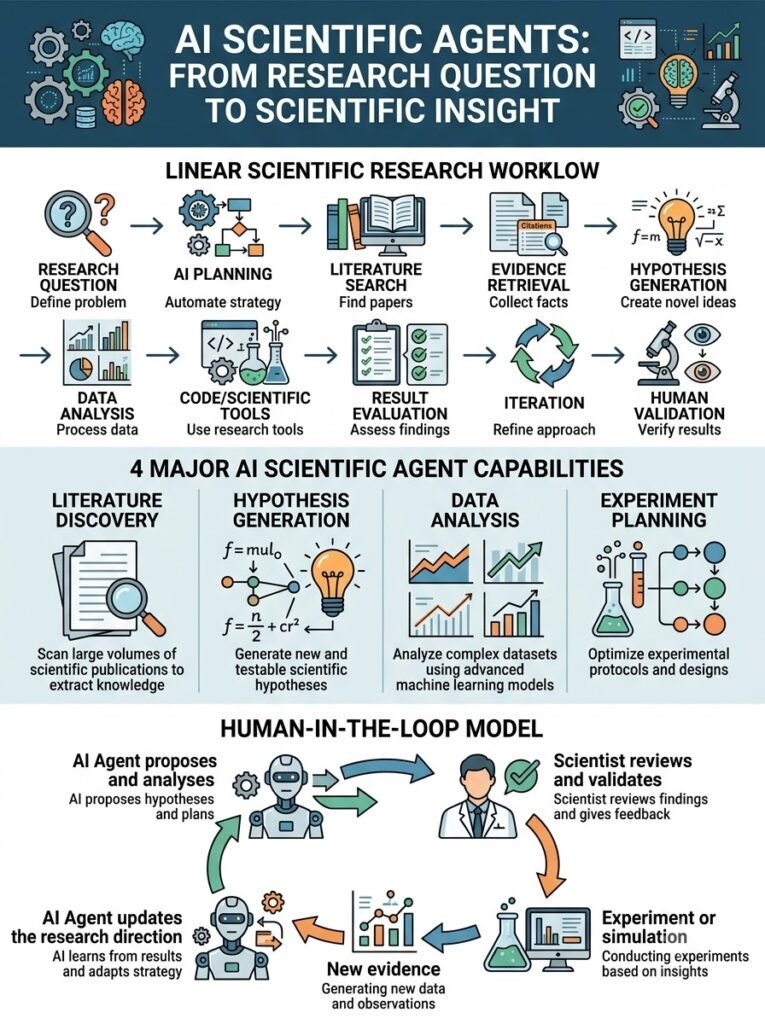
Research Question → Literature Search → Evidence Collection → Hypothesis Generation → Data Analysis → Experiment/Simulation → Result Interpretation → New Hypothesis
ಇಲ್ಲಿ ಒಂದು important difference ಇದೆ.
AI Scientific Agent ಒಂದು answer generate ಮಾಡಿ task ಮುಗಿಸುವುದಿಲ್ಲ. ಅದು task ಅನ್ನು multiple stepsಗೆ break ಮಾಡಿ, ಪ್ರತಿಯೊಂದು ಹಂತದಲ್ಲಿ different tools ಬಳಸಬಹುದು.
ಉದಾಹರಣೆಗೆ researcher ಕೇಳಬಹುದು:
“ಈ diseaseಗೆ ಸಂಬಂಧಿಸಿದ genetic pathwaysನಲ್ಲಿ ಯಾವ unexplored relationships research ಮಾಡಲು ಸಾಧ್ಯ?”
ಒಂದು advanced scientific agent:
- Existing papers ಹುಡುಕಬಹುದು.
- Relevant genes ಮತ್ತು pathways identify ಮಾಡಬಹುದು.
- Existing datasets analyse ಮಾಡಬಹುದು.
- Previous researchನಲ್ಲಿ missing areas ಹುಡುಕಬಹುದು.
- Several hypotheses generate ಮಾಡಬಹುದು.
- Hypothesesಗೆ supporting evidence ಹುಡುಕಬಹುದು.
- Code ಬಳಸಿ statistical analysis ಮಾಡಬಹುದು.
- Results ಆಧರಿಸಿ hypotheses rank ಮಾಡಬಹುದು.
- Human researcherಗೆ next experiments suggest ಮಾಡಬಹುದು.
ಇದು ಸಾಮಾನ್ಯ chatbot responseಗಿಂತ fundamentally different workflow.
ಏಕೆ Scientific Researchಗೆ AI Agents ಬೇಕಾಗುತ್ತಿವೆ?
Scientific knowledge ವೇಗವಾಗಿ expand ಆಗುತ್ತಿದೆ.
ಒಂದು researcherಗೆ ತನ್ನ fieldನ ಎಲ್ಲಾ papers ಓದಿ, ಪ್ರತಿಯೊಂದು dataset ಅರ್ಥಮಾಡಿಕೊಂಡು, ಪ್ರತಿಯೊಂದು relevant method test ಮಾಡುವುದು practically impossible ಆಗಬಹುದು.
ಇದರಿಂದ ಒಂದು information bottleneck ಉಂಟಾಗುತ್ತದೆ.
Researcherಗೆ knowledge ಇಲ್ಲದ ಕಾರಣ problem ಆಗುವುದಿಲ್ಲ.
Problem ಎಂದರೆ available knowledge ತುಂಬಾ ದೊಡ್ಡದಾಗಿದೆ.
AI agents ಈ bottleneckನ ಕೆಲವು ಭಾಗಗಳನ್ನು handle ಮಾಡಬಹುದು.
1. Literature overload
ಒಂದು specific research topicಗೆ ಸಾವಿರಾರು papers ಇರಬಹುದು.
AI agent ಅವುಗಳನ್ನು search ಮಾಡಿ:
- relevant papers
- methods
- datasets
- findings
- contradictory results
- research gaps
ಇವುಗಳನ್ನು identify ಮಾಡಲು ಸಹಾಯ ಮಾಡಬಹುದು.
2. Data complexity
Modern scientific researchನಲ್ಲಿ datasets ಬಹಳ ದೊಡ್ಡದಾಗಿರಬಹುದು.
Genomics, astronomy, climate science, materials science ಮತ್ತು biomedical researchನಲ್ಲಿ human analysis ಮಾತ್ರ ಬಳಸುವುದು time-consuming ಆಗಬಹುದು.
AI agent data-analysis toolsಗೆ access ಹೊಂದಿದ್ದರೆ, ಅದು relevant computations run ಮಾಡಲು ಸಹಾಯ ಮಾಡಬಹುದು.
3. Multiple disciplines
ಇಂದಿನ major scientific problems ಒಂದೇ fieldನಲ್ಲಿ ಸೀಮಿತವಾಗಿಲ್ಲ.
Climate problemನಲ್ಲಿ:
Physics + Chemistry + Biology + Computer Science + Statistics
ಒಟ್ಟಿಗೆ ಬೇಕಾಗಬಹುದು.
AI agents different knowledge sources ಮತ್ತು tools combine ಮಾಡುವ ಸಾಧ್ಯತೆ ಹೊಂದಿವೆ.
4. Repetitive research tasks
Researchನಲ್ಲಿ ಕೆಲವು tasks intellectually important ಆಗಿದ್ದರೂ repetitive ಆಗಿರುತ್ತವೆ.
ಉದಾಹರಣೆಗೆ:
- papers classify ಮಾಡುವುದು
- datasets clean ಮಾಡುವುದು
- statistical tests run ಮಾಡುವುದು
- references compare ಮಾಡುವುದು
- experiment logs analyse ಮಾಡುವುದು
- code variations test ಮಾಡುವುದು
ಇವುಗಳಲ್ಲಿ AI agents researchersಗೆ time ಉಳಿಸಬಹುದು.
AI Scientific Agent ಹೇಗೆ ಕೆಲಸ ಮಾಡುತ್ತದೆ?
ಒಂದು typical scientific agent architecture ಅನ್ನು simple workflow ಆಗಿ ನೋಡಿದರೆ:
Research Goal
↓
Planning
↓
Literature Search
↓
Knowledge Retrieval
↓
Hypothesis Generation
↓
Tool Selection
↓
Data / Code Analysis
↓
Result Evaluation
↓
Iteration
↓
Human Validation
Scientific agent documentಗಳು ಮತ್ತು research papersನಿಂದ relevant information retrieve ಮಾಡುವ ವಿಧಾನವನ್ನು ಅರ್ಥಮಾಡಿಕೊಳ್ಳಲು RAG AI concept ಕೂಡ ಮುಖ್ಯವಾಗಿದೆ.
ಈ workflowನಲ್ಲಿ LLM ಅಥವಾ foundation model central reasoning layer ಆಗಿರಬಹುದು.
ಆದರೆ model ಒಂದೇ ಕೆಲಸ ಮಾಡುವುದಿಲ್ಲ.
ಅದು external tools ಬಳಸುತ್ತದೆ.
ಉದಾಹರಣೆಗೆ:
- academic search tools
- databases
- Python
- statistical packages
- scientific APIs
- simulation software
- laboratory systems
- document repositories
- internal datasets
ಇದರಿಂದ AI agentಗೆ “knowledge” ಮಾತ್ರವಲ್ಲ, action capability ಕೂಡ ಬರುತ್ತದೆ.
AI Scientific Agents ಮತ್ತು ಸಾಮಾನ್ಯ AI Chatbots ನಡುವಿನ ವ್ಯತ್ಯಾಸ
ಈ difference ಅರ್ಥಮಾಡಿಕೊಳ್ಳುವುದು ಬಹಳ ಮುಖ್ಯ.
| ಸಾಮಾನ್ಯ AI Chatbot | AI Scientific Agent |
|---|---|
| Questionಗೆ answer | Research goalಗೆ workflow |
| Mostly single response | Multi-step execution |
| Static knowledge + prompt | External tools + data |
| Human does most actions | Agent can perform selected actions |
| Limited iteration | Iterative reasoning |
| General-purpose | Can be domain-specialized |
| Answer generation | Evidence + analysis + action |
ಉದಾಹರಣೆಗೆ ನೀವು ಕೇಳಿದರೆ:
“CRISPR gene editing ಎಂದರೇನು?”
Chatbot explanation ಕೊಡಬಹುದು.
ಆದರೆ ನೀವು ಕೇಳಿದರೆ:
“ಈ gene datasetನಲ್ಲಿ disease-associated mutations identify ಮಾಡಿ, previous literature ಜೊತೆ compare ಮಾಡಿ ಮತ್ತು promising candidates rank ಮಾಡಿ.”
ಇದು agentic workflowಗೆ ಹೆಚ್ಚು suitable task.
ಅಲ್ಲಿ AIಗೆ:
- dataset access
- literature search
- code execution
- statistical analysis
- reasoning
- result comparison
ಬೇಕಾಗುತ್ತದೆ.
AI Scientific Agentsನ ಪ್ರಮುಖ Research Tasks
AI Scientific Agents researchನಲ್ಲಿ ಹಲವು ರೀತಿಯಲ್ಲಿ ಉಪಯೋಗವಾಗಬಹುದು.
1. Literature Discovery
Research project ಆರಂಭಿಸುವಾಗ ಮೊದಲ challenge:
“ಈ topic ಬಗ್ಗೆ ಈಗಾಗಲೇ ಏನು ಗೊತ್ತಿದೆ?”
AI agent thousands of papers search ಮಾಡಿ relevant evidence collect ಮಾಡಬಹುದು.
ಆದರೆ search ಮಾತ್ರ ಸಾಕಾಗುವುದಿಲ್ಲ.
Agent:
- paper relevance
- methodology
- sample size
- results
- limitations
- conflicting findings
ಇವುಗಳನ್ನು ಕೂಡ compare ಮಾಡಬಹುದು.
ಇದರಿಂದ literature review process ವೇಗವಾಗಬಹುದು.
2. Research Gap Identification
ಒಂದು strong research question ಸಾಮಾನ್ಯವಾಗಿ existing knowledgeನಲ್ಲಿ ಇರುವ gapನಿಂದ ಬರುತ್ತದೆ.
AI agent existing papers compare ಮಾಡಿ:
“ಈ areaನಲ್ಲಿ ಯಾವ ಪ್ರಶ್ನೆಗಳು ಇನ್ನೂ unanswered ಆಗಿವೆ?”
ಎಂಬುದನ್ನು identify ಮಾಡಲು ಪ್ರಯತ್ನಿಸಬಹುದು.
ಆದರೆ ಇಲ್ಲಿ human judgement ಬಹಳ ಮುಖ್ಯ.
AI ಹೇಳಿದ gap ನಿಜವಾಗಿಯೂ research gap ಆಗಿದೆಯೇ ಅಥವಾ ಅದು already studied topic ಆಗಿದೆಯೇ ಎಂಬುದನ್ನು researcher verify ಮಾಡಬೇಕು.
3. Hypothesis Generation
Scientific discoveryಯಲ್ಲಿ hypothesis generation ಅತ್ಯಂತ important step.
AI agents existing evidence combine ಮಾಡಿ multiple hypotheses generate ಮಾಡಬಹುದು.
ಉದಾಹರಣೆಗೆ:
Observation → Possible Mechanism → Hypothesis → Testable Prediction
ಒಂದು human researcher ಒಂದು ಅಥವಾ ಕೆಲವು hypotheses develop ಮಾಡಬಹುದು.
AI agent ದೊಡ್ಡ hypothesis space explore ಮಾಡಲು ಸಹಾಯ ಮಾಡಬಹುದು.
ಆದರೆ quantity ಎಂದರೆ quality ಅಲ್ಲ.
AI-generated hypothesis scientifically meaningful ಆಗಿದೆಯೇ ಎಂಬುದು validation ಮೇಲೆ depend ಆಗುತ್ತದೆ.
Robin: Scientific Discoveryನಲ್ಲಿ Multi-Agent Approach
2026ರಲ್ಲಿ ಗಮನಾರ್ಹ research examplesಗಳಲ್ಲಿ ಒಂದು Robin.
Robin ಬಗ್ಗೆ original research detailsಗಾಗಿ Robin research ಅನ್ನು Natureನಲ್ಲಿ ನೋಡಬಹುದು.
Natureನಲ್ಲಿ ಪ್ರಕಟವಾದ studyಯಲ್ಲಿ Robin ಎಂಬ multi-agent system experimental biology researchನ ಕೆಲವು stages automate ಮಾಡಲು design ಮಾಡಲಾಗಿದೆ.
ಇದು literature search agents ಮತ್ತು data-analysis agentsಗಳನ್ನು combine ಮಾಡುತ್ತದೆ.
System:
- hypotheses generate ಮಾಡಬಹುದು
- experiments propose ಮಾಡಬಹುದು
- experimental results interpret ಮಾಡಬಹುದು
- updated hypotheses generate ಮಾಡಬಹುದು
ಅಂದರೆ research ಒಂದು linear process ಆಗಿರದೆ iterative loop ಆಗುತ್ತದೆ.
ಅದರ workflow ಅನ್ನು simplified ರೂಪದಲ್ಲಿ ನೋಡಿದರೆ:
Literature → Hypothesis → Experiment → Data → Analysis → Interpretation → New Hypothesis
ಇದು scientific methodನ core structureಗೆ AI agents ಅನ್ನು connect ಮಾಡುವ ಒಂದು interesting example.
Robin researchನಲ್ಲಿ therapeutic candidates for dry age-related macular degeneration identify ಮಾಡಲು ಬಳಸಲಾಯಿತು ಎಂದು Nature paper ವರದಿ ಮಾಡುತ್ತದೆ. ಆದರೆ ಇದನ್ನು “AI independently discovered a new medicine” ಎಂದು ಅರ್ಥಮಾಡಿಕೊಳ್ಳಬಾರದು.
ಇದು AI-assisted scientific discoveryಯ experimental demonstration.
Final scientific validation ಇನ್ನೂ essential.
Paper2Agent: Research Paper ಅನ್ನು AI Agent ಆಗಿ ಪರಿವರ್ತಿಸುವುದು
AI Scientific Agents fieldನಲ್ಲಿ ಮತ್ತೊಂದು particularly interesting idea Paper2Agent.
ಸಾಮಾನ್ಯ research paper ಒಂದು static artifact.
ಅದರಲ್ಲಿರಬಹುದು:
- methodology
- code
- datasets
- supplementary materials
- results
- workflows
ಆದರೆ researcher ಅದನ್ನು ಬಳಸಲು paper ಓದಿ, code repository ಹುಡುಕಿ, dependencies install ಮಾಡಿ, environment setup ಮಾಡಿ, inputs ಅರ್ಥಮಾಡಿಕೊಂಡು analysis run ಮಾಡಬೇಕಾಗಬಹುದು.
Paper2Agent ಈ process ಅನ್ನು fundamentally rethink ಮಾಡುತ್ತದೆ.
Natureನಲ್ಲಿ 2026ರಲ್ಲಿ ಪ್ರಕಟವಾದ Paper2Agent work research paper ಅನ್ನು interactive AI agent ಆಗಿ ಪರಿವರ್ತಿಸುವ framework ಅನ್ನು ಪರಿಚಯಿಸಿದೆ. ಅದು paperನ manuscript, supplementary materials, datasets, code ಮತ್ತು workflows ಅನ್ನು agent-native knowledge ಆಗಿ expose ಮಾಡುತ್ತದೆ.
Paper2Agentನ architecture ಮತ್ತು research results ಬಗ್ಗೆ ಹೆಚ್ಚಿನ detailsಗಾಗಿ Paper2Agent research ಅನ್ನು Natureನಲ್ಲಿ ನೋಡಬಹುದು.
ಅದರರ್ಥ researcher natural languageನಲ್ಲಿ ಕೇಳಬಹುದು:
“ಈ paperನ method ನನ್ನ datasetಗೆ ಹೇಗೆ apply ಮಾಡಬಹುದು?”
ಅಥವಾ:
“ಈ analysis reproduce ಮಾಡಿ.”
Agent original paperನ tools ಮತ್ತು workflows ಬಳಸಿಕೊಂಡು task execute ಮಾಡಲು ಪ್ರಯತ್ನಿಸಬಹುದು.
ಇದು scientific communicationನಲ್ಲಿ ಒಂದು ದೊಡ್ಡ conceptual shift.
Paper → Passive Document
ಇಂದಿನಿಂದ
Paper → Interactive Research System
ಎಂಬ direction ಕಾಣಿಸಿಕೊಳ್ಳುತ್ತಿದೆ.
Paper2Agent AlphaGenome, Scanpy ಮತ್ತು TISSUE ಮುಂತಾದ scientific systems ಆಧಾರಿತ agents ಮೂಲಕ case studies ಪ್ರದರ್ಶಿಸಿದೆ ಮತ್ತು original results reproduce ಮಾಡುವುದರ ಜೊತೆಗೆ novel user queries handle ಮಾಡುವ ಸಾಮರ್ಥ್ಯವನ್ನು ಪರೀಕ್ಷಿಸಿದೆ.
AI Scientific Agentsನಲ್ಲಿ MCP ಏಕೆ Important?
Paper2Agentನ architectureನಲ್ಲಿ Model Context Protocol ಅಥವಾ MCP ಪ್ರಮುಖ role ಹೊಂದಿದೆ.
MCP ಬಗ್ಗೆ ನಾವು ಹಿಂದಿನ articleನಲ್ಲಿ detailed ಆಗಿ ನೋಡಿದ್ದೇವೆ:
Model Context Protocol (MCP) Explained: Complete Beginner Guide with AI Agent Examples (2026)
ಈ concept ಅನ್ನು ಇನ್ನಷ್ಟು detailನಲ್ಲಿ ಅರ್ಥಮಾಡಿಕೊಳ್ಳಲು ನಮ್ಮ Model Context Protocol (MCP) guide ನೋಡಿ.
Scientific environmentನಲ್ಲಿ MCPನ value simple ಆಗಿ ಹೇಳುವುದಾದರೆ:
AI model ↔ Scientific tools/data/workflows
ಇವುಗಳ ನಡುವೆ standardized connection ಒದಗಿಸಲು ಸಹಾಯ ಮಾಡುವುದು.
ಒಂದು scientific agentಗೆ:
- database
- code
- analysis tool
- scientific workflow
ಇವೆಲ್ಲ access ಬೇಕಾಗಬಹುದು.
ಪ್ರತಿಯೊಂದು toolಗೆ completely different integration build ಮಾಡಬೇಕಾದರೆ system complexity ಹೆಚ್ಚುತ್ತದೆ.
MCP-style tool connectivity ಈ integration ಅನ್ನು more structured ಆಗಿ ಮಾಡಬಹುದು.
Paper2Agent paperನಲ್ಲಿ research paperನ codebase ಮತ್ತು scientific workflowsನಿಂದ MCP server ನಿರ್ಮಿಸಿ, ಅದನ್ನು chat agent ಜೊತೆ connect ಮಾಡುವ approach ಬಳಸಲಾಗಿದೆ.
ಇದು futureನಲ್ಲಿ scientific papers “read-only documents” ಆಗಿರದೆ tool-enabled knowledge objects ಆಗುವ ಸಾಧ್ಯತೆಯನ್ನು ತೋರಿಸುತ್ತದೆ.
AI Agents Data Analysis ಹೇಗೆ ಮಾಡಬಹುದು?
Scientific researchನಲ್ಲಿ data analysis ಅತ್ಯಂತ important.
ಒಂದು AI agentಗೆ Python ಅಥವಾ statistical tools access ಇದ್ದರೆ ಅದು:
- data cleaning
- exploratory analysis
- visualization
- statistical testing
- model fitting
- parameter comparison
- error analysis
ಹೀಗೆ ಹಲವು steps execute ಮಾಡಲು ಸಹಾಯ ಮಾಡಬಹುದು.
ಉದಾಹರಣೆಗೆ researcher ಒಂದು dataset ನೀಡಿದರೆ:
Dataset → Inspect → Clean → Analyse → Visualize → Interpret
ಎಂಬ workflow agent perform ಮಾಡಬಹುದು.
ಆದರೆ ಇಲ್ಲಿ ಒಂದು major risk ಇದೆ.
AI agent code successfully execute ಮಾಡಿದೆ ಎಂದರೆ result automatically correct ಎಂದಲ್ಲ.
Wrong assumption ಇದ್ದರೆ:
Correct code + wrong assumption = wrong scientific conclusion
ಆದ್ದರಿಂದ scientific agentsನಲ್ಲಿ reproducibility ಮತ್ತು validation ಅತ್ಯಂತ ಮುಖ್ಯ.
Research dataನ quality ಮತ್ತು reliability ಬಗ್ಗೆ ಇನ್ನಷ್ಟು ತಿಳಿದುಕೊಳ್ಳಲು ನಮ್ಮ AI Data Observability article ಕೂಡ useful ಆಗುತ್ತದೆ.
AI Scientific Agents Experiments Design ಮಾಡಬಹುದೇ?
ಕೆಲವು advanced systems experiment planningಗೂ ಪ್ರಯತ್ನಿಸುತ್ತಿವೆ.
ಒಂದು hypothesis ಇದ್ದರೆ agent:
- Existing evidence review ಮಾಡಬಹುದು.
- Testable prediction define ಮಾಡಬಹುದು.
- Possible experimental design suggest ಮಾಡಬಹುದು.
- Variables identify ಮಾಡಬಹುದು.
- Controls suggest ಮಾಡಬಹುದು.
- Expected outcomes define ಮಾಡಬಹುದು.
- Results ಬಂದ ನಂತರ interpretation ಮಾಡಬಹುದು.
ಇದು laboratory automation ಜೊತೆ combine ಆದಾಗ ಇನ್ನಷ್ಟು powerful ಆಗಬಹುದು.
ಆದರೆ physical experimentನಲ್ಲಿ AI agentಗೆ unrestricted control ನೀಡುವುದು practical ಅಥವಾ safe approach ಅಲ್ಲ.
Human researcher:
- experimental feasibility
- safety
- ethics
- equipment limitations
- biological variability
- regulatory requirements
ಇವುಗಳನ್ನು validate ಮಾಡಬೇಕು.
AI Scientific Agentsನಲ್ಲಿನ ದೊಡ್ಡ Challenge: Hallucination
Scientific researchನಲ್ಲಿ hallucination ಸಾಮಾನ್ಯ chatbotನಲ್ಲಿ ಇರುವುದಕ್ಕಿಂತ ಹೆಚ್ಚು serious.
ಒಂದು chatbot ತಪ್ಪಾದ fact ಹೇಳಿದರೆ user correction ಮಾಡಬಹುದು.
ಆದರೆ research agent ತಪ್ಪಾದ:
- paper interpretation
- dataset assumption
- statistical method
- hypothesis
- code
- experimental conclusion
ನೀಡಿದರೆ downstream research ತಪ್ಪು directionಗೆ ಹೋಗಬಹುದು.
ಆದ್ದರಿಂದ scientific agentsಗೆ evidence traceability ಬಹಳ ಮುಖ್ಯ.
ಪ್ರತಿಯೊಂದು important conclusionಗೆ:
“ಈ conclusion ಯಾವ evidence ಆಧಾರದಲ್ಲಿ ಬಂದಿದೆ?”
ಎಂಬ ಪ್ರಶ್ನೆಗೆ answer ಇರಬೇಕು.
Scientific AIಗೆ Reproducibility ಏಕೆ ಮುಖ್ಯ?
ಒಂದು research result scientifically valuable ಆಗಲು ಅದು reproducible ಆಗಿರುವುದು important.
AI agent ಒಂದು conclusion generate ಮಾಡಿದರೆ researcherಗೆ ಸಾಧ್ಯವಾದಷ್ಟು:
- input data
- code
- parameters
- source papers
- intermediate steps
- final output
trace ಮಾಡಬಹುದಾಗಿರಬೇಕು.
ಇದನ್ನೇ broadly research provenance ಎಂದು ನೋಡಬಹುದು.
Paper2Agentನಲ್ಲಿ generated agents original papersನ results reproduce ಮಾಡಬಹುದೇ ಮತ್ತು novel queries handle ಮಾಡಬಹುದೇ ಎಂಬುದನ್ನು test ಮಾಡಲಾಗಿದೆ.
Future scientific agentsನಲ್ಲಿ provenance ಇನ್ನಷ್ಟು important ಆಗಲಿದೆ.
AI Research Agents ನಿಜವಾಗಿಯೂ New Discoveries ಮಾಡಬಹುದೇ?
ಇದು ಅತ್ಯಂತ interesting question.
AI agent existing knowledge combine ಮಾಡಿ ಹೊಸ hypothesis generate ಮಾಡಬಹುದು.
ಆದರೆ:
New combination ≠ New scientific discovery
ಒಂದು research agent existing papersನ concepts combine ಮಾಡಿ seemingly new idea ಕೊಡಬಹುದು.
ಆದರೆ ಆ idea:
- already published ಆಗಿದೆಯೇ?
- scientifically plausible ಆಗಿದೆಯೇ?
- experimentally testable ಆಗಿದೆಯೇ?
- meaningful improvement ನೀಡುತ್ತದೆಯೇ?
ಎಂಬುದನ್ನು verify ಮಾಡಬೇಕು.
2026ರಲ್ಲಿ ಪ್ರಕಟವಾದ research ಇದನ್ನೇ caution ಆಗಿ ತೋರಿಸುತ್ತದೆ. AI research agents scientific ideas generate ಮಾಡುವ ಸಾಮರ್ಥ್ಯ ಹೊಂದಿದ್ದರೂ, ಒಂದು studyಯಲ್ಲಿ generated ideas human-authored follow-on researchಗಿಂತ ಹೆಚ್ಚು concentrated ಆಗಿದ್ದು, existing literatureಗೆ ಹೆಚ್ಚು ಹತ್ತಿರವಾಗಿದ್ದವು. Researchers ಇದನ್ನು current agents broad explorationಗಿಂತ local elaborationನಲ್ಲಿ ಹೆಚ್ಚು strong ಆಗಿರಬಹುದು ಎಂದು interpret ಮಾಡಿದ್ದಾರೆ.
AI research agentsನ novelty ಮತ್ತು exploration capabilities ಬಗ್ಗೆ ಈ AI research agent evaluation study ಕೂಡ useful evidence ನೀಡುತ್ತದೆ.
ಅಂದರೆ AI agents ಈಗಾಗಲೇ research spaceನಲ್ಲಿ useful exploration ಮಾಡುತ್ತಿವೆ.
ಆದರೆ completely unknown scientific territoryಗೆ independently ಹೋಗುತ್ತಿವೆ ಎಂದು ಹೇಳಲು ಇನ್ನೂ evidence ಸೀಮಿತವಾಗಿದೆ.
FIRE-Bench: AI Scientific Reasoning ಅನ್ನು ಹೇಗೆ Test ಮಾಡಬೇಕು?
AI-generated scientific papers ಓದಲು impressive ಆಗಿರಬಹುದು.
ಆದರೆ paper ಚೆನ್ನಾಗಿ ಬರೆಯಲಾಗಿದೆ ಎಂದರೆ research correct ಎಂದಲ್ಲ.
ಇದಕ್ಕಾಗಿ researchers evaluation methods develop ಮಾಡುತ್ತಿದ್ದಾರೆ.
FIRE-Bench ಅಂತಹ ಒಂದು benchmark.
FIRE-Benchನ methodology ಮತ್ತು evaluation results ಬಗ್ಗೆ ಹೆಚ್ಚಿನ informationಗಾಗಿ FIRE-Bench research paper ನೋಡಿ.
ಇದು agentsಗೆ existing scientific findings ಅನ್ನು rediscover ಮಾಡುವ task ನೀಡುತ್ತದೆ.
Agentಗೆ published studyಯ high-level research question ನೀಡಲಾಗುತ್ತದೆ.
ನಂತರ ಅದು:
- experiment design ಮಾಡಬೇಕು
- experiments run ಮಾಡಬೇಕು
- conclusions draw ಮಾಡಬೇಕು
ಮತ್ತು ಅದರ result original studyಯ verified findings ಜೊತೆ compare ಮಾಡಲಾಗುತ್ತದೆ.
ಇದು scientific agents evaluate ಮಾಡಲು interesting direction.
Futureನಲ್ಲಿ ನಾವು:
“AI ಎಷ್ಟು convincing paper ಬರೆಯುತ್ತದೆ?”
ಎಂಬುದಕ್ಕಿಂತ:
“AI independently correct scientific result reproduce ಮಾಡಬಹುದೇ?”
ಎಂಬ ಪ್ರಶ್ನೆಗೆ ಹೆಚ್ಚು importance ಕೊಡಬೇಕಾಗಬಹುದು.
AI Scientific Agents ಯಾವ Fieldsನಲ್ಲಿ ಹೆಚ್ಚು Useful?
AI Scientific Agents broad scientific domainsನಲ್ಲಿ ಉಪಯೋಗವಾಗಬಹುದು.
Biology and Genomics
ಈ ಕ್ಷೇತ್ರದಲ್ಲಿ datasets ಮತ್ತು literature ಎರಡೂ massive ಆಗಿವೆ.
Agents:
- gene relationships
- genetic variants
- biological pathways
- single-cell data
- disease mechanisms
ಇವುಗಳನ್ನು analyse ಮಾಡಲು ಸಹಾಯ ಮಾಡಬಹುದು.
Paper2Agent case studiesನಲ್ಲಿ genomic variant interpretation ಮತ್ತು single-cell/spatial transcriptomics workflows ಸೇರಿದ್ದವು.
Drug Discovery
Drug discoveryನಲ್ಲಿ:
Target → Molecule → Prediction → Testing → Optimization
ಎಂಬ long workflow ಇರುತ್ತದೆ.
AI agents literature, molecular data ಮತ್ತು computational tools combine ಮಾಡಿ candidate prioritizationಗೆ ಸಹಾಯ ಮಾಡಬಹುದು.
Materials Science
ಹೊಸ materials ಹುಡುಕಲು:
- chemical properties
- simulations
- experimental results
- databases
ಇವೆಲ್ಲ combine ಮಾಡಬೇಕಾಗಬಹುದು.
AI agents candidate materials search ಮತ್ತು comparisonನಲ್ಲಿ useful ಆಗಬಹುದು.
Climate Science
Climate researchನಲ್ಲಿ huge datasets ಮತ್ತು complex simulations ಇವೆ.
AI agents:
- climate literature
- weather data
- simulations
- statistical models
ಇವುಗಳನ್ನು combine ಮಾಡಲು futureನಲ್ಲಿ ಸಹಾಯ ಮಾಡಬಹುದು.
Physics
Physicsನಲ್ಲಿ hypothesis testing ಮತ್ತು computational simulation ಪ್ರಮುಖ.
AI agent equations, simulations ಮತ್ತು literature combine ಮಾಡಿ researchersಗೆ candidate explanations explore ಮಾಡಲು ಸಹಾಯ ಮಾಡಬಹುದು.
AI Scientific Agentsನ Multi-Agent Architecture
ಒಬ್ಬ AI agent ಎಲ್ಲಾ ಕೆಲಸ ಮಾಡುವುದು ಒಂದು approach.
ಆದರೆ complex researchಗೆ multi-agent system ಹೆಚ್ಚು interesting.
ಉದಾಹರಣೆಗೆ:
Literature Agent
Papers ಹುಡುಕುತ್ತದೆ.
↓
Hypothesis Agent
Possible research ideas generate ಮಾಡುತ್ತದೆ.
↓
Data Agent
Dataset analyse ಮಾಡುತ್ತದೆ.
↓
Experiment Agent
Experiment ಅಥವಾ simulation design ಮಾಡುತ್ತದೆ.
↓
Critic Agent
Results ಮತ್ತು assumptions challenge ಮಾಡುತ್ತದೆ.
↓
Synthesis Agent
ಎಲ್ಲ findings combine ಮಾಡುತ್ತದೆ.
ಈ architectureನಲ್ಲಿ ಪ್ರತಿಯೊಂದು agentಗೆ specific role ಇರಬಹುದು.
Robin research ಇದೇ directionನಲ್ಲಿ multi-agent scientific discovery approach ಬಳಸಿರುವ ಪ್ರಮುಖ example.
ಆದರೆ agents ಹೆಚ್ಚಾದಂತೆ coordination problem ಕೂಡ ಹೆಚ್ಚಾಗುತ್ತದೆ.
ಒಂದು agent ತಪ್ಪು assumption ಮಾಡಿದರೆ ಮತ್ತೊಂದು agent ಅದನ್ನೇ evidence ಎಂದು ತೆಗೆದುಕೊಂಡರೆ error chain ಆಗಬಹುದು.
ಆದ್ದರಿಂದ multi-agent system ಎಂದರೆ automatically better system ಅಲ್ಲ.
AI Scientific Agentsನ ಪ್ರಮುಖ Limitations
AI agents powerful ಆಗುತ್ತಿದ್ದರೂ ಕೆಲವು limitations ಗಮನದಲ್ಲಿರಬೇಕು.
1. Hallucination
AI confidently wrong scientific claims generate ಮಾಡಬಹುದು.
2. Data Quality
Poor-quality dataset ಇದ್ದರೆ advanced agent ಕೂಡ reliable result ಕೊಡಲು ಸಾಧ್ಯವಿಲ್ಲ.
3. Bias
Training data ಮತ್ತು research literatureನಲ್ಲಿ ಇರುವ biases agent outputನಲ್ಲಿ reflect ಆಗಬಹುದು.
4. Reproducibility
ಒಂದು result generate ಆಗಿದೆ ಎಂದರೆ ಅದು independently reproduce ಆಗುತ್ತದೆ ಎಂದು guarantee ಇಲ್ಲ.
5. Novelty Problem
AI ಹೊಸದಾಗಿ ಕಾಣುವ idea ಕೊಟ್ಟರೂ ಅದು truly novel ಆಗಿರದೇ ಇರಬಹುದು.
6. Tool Errors
Agent ಬಳಸುವ external tool ಅಥವಾ code ತಪ್ಪಾದ output ಕೊಟ್ಟರೆ final conclusion ಕೂಡ ತಪ್ಪಾಗಬಹುದು.
7. Evaluation Difficulty
Scientific discoveryಗೆ correct answer ಯಾವಾಗಲೂ immediately known ಆಗಿರುವುದಿಲ್ಲ.
8. Human Oversight
High-stakes scientific decisionsನಲ್ಲಿ human validation ಇನ್ನೂ essential.
AI Scientific Agents Scientistsನ Jobs Replace ಮಾಡುತ್ತವೆಯೇ?
ಈ ಪ್ರಶ್ನೆಗೆ simple “yes” ಅಥವಾ “no” answer ಸರಿಯಾಗುವುದಿಲ್ಲ.
More realistic scenario:
Scientists + AI Agents
rather than
Scientists vs AI Agents
AI agents repetitive research tasks handle ಮಾಡಿದರೆ scientists:
- better questions ಕೇಳಬಹುದು
- more hypotheses explore ಮಾಡಬಹುದು
- deeper experiments design ಮಾಡಬಹುದು
- complex evidence interpret ಮಾಡಬಹುದು
ಅಂದರೆ scientistನ role “information processor”ನಿಂದ “research director and validator” ಕಡೆಗೆ shift ಆಗಬಹುದು.
Future researcherಗೆ AI tools ಬಳಸುವುದು basic digital skillನಂತೆ important ಆಗುವ ಸಾಧ್ಯತೆ ಇದೆ.
Future Research Workflow ಹೇಗಿರಬಹುದು?
ಒಂದು future scientific research project ಅನ್ನು imagine ಮಾಡಿ.
Researcher ಹೇಳುತ್ತಾರೆ:
“ಈ diseaseನಲ್ಲಿ treatment resistanceಗೆ ಕಾರಣವಾಗಬಹುದಾದ unexplored mechanisms identify ಮಾಡಿ.”
AI research system:
Step 1: Relevant literature search ಮಾಡುತ್ತದೆ.
Step 2: Existing hypotheses map ಮಾಡುತ್ತದೆ.
Step 3: Public datasets identify ಮಾಡುತ್ತದೆ.
Step 4: Data analysis ಮಾಡುತ್ತದೆ.
Step 5: Contradictory findings ಹುಡುಕುತ್ತದೆ.
Step 6: Multiple hypotheses generate ಮಾಡುತ್ತದೆ.
Step 7: Hypothesesಗೆ evidence score ಮಾಡುತ್ತದೆ.
Step 8: Computational experiments run ಮಾಡುತ್ತದೆ.
Step 9: Strong candidates prioritize ಮಾಡುತ್ತದೆ.
Step 10: Researcherಗೆ evidence-backed research plan ನೀಡುತ್ತದೆ.
Researcher ನಂತರ:
Validate → Experiment → Measure → Correct → Repeat
ಮಾಡುತ್ತಾರೆ.
ಇದು fully autonomous scienceಗಿಂತ AI-augmented science ಎಂದು ಹೇಳುವುದು ಹೆಚ್ಚು accurate.
AI Scientific Agents ಮತ್ತು Scientific Papersನ Future
Paper2Agentನಂತಹ research ಈ ವಿಷಯದಲ್ಲಿ ಒಂದು ದೊಡ್ಡ possibility ತೋರಿಸುತ್ತದೆ.
ಇಂದಿನ scientific paper:
Read → Understand → Implement
Futureನಲ್ಲಿ:
Ask → Execute → Verify → Reuse
ಆಗಬಹುದು.
ಒಂದು paperನಲ್ಲಿ method ಇದ್ದರೆ researcher ಅದನ್ನು manually implement ಮಾಡುವ ಬದಲು paper-agent ಜೊತೆ natural languageನಲ್ಲಿ interact ಮಾಡಬಹುದು.
ಉದಾಹರಣೆಗೆ:
“ಈ method ಅನ್ನು ನನ್ನ datasetನಲ್ಲಿ run ಮಾಡಿ.”
ಅಥವಾ:
“ಈ paperನ result reproduce ಮಾಡಿ.”
ಅಥವಾ:
“ನನ್ನ datasetಗೆ ಈ methodನಲ್ಲಿ ಯಾವ parameters ಬದಲಿಸಬೇಕು?”
ಇಂತಹ interaction scientific knowledge reuse ಅನ್ನು faster ಮಾಡಬಹುದು.
AI Scientific Agentsನಲ್ಲಿ Human Scientistನ Role
AI agent powerful ಆದರೂ scientistನ role disappear ಆಗುವುದಿಲ್ಲ.
Human researcher ಮುಖ್ಯವಾಗಿ:
Research Question
ಯಾವ problem solve ಮಾಡಬೇಕು?
Scientific Judgment
ಯಾವ hypothesis meaningful?
Experimental Design
ಯಾವ experiment scientifically valid?
Validation
AI conclusion correct ಆಗಿದೆಯೇ?
Ethics
Research ethically acceptable ಆಗಿದೆಯೇ?
Interpretation
Resultನ real-world meaning ಏನು?
ಇವುಗಳಲ್ಲಿ human expertise ಅತ್ಯಂತ important.
AI agent speed ಹೆಚ್ಚಿಸಬಹುದು.
ಆದರೆ scientific responsibility ಇನ್ನೂ human sideದಲ್ಲೇ ಇರಬೇಕು.
AI Scientific Agentsನಿಂದ ಸಾಮಾನ್ಯ Users ಏನು ಕಲಿಯಬಹುದು?
AI Scientific Agents ಕೇವಲ university researchersಗೆ ಮಾತ್ರ relevant ಅಲ್ಲ.
ಈ technologyನ underlying workflow ಸಾಮಾನ್ಯ knowledge workಗೂ useful.
ಅದರ core idea:
Ask → Search → Analyse → Use Tools → Verify → Iterate
ಈ model ಅನ್ನು business research, market research, education, journalism ಮತ್ತು technical analysisನಲ್ಲಿ ಕೂಡ ಬಳಸಬಹುದು.
ಅಂದರೆ AI agent ಎಂದರೆ ಕೇವಲ autonomous chatbot ಅಲ್ಲ.
ಅದು multi-step problem-solving system.
ಈ concept ಅರ್ಥಮಾಡಿಕೊಂಡರೆ future AI tools ಹೇಗೆ evolve ಆಗುತ್ತಿವೆ ಎಂಬುದನ್ನು better ಆಗಿ ಅರ್ಥಮಾಡಿಕೊಳ್ಳಬಹುದು.
ಇದೇ multi-step workflow ಅನ್ನು personal productivityಗೆ ಹೇಗೆ ಬಳಸಬಹುದು ಎಂಬುದನ್ನು ನಮ್ಮ personal AI assistant guideನಲ್ಲಿ ನೋಡಬಹುದು.
AI Scientific Agentsನಿಂದ ಸಿಗುವ ದೊಡ್ಡ Takeaways
AI Scientific Agents ಬಗ್ಗೆ ಮುಖ್ಯವಾಗಿ ನೆನಪಿಟ್ಟುಕೊಳ್ಳಬೇಕಾದ ವಿಷಯಗಳು:
- AI Scientific Agents scientific researchನಲ್ಲಿ multi-step workflows handle ಮಾಡಲು design ಆಗುತ್ತಿವೆ.
- ಇವು literature search, hypothesis generation, data analysis ಮತ್ತು experiment planning ಮುಂತಾದ tasksನಲ್ಲಿ ಸಹಾಯ ಮಾಡಬಹುದು.
- Robin multi-agent scientific discovery workflowಗೆ important research example ಆಗಿದೆ.
- Paper2Agent research papers ಅನ್ನು interactive AI agents ಆಗಿ ಪರಿವರ್ತಿಸುವ ಹೊಸ direction ತೋರಿಸಿದೆ.
- MCPನಂತಹ tool-connectivity approaches scientific agentsಗೆ external tools ಮತ್ತು workflows connect ಮಾಡಲು ಸಹಾಯ ಮಾಡಬಹುದು.
- AI-generated hypothesis ಎಂದರೆ automatically scientific discovery ಅಲ್ಲ.
- Current research ಪ್ರಕಾರ AI research agents existing literatureಗೆ ಹತ್ತಿರದ ideas generate ಮಾಡುವಲ್ಲಿ strong ಆಗಿದ್ದರೂ, broad scientific explorationನಲ್ಲಿ ಇನ್ನೂ limitations ಇವೆ.
- Scientific AIಗೆ hallucination, bias, data quality ಮತ್ತು reproducibility ಪ್ರಮುಖ challenges.
- FIRE-Benchನಂತಹ benchmarks scientific agentsನ actual research capability evaluate ಮಾಡಲು ಹೊಸ approaches ನೀಡುತ್ತಿವೆ.
- Futureನಲ್ಲಿ ಹೆಚ್ಚು realistic model Scientists + AI Agents ಆಗಿರಬಹುದು.
Frequently Asked Questions
AI Scientific Agents ಎಂದರೇನು?
AI Scientific Agents ಎಂದರೆ scientific research problems solve ಮಾಡಲು AI models, external tools, scientific data, code ಮತ್ತು multi-step reasoning workflows ಬಳಸುವ AI systems.
AI agents scientific discoveries ಮಾಡಬಹುದೇ?
AI agents hypothesis generate, data analyse ಮತ್ತು experiments plan ಮಾಡಲು ಸಹಾಯ ಮಾಡಬಹುದು. ಆದರೆ generated result ನಿಜವಾದ scientific discovery ಆಗಿದೆಯೇ ಎಂಬುದನ್ನು human researchers ಮತ್ತು real-world validation confirm ಮಾಡಬೇಕು.
Robin ಎಂದರೇನು?
Robin ಒಂದು multi-agent system ಆಗಿದ್ದು experimental biology researchನಲ್ಲಿ hypothesis generation ಮತ್ತು data analysisನಂತಹ stages automate ಮಾಡಲು ಸಂಶೋಧಿಸಲಾಗಿದೆ.
Paper2Agent ಎಂದರೇನು?
Paper2Agent research paperನ manuscript, code, datasets ಮತ್ತು workflows ಅನ್ನು interactive AI agent ಆಗಿ ಬಳಸುವ framework. ಇದು paper ಅನ್ನು static documentನಿಂದ executable research artifact ಕಡೆಗೆ move ಮಾಡುವ concept ತೋರಿಸುತ್ತದೆ.
AI Scientific Agents researchersನ jobs replace ಮಾಡುತ್ತವೆಯೇ?
ಸದ್ಯದ evidence ಆಧರಿಸಿ complete replacementಗಿಂತ AI-assisted research ಹೆಚ್ಚು realistic direction. Agents repetitive ಮತ್ತು computational tasks handle ಮಾಡಬಹುದು, ಆದರೆ research judgment, validation, ethics ಮತ್ತು experimental responsibilityಗೆ human scientists ಅಗತ್ಯ.
AI Scientific Agentsನ ದೊಡ್ಡ challenge ಏನು?
Reliability. AI agent ಒಂದು impressive answer ಅಥವಾ hypothesis ಕೊಟ್ಟರೂ ಅದು scientifically correct ಎಂದು assume ಮಾಡಬಾರದು. Evidence, reproducibility ಮತ್ತು independent validation ಅಗತ್ಯ.
Conclusion
AI Scientific Agents scientific researchನ future ಅನ್ನು ನಿಧಾನವಾಗಿ ಬದಲಾಯಿಸುತ್ತಿರುವ ಪ್ರಮುಖ AI directionಗಳಲ್ಲಿ ಒಂದಾಗಿದೆ.
ಇದು ಕೇವಲ researchersಗೆ faster search tool ನೀಡುವ ವಿಷಯವಲ್ಲ.
AI ಈಗ:
Literature ಓದುವುದು → Hypothesis ರೂಪಿಸುವುದು → Data analyse ಮಾಡುವುದು → Tools ಬಳಸುವುದು → Results interpret ಮಾಡುವುದು → Next step suggest ಮಾಡುವುದು
ಎಂಬ research loopನಲ್ಲಿ ಹೆಚ್ಚು active role ಪಡೆಯುತ್ತಿದೆ.
Robinನಂತಹ multi-agent systems scientific discovery cycleನ ಹಲವು stages automate ಮಾಡಲು ಸಾಧ್ಯವೇ ಎಂಬುದನ್ನು ಪರೀಕ್ಷಿಸುತ್ತಿವೆ. Paper2Agent research papersನ knowledge, code ಮತ್ತು workflows ಅನ್ನು interactive agents ಆಗಿ ಪರಿವರ್ತಿಸುವ ಸಾಧ್ಯತೆಯನ್ನು ತೋರಿಸುತ್ತಿದೆ.
ಆದರೆ ನಾವು ಒಂದು important distinction ಮರೆಯಬಾರದು.
AI-generated result ಮತ್ತು scientifically validated discovery ಒಂದೇ ಅಲ್ಲ.
Futureನಲ್ಲಿ ಅತ್ಯಂತ powerful research environment ಬಹುಶಃ completely autonomous AI laboratory ಆಗಿರದೇ ಇರಬಹುದು. ಬದಲಾಗಿ, human scientists + AI Scientific Agents + scientific tools + reliable data + rigorous validation ಒಟ್ಟಿಗೆ ಕೆಲಸ ಮಾಡುವ system ಆಗಿರಬಹುದು.
ಇದರ biggest advantage speed ಮಾತ್ರವಲ್ಲ.
ಒಬ್ಬ researcher ಹಿಂದೆ explore ಮಾಡಲಾಗದಷ್ಟು ದೊಡ್ಡ research space ಅನ್ನು AI agents ಸಹಾಯದಿಂದ systematically explore ಮಾಡಲು ಸಾಧ್ಯವಾಗಬಹುದು.
ಅದೇ ಕಾರಣಕ್ಕೆ AI Scientific Agents ಅನ್ನು “scientists replace ಮಾಡುವ AI” ಎಂದು ನೋಡುವುದಕ್ಕಿಂತ, scientistsಗೆ More questions explore ಮಾಡಲು, complex data ಅರ್ಥಮಾಡಿಕೊಳ್ಳಲು ಮತ್ತು research cycle ವೇಗಗೊಳಿಸಲು ಸಹಾಯ ಮಾಡುವ next-generation research infrastructure ಎಂದು ನೋಡುವುದು ಹೆಚ್ಚು practical.
Scientific discoveryಯಲ್ಲಿ AIಯ ಮುಂದಿನ chapter ಬಹುಶಃ better chatbot ಬಗ್ಗೆ ಇರದೇ ಇರಬಹುದು.
ಅದು AI itself becoming an active research collaborator ಆಗುವ ಬಗ್ಗೆ ಇರಬಹುದು.