

AI Hallucinations Explained: Why AI Gives Wrong Answers and How to Reduce Them
Introduction
AI ಜೊತೆ ಮಾತನಾಡುವಾಗ ಒಂದು ವಿಚಿತ್ರ experience ನಿಮಗೆ ಆಗಿರಬಹುದು.
ನೀವು ಒಂದು simple question ಕೇಳುತ್ತೀರಿ. AI confident ಆಗಿ answer ಕೊಡುತ್ತದೆ. Answer ನೋಡಿದಾಗ ಅದು professional ಆಗಿ ಕಾಣುತ್ತದೆ. ಆದರೆ ಸ್ವಲ್ಪ ಪರಿಶೀಲಿಸಿದ ನಂತರ ಅದರಲ್ಲಿ ಕೆಲವು facts ತಪ್ಪಾಗಿರಬಹುದು. ಕೆಲವೊಮ್ಮೆ source ಇಲ್ಲದಿದ್ದರೂ source ಇದ್ದಂತೆ ಹೇಳಬಹುದು. ಇನ್ನೂ ಕೆಲವೊಮ್ಮೆ ನಿಜವಾಗಿಯೇ exist ಆಗದ research paper, website, person ಅಥವಾ statistic ಕೂಡ create ಮಾಡಬಹುದು.
ಈ problemಗೆ AI Hallucinations ಎಂದು ಕರೆಯಲಾಗುತ್ತದೆ.
ಇಲ್ಲಿ ಮುಖ್ಯವಾದ ವಿಷಯ ಏನೆಂದರೆ AI “ಸುಳ್ಳು ಹೇಳಬೇಕು” ಎಂದು ಉದ್ದೇಶಪೂರ್ವಕವಾಗಿ ನಿರ್ಧರಿಸುತ್ತಿಲ್ಲ. AI model ಸಾಮಾನ್ಯವಾಗಿ next likely token ಅಥವಾ sequence generate ಮಾಡುವ ರೀತಿಯಲ್ಲಿ trained ಆಗಿರುತ್ತದೆ. ಅದರ response fluent ಮತ್ತು confident ಆಗಿದ್ದರೂ, ಅದು ಪ್ರತಿಯೊಂದು statementನ factual truth ಅನ್ನು independently verify ಮಾಡುತ್ತದೆ ಎಂದು ಅರ್ಥವಲ್ಲ.
ಅದಕ್ಕಾಗಿಯೇ AIಯನ್ನು ಬಳಸುವಾಗ ಒಂದು fundamental rule ನೆನಪಿಟ್ಟುಕೊಳ್ಳಬೇಕು:
Fluent answer ಎಂದರೆ accurate answer ಎಂದಲ್ಲ.
ChatGPT, Gemini, Claude ಅಥವಾ ಬೇರೆ AI systems research, writing, coding, education, business ಮತ್ತು everyday productivityನಲ್ಲಿ ಬಹಳ useful ಆಗಿವೆ. ಆದರೆ output ಅನ್ನು blindly trust ಮಾಡಿದರೆ small factual mistake ದೊಡ್ಡ problem ಆಗಬಹುದು.
ಉದಾಹರಣೆಗೆ student ತಪ್ಪಾದ historical date ಅನ್ನು assignmentನಲ್ಲಿ ಬಳಸಬಹುದು. Blogger fake source cite ಮಾಡಬಹುದು. Business owner incorrect market information ಆಧರಿಸಿ decision ತೆಗೆದುಕೊಳ್ಳಬಹುದು. Developer AI-generated codeನಲ್ಲಿ hidden error ಇಟ್ಟು productionಗೆ deploy ಮಾಡಬಹುದು.
ಆದ್ದರಿಂದ AI Hallucinations ಅರ್ಥಮಾಡಿಕೊಳ್ಳುವುದು AI ಬಳಸುವ ಪ್ರತಿಯೊಬ್ಬರಿಗೂ basic AI literacyಯ ಒಂದು ಪ್ರಮುಖ ಭಾಗವಾಗಿದೆ.
ಈ articleನಲ್ಲಿ AI hallucination ಎಂದರೇನು, ಅದು ಏಕೆ ಸಂಭವಿಸುತ್ತದೆ, ಯಾವ ರೀತಿಯ hallucinations ಇವೆ, ಯಾವ ಸಂದರ್ಭಗಳಲ್ಲಿ risk ಹೆಚ್ಚು, AI models ಏಕೆ confidently wrong answers ಕೊಡುತ್ತವೆ ಮತ್ತು practical prompting, verification, RAG ಮತ್ತು human review ಮೂಲಕ hallucinations ಅನ್ನು ಹೇಗೆ reduce ಮಾಡಬಹುದು ಎಂಬುದನ್ನು step-by-step ನೋಡೋಣ.
AI Hallucinations ಎಂದರೇನು?
AI Hallucinations ಎಂದರೆ AI system factual, unsupported ಅಥವಾ contextually incorrect information ಅನ್ನು plausible-looking answer ಆಗಿ generate ಮಾಡುವ situation.
AI hallucination concept ಬಗ್ಗೆ OpenAI ನೀಡಿರುವ official explanation of hallucinations ಕೂಡ useful reference ಆಗಿದೆ.
ಸರಳವಾಗಿ:
AI knows something wrong → answer ತಪ್ಪಾಗಬಹುದು
ಆದರೆ problem ಅಷ್ಟೇ ಅಲ್ಲ.
ಕೆಲವೊಮ್ಮೆ AIಗೆ information ಗೊತ್ತೇ ಇಲ್ಲ.
ಆದರೂ ಅದು:
“I don’t know”
ಎಂದು ಹೇಳುವ ಬದಲು ಒಂದು plausible answer generate ಮಾಡಬಹುದು.
ಉದಾಹರಣೆಗೆ:
“2024ರಲ್ಲಿ publish ಆದ ಈ research paperನ main findings ಏನು?”
Paper exist ಆಗದೇ ಇದ್ದರೂ model ಒಂದು realistic-looking title, authors, journal ಮತ್ತು findings create ಮಾಡಿದರೆ ಅದು hallucination.
ಇನ್ನೊಂದು example:
“ಈ companyನ CEO ಯಾರು?”
Model outdated information ಆಧಾರವಾಗಿ ಹಿಂದಿನ CEO ಹೆಸರನ್ನು ಹೇಳಬಹುದು.
ಇದು hallucination ಅಥವಾ outdated knowledge-related factual error ಆಗಿರಬಹುದು.
ಮತ್ತೊಂದು situation:
User question ambiguous ಆಗಿದೆ.
AI clarification ಕೇಳದೆ ಒಂದು interpretation assume ಮಾಡಿ answer ನೀಡುತ್ತದೆ.
ಇಲ್ಲಿ answer logically coherent ಆಗಿದ್ದರೂ user ಕೇಳಿದ ವಿಷಯಕ್ಕೆ ಸರಿಯಾಗಿರದೇ ಇರಬಹುದು.
ಹೀಗಾಗಿ hallucination ಅನ್ನು ಕೇವಲ “completely fake information” ಎಂದು ಅರ್ಥಮಾಡಿಕೊಳ್ಳಬಾರದು.
ಇದು:
- False facts
- Fabricated sources
- Wrong numbers
- Incorrect citations
- Misinterpreted context
- Unsupported claims
- Invented examples presented as facts
ಹಲವು formsನಲ್ಲಿ ಕಾಣಿಸಬಹುದು.
AI Hallucinations ಏಕೆ ಸಂಭವಿಸುತ್ತವೆ?
ಇದಕ್ಕೆ ಒಂದೇ ಕಾರಣ ಇಲ್ಲ.
AI modelನ architecture, training data, prompt, context, retrieval system, tool usage ಮತ್ತು generation settings ಎಲ್ಲವೂ influence ಮಾಡಬಹುದು.
1. AI Language Model ಮುಂದಿನ ಪದವನ್ನು predict ಮಾಡುತ್ತದೆ
Large Language Modelನ basic mechanism ಅರ್ಥಮಾಡಿಕೊಳ್ಳುವುದು ಇಲ್ಲಿ useful.
ನಾವು AIಗೆ:
“The capital of France is…”
ಎಂದು prompt ಕೊಟ್ಟರೆ trainingನಲ್ಲಿ learned patterns ಆಧಾರವಾಗಿ model “Paris” generate ಮಾಡುವ probability ಬಹಳ high.
ಆದರೆ prompt ಹೀಗಿದ್ದರೆ:
“The 18th-century scientist John Smith published…”
ಇಲ್ಲಿ information uncertain ಆಗಿದ್ದರೂ model language pattern continue ಮಾಡಬಹುದು.
ಅಂದರೆ model:
“ಇದು ನಿಜವೇ?”
ಎಂಬ human-style fact-checking process ಪ್ರತಿಯೊಂದು sentenceಗೆ automatically ಮಾಡುವುದಿಲ್ಲ.
ಅದು context ಮತ್ತು learned patterns ಆಧರಿಸಿ likely continuation generate ಮಾಡುತ್ತದೆ.
Modern models reasoning ಮತ್ತು tool use capabilities ಹೊಂದಿದ್ದರೂ, factual verification ಮತ್ತು generation ಒಂದೇ process ಅಲ್ಲ.
2. Training Data ಅಪೂರ್ಣವಾಗಿರಬಹುದು
AI model trainingಗೆ ಬಳಸಿದ data:
- incomplete
- outdated
- contradictory
- noisy
- biased
ಆಗಿರಬಹುದು.
ಒಂದು event training cutoff ನಂತರ ನಡೆದಿದ್ದರೆ modelಗೆ ಅದರ direct knowledge ಇರದೇ ಇರಬಹುದು.
ಆದರೂ user ಕೇಳಿದಾಗ model answer generate ಮಾಡಬಹುದು.
ಉದಾಹರಣೆಗೆ:
“October 2026ರಲ್ಲಿ ಈ company ಏನು announce ಮಾಡಿತು?”
Current web access ಅಥವಾ updated source ಇಲ್ಲದ modelಗೆ reliable answer ನೀಡಲು ಸಾಧ್ಯವಾಗದೇ ಇರಬಹುದು.
ಇಂತಹ situationನಲ್ಲಿ confident guess ಬಂದರೆ ಅದು dangerous.
3. Knowledge Gaps
AIಗೆ ಎಲ್ಲಾ ವಿಷಯಗಳ complete database ಇಲ್ಲ.
ಒಂದು niche scientific topic, obscure local business ಅಥವಾ recently published paper ಬಗ್ಗೆ sufficient information ಇಲ್ಲದಿರಬಹುದು.
ಆದರೆ modelನ objective conversationally useful response generate ಮಾಡುವುದಾಗಿದೆ.
ಅದರಿಂದ knowledge gap ಇರುವ ಜಾಗದಲ್ಲಿ model plausible completion generate ಮಾಡುವ risk ಇದೆ.
4. Ambiguous Questions
User question clear ಆಗಿರದಿದ್ದರೂ AI answer generate ಮಾಡಬಹುದು.
ಉದಾಹರಣೆಗೆ:
“Apple ಬಗ್ಗೆ latest information ಕೊಡಿ.”
Apple ಎಂದರೆ:
- Apple Inc.
- apple fruit
- Apple product
- Apple stock
ಯಾವುದು?
AI clarification ಕೇಳದೆ ಒಂದನ್ನು assume ಮಾಡಿದರೆ answer technically correct ಆಗಿದ್ದರೂ user intentಗೆ wrong ಆಗಬಹುದು.
ಆದ್ದರಿಂದ ambiguity ಕೂಡ AI reliabilityಗೆ major factor.
5. Long Contextನಲ್ಲಿ Information Mix ಆಗುವುದು
Modern AI models ದೊಡ್ಡ context windows handle ಮಾಡಬಹುದು.
ಆದರೂ long conversation ಅಥವಾ huge documentನಲ್ಲಿ information:
- mix ಆಗಬಹುದು
- overlooked ಆಗಬಹುದು
- incorrectly associated ಆಗಬಹುದು
ಉದಾಹರಣೆಗೆ ಒಂದು reportನಲ್ಲಿ ಎರಡು companies ಬಗ್ಗೆ separate numbers ಇದ್ದರೆ AI ಅವುಗಳನ್ನು accidentally combine ಮಾಡಬಹುದು.
ಇದನ್ನು context-related error ಎಂದು ನೋಡಬಹುದು.
AI Hallucinationsನ ಪ್ರಮುಖ ವಿಧಗಳು
ಎಲ್ಲ hallucinations ಒಂದೇ ರೀತಿಯಲ್ಲ.
1. Factual Hallucination
AI wrong fact ಹೇಳುತ್ತದೆ.
Example:
“India’s capital is Mumbai.”
ಇದು straightforward factual error.
2. Fabricated Citation
ಇದು research ಮತ್ತು content creationನಲ್ಲಿ particularly dangerous.
AI:
“According to a 2025 Nature study…”
ಎಂದು ಹೇಳುತ್ತದೆ.
ಆದರೆ ಆ paper exist ಆಗದೇ ಇರಬಹುದು.
Fake:
- author
- DOI
- journal
- URL
- publication date
ಎಲ್ಲ generate ಆಗಬಹುದು.
ಆದ್ದರಿಂದ AI ನೀಡಿದ citation ಅನ್ನು click ಮಾಡಿ verify ಮಾಡುವುದು important.
3. Fake Quotes
AI public figure ಅಥವಾ researcher ಹೇಳದ sentence ಅನ್ನು quote marksನಲ್ಲಿ ನೀಡಬಹುದು.
ಇದು reputation ಮತ್ತು misinformation risk create ಮಾಡುತ್ತದೆ.
ವಿಶೇಷವಾಗಿ news articlesನಲ್ಲಿ ಇದು serious issue.
4. Wrong Numerical Information
Numbers ಕೂಡ hallucinationಗೆ ಒಳಗಾಗಬಹುದು.
ಉದಾಹರಣೆಗೆ:
- market size
- percentage
- population
- pricing
- research sample size
- company revenue
ಇವುಗಳಲ್ಲಿ AI plausible-looking number generate ಮಾಡಬಹುದು.
Numbers professional-looking ಆಗಿರುವುದರಿಂದ users ಹೆಚ್ಚು easily trust ಮಾಡುತ್ತಾರೆ.
5. Contextual Hallucination
ಕೆಲವೊಮ್ಮೆ individual statements correct ಆಗಿರಬಹುದು.
ಆದರೆ AI ಅವುಗಳನ್ನು wrong contextನಲ್ಲಿ connect ಮಾಡುತ್ತದೆ.
ಉದಾಹರಣೆಗೆ two separate research studiesನ findings combine ಮಾಡಿ ಅವು ಒಂದೇ studyಯ result ಎಂದು present ಮಾಡಬಹುದು.
6. Coding Hallucination
AI codingನಲ್ಲಿ ಕೂಡ hallucinate ಮಾಡಬಹುದು.
ಉದಾಹರಣೆಗೆ:
“ಈ libraryನಲ್ಲಿ
generate_report()function ಇದೆ.”
ಆದರೆ ಆ function libraryನಲ್ಲಿ exist ಆಗದೇ ಇರಬಹುದು.
AI-generated code syntactically correct ಆಗಿದ್ದರೂ API incorrect ಆಗಿರಬಹುದು.
ಇದನ್ನು developers ಕೆಲವೊಮ್ಮೆ API hallucination ಅಥವಾ package hallucination ಎಂದು refer ಮಾಡುತ್ತಾರೆ.
AI Hallucinations ಮತ್ತು Confidence
ಇದು AI usersಗೆ ಅತ್ಯಂತ important lesson.
AI answerನ confidence ಮತ್ತು factual accuracy ಒಂದೇ ವಿಷಯಗಳಲ್ಲ.
AI:
“The answer is definitely…”
ಎಂದು ಹೇಳಿದರೆ ಅದು necessarily verified ಎಂದಲ್ಲ.
ಅದೇ ರೀತಿ:
“I believe…”
ಎಂದು ಹೇಳಿದರೆ answer necessarily wrong ಎಂದೂ ಅಲ್ಲ.
Language confidence ಒಂದು generation characteristic.
Factual confidenceಗಾಗಿ external evidence ಬೇಕಾಗಬಹುದು.
ಅದಕ್ಕಾಗಿಯೇ:
Confidence ≠ Truth
ಎಂಬ rule ನೆನಪಿಟ್ಟುಕೊಳ್ಳಿ.
AI Hallucinationsನಲ್ಲಿ Promptನ Role ಏನು?
Prompt quality hallucination risk ಮೇಲೆ influence ಮಾಡಬಹುದು.
Weak prompt:
“Tell me about AI jobs.”
ಇದು broad.
Better prompt:
“Explain five major AI job roles expected to remain relevant through 2030. Separate established roles from emerging roles and clearly identify any uncertain predictions.”
ಇಲ್ಲಿ AIಗೆ:
- scope
- time period
- output structure
- uncertainty handling
ಕೊಟ್ಟಿದ್ದೇವೆ.
ಇದರಿಂದ answer quality improve ಆಗಬಹುದು.
ಆದರೆ good prompt hallucinations completely eliminate ಮಾಡುವುದಿಲ್ಲ.
Hallucinations Reduce ಮಾಡಲು 10 Practical Methods
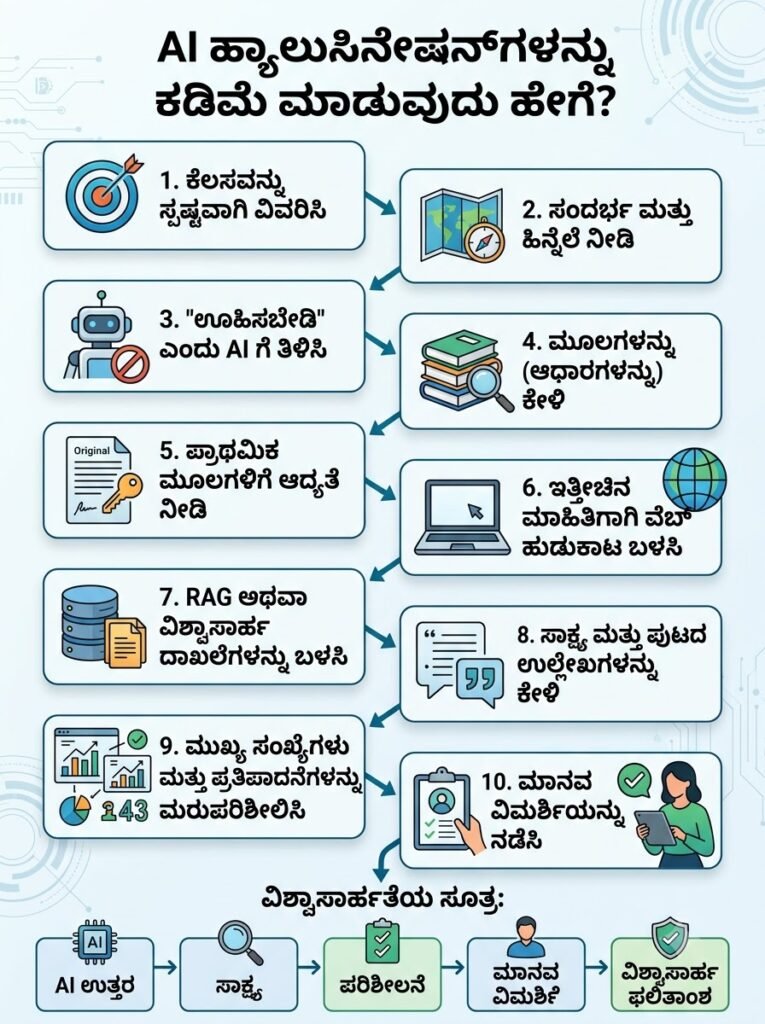
1. AIಗೆ “Don’t Guess” ಎಂದು ಹೇಳಿ
Simple instruction useful ಆಗಬಹುದು.
Prompt:
“ನಿಮಗೆ answer ಖಚಿತವಾಗಿ ಗೊತ್ತಿಲ್ಲದಿದ್ದರೆ guess ಮಾಡಬೇಡಿ. Uncertain information ಅನ್ನು clearly identify ಮಾಡಿ.”
ಇದು modelಗೆ uncertainty express ಮಾಡುವ direction ಕೊಡುತ್ತದೆ.
Promptನಲ್ಲಿ clear instructions ಮತ್ತು constraints ನೀಡುವ ಬಗ್ಗೆ OpenAI prompting guidance ಇನ್ನಷ್ಟು useful examples ನೀಡುತ್ತದೆ.
2. Sources ಕೇಳಿ
Research question ಆಗಿದ್ದರೆ:
“ಪ್ರತಿಯೊಂದು important factual claimಗೆ source ಕೊಡಿ.”
ಎಂದು ಕೇಳಬಹುದು.
ಆದರೆ source ನೀಡಲಾಗಿದೆ ಎಂದರೆ ಅದು automatically genuine ಎಂದು assume ಮಾಡಬಾರದು.
Source verify ಮಾಡಬೇಕು.
3. Primary Sources ಬಳಸಲು ಹೇಳಿ
“Sources ಕೊಡಿ”ಗಿಂತ:
“Official government websites, original research papers ಅಥವಾ company documentation ಅನ್ನು primary sources ಆಗಿ prioritize ಮಾಡಿ.”
ಎಂದು ಹೇಳುವುದು better.
ಇದರಿಂದ low-quality secondary sources ಮೇಲೆ dependency ಕಡಿಮೆಯಾಗಬಹುದು.
4. Web Search ಬಳಸಿ
Current information ಬೇಕಾದರೆ static model knowledge ಮೇಲೆ depend ಮಾಡಬೇಡಿ.
ಉದಾಹರಣೆಗೆ:
- current pricing
- latest product launch
- recent research
- current government policy
- today’s news
ಇವುಗಳಿಗೆ updated web sources ಅಗತ್ಯವಾಗಬಹುದು.
5. RAG ಬಳಸಿ
Retrieval-Augmented Generation (RAG) hallucination risk reduce ಮಾಡಲು powerful approach.
RAG systemನಲ್ಲಿ:
Question
↓
Retrieve relevant documents
↓
Provide evidence to model
↓
Generate answer
ಇದರಿಂದ model external knowledge baseನ relevant information ಆಧಾರವಾಗಿ answer generate ಮಾಡಬಹುದು.
RAG hallucinations completely eliminate ಮಾಡುವುದಿಲ್ಲ.
ಆದರೆ modelಗೆ relevant evidence provide ಮಾಡುವುದರಿಂದ unsupported generation risk ಕಡಿಮೆಯಾಗಬಹುದು.
ನಮ್ಮ detailed RAG Explained: How Retrieval-Augmented Generation Helps AI Give Better Answers articleನಲ್ಲಿ ಈ architecture ಅನ್ನು ಇನ್ನಷ್ಟು ವಿವರವಾಗಿ ನೋಡಬಹುದು.
AIಗೆ external knowledge baseನ relevant information retrieve ಮಾಡಿ answer generate ಮಾಡುವ ಈ approach ಅನ್ನು RAG ಎಂದು ಕರೆಯಲಾಗುತ್ತದೆ; ಇದರ complete workflow ಅನ್ನು ನಮ್ಮ detailed guideನಲ್ಲಿ ನೋಡಬಹುದು.
6. AIಗೆ Evidence Table ಕೇಳಿ
Complex researchನಲ್ಲಿ direct answerಗಿಂತ evidence table useful.
Prompt:
“ಈ conclusionಗೆ supporting evidence ಮತ್ತು contradicting evidence ಅನ್ನು separate tableನಲ್ಲಿ ಕೊಡಿ.”
ಇದು reasoning transparency improve ಮಾಡಲು ಸಹಾಯ ಮಾಡಬಹುದು.
7. Important Numbers Double-Check ಮಾಡಿ
Numbers ಬಂದಾಗ:
AI → Source → Original Source
ಈ three-step verification ಮಾಡಿ.
ಉದಾಹರಣೆಗೆ:
AI ಹೇಳುತ್ತದೆ:
“Company X has 80% market share.”
ತಕ್ಷಣ publish ಮಾಡಬೇಡಿ.
Original report ಹುಡುಕಿ.
8. Long Documentsನಲ್ಲಿ Page/Section References ಕೇಳಿ
PDF ಅಥವಾ report analyse ಮಾಡುವಾಗ:
“ಪ್ರತಿಯೊಂದು major claimಗೆ document page number ಅಥವಾ section reference ಕೊಡಿ.”
ಎಂದು ಕೇಳಿ.
ಇದರಿಂದ source traceability improve ಆಗುತ್ತದೆ.
9. Critical Answersಗೆ Second Verification
High-stakes informationನಲ್ಲಿ second check ಮಾಡಿ.
ಉದಾಹರಣೆಗೆ:
AI Answer
Official Source
ಅಥವಾ
AI Answer
Second independent source
ಈ approach reliability ಹೆಚ್ಚಿಸುತ್ತದೆ.
10. Human Review
ಕೊನೆಯ safeguard:
Human verification
AI generated content publish ಮಾಡುವ ಮೊದಲು:
- names
- dates
- numbers
- quotations
- sources
- legal claims
- medical claims
- financial claims
check ಮಾಡಬೇಕು.
AI speed ಕೊಡುತ್ತದೆ.
Human verification trust ಕೊಡುತ್ತದೆ.
AI systemsನಲ್ಲಿ risk management ಮತ್ತು trustworthy AI principles ಬಗ್ಗೆ NIST AI Risk Management Framework ಕೂಡ useful primary reference ಆಗಿದೆ.
AI Hallucinations ಮತ್ತು RAG ನಡುವಿನ Connection
AI reliability ಬಗ್ಗೆ ಮಾತನಾಡುವಾಗ RAG repeatedly ಬರುತ್ತದೆ.
ಏಕೆಂದರೆ normal LLM ತನ್ನ learned parametersನಿಂದ answer generate ಮಾಡಬಹುದು.
RAG system external knowledge retrieve ಮಾಡುತ್ತದೆ.
Retrieval-based AI workflows ಬಗ್ಗೆ technical understanding ಪಡೆಯಲು OpenAI retrieval documentation ನೋಡಬಹುದು.
ಉದಾಹರಣೆಗೆ company internal documentationಗೆ chatbot build ಮಾಡುತ್ತಿದ್ದೇವೆ ಎಂದು imagine ಮಾಡಿ.
Without RAG:
Question → Model → Answer
With RAG:
Question → Search Internal Documents → Relevant Context → Model → Answer
ಇಲ್ಲಿ modelಗೆ companyನ current documentation context ಆಗಿ ದೊರೆಯುತ್ತದೆ.
ಆದರೆ RAG ಕೂಡ perfect ಅಲ್ಲ.
Wrong document retrieve ಆದರೆ:
Wrong Retrieval → Wrong Context → Wrong Answer
ಆದ್ದರಿಂದ reliable AI systemಗೆ retrieval quality ಕೂಡ important.
Retrieval-Augmented Generationನ original research approach ಬಗ್ಗೆ deeper technical understandingಗಾಗಿ original RAG research paper ನೋಡಬಹುದು.
AI Data Quality ಕೂಡ AI Reliabilityಗೆ ಮುಖ್ಯ
ಒಂದು AI systemನ output quality model ಮೇಲೆ ಮಾತ್ರ depend ಆಗುವುದಿಲ್ಲ.
ಒಂದು useful principle:
Bad Data → Bad Context → Bad Output
AI systemsನಲ್ಲಿ data quality, freshness ಮತ್ತು consistency ಏಕೆ ಮುಖ್ಯ ಎಂಬುದನ್ನು ನಮ್ಮ AI Data Observability guideನಲ್ಲಿ ಇನ್ನಷ್ಟು ವಿವರವಾಗಿ ನೋಡಬಹುದು.
ಅದರಲ್ಲೂ enterprise AI systemsನಲ್ಲಿ data quality, freshness, completeness ಮತ್ತು consistency critical.
ಇದಕ್ಕಾಗಿಯೇ AI reliability ಬಗ್ಗೆ ಮಾತನಾಡುವಾಗ AI Data Observability ಕೂಡ important topic.
ನಮ್ಮ AI Data Observability ಎಂದರೇನು? AI Systemsನ Data Quality ಮತ್ತು Reliability ಹೇಗೆ ಕಾಪಾಡಬಹುದು? articleನಲ್ಲಿ AI systemsನ data quality ಮತ್ತು reliability ಬಗ್ಗೆ detailed explanation ಇದೆ.
ಯಾವ ಸಂದರ್ಭಗಳಲ್ಲಿ AI Hallucinations ಹೆಚ್ಚು Risky?
ಎಲ್ಲ AI use cases ಒಂದೇ risk level ಹೊಂದಿಲ್ಲ.
Low-Risk
- Brainstorming
- Creative writing
- Story ideas
- Naming ideas
- Social media concepts
ಇಲ್ಲಿ minor error ಸಾಮಾನ್ಯವಾಗಿ ದೊಡ್ಡ damage ಮಾಡುವುದಿಲ್ಲ.
Medium-Risk
- Blog research
- Business research
- Educational content
- Market analysis
ಇಲ್ಲಿ verification ಅಗತ್ಯ.
High-Risk
- Medical information
- Legal information
- Financial decisions
- Safety instructions
- Scientific claims
- Government policy
- Security decisions
ಇಲ್ಲಿ AI output ಅನ್ನು independently verify ಮಾಡುವುದು essential.
AI Hallucinations Reduce ಮಾಡಲು ಒಂದು Practical Workflow
ನೀವು AI ಅನ್ನು serious workಗೆ ಬಳಸುತ್ತಿದ್ದರೆ ಈ workflow follow ಮಾಡಬಹುದು.
Step 1: Define the task
ನಿಖರವಾಗಿ ಏನು ಬೇಕು ಎಂದು ಹೇಳಿ.
Step 2: Give context
Relevant documents, data ಅಥವಾ background provide ಮಾಡಿ.
Step 3: Set uncertainty rules
“Don’t guess.”
ಎಂದು instruction ಕೊಡಿ.
Step 4: Ask for sources
Important claimsಗೆ sources ಕೇಳಿ.
Step 5: Prefer primary sources
Official documentation ಅಥವಾ original research prioritize ಮಾಡಿ.
Step 6: Separate facts and inference
AIಗೆ:
“Verified facts ಮತ್ತು your interpretation ಅನ್ನು separate ಮಾಡಿ.”
ಎಂದು ಹೇಳಿ.
Step 7: Verify critical claims
Names, dates, numbers ಮತ್ತು citations manually check ಮಾಡಿ.
Step 8: Publish only after review
AI output ಅನ್ನು draft ಎಂದು treat ಮಾಡಿ.
Final truth source ಎಂದು ಅಲ್ಲ.
A Powerful Prompt for Reducing AI Hallucinations
ನೀವು research ಅಥವಾ content creationನಲ್ಲಿ ಈ type of prompt ಬಳಸಬಹುದು:
“Answer only using reliable evidence available in the provided context or verified sources. Do not guess or invent facts, citations, statistics, names or quotations. If information is uncertain or unavailable, clearly say so. Separate verified facts from interpretation. For important claims, provide the source and, where possible, identify the exact document section or page. Prioritize primary sources over secondary sources.”
ಈ prompt hallucination ಅನ್ನು completely stop ಮಾಡುವುದಿಲ್ಲ.
ಆದರೆ AIಗೆ verification-first behavior follow ಮಾಡಲು strong instruction ಕೊಡುತ್ತದೆ.
AI Hallucination vs AI Mistake
ಈ ಎರಡು terms ಒಂದೇ ಅಲ್ಲ.
AI Mistake broad term.
AI outputನಲ್ಲಿ ಯಾವುದೇ error ಇದ್ದರೂ ಅದು mistake ಆಗಬಹುದು.
AI Hallucination ಸಾಮಾನ್ಯವಾಗಿ AI unsupported ಅಥವಾ fabricated information ಅನ್ನು plausible answer ಆಗಿ generate ಮಾಡುವ situationಗೆ ಬಳಸಲಾಗುತ್ತದೆ.
ಉದಾಹರಣೆಗೆ:
AI arithmeticನಲ್ಲಿ 25 + 25 = 60 ಎಂದರೆ mistake.
ಆದರೆ:
“2026ರಲ್ಲಿ XYZ University ಪ್ರಕಟಿಸಿದ study ಪ್ರಕಾರ…”
ಎಂದು exist ಆಗದ study invent ಮಾಡಿದರೆ ಅದು hallucinationಗೆ ಹೆಚ್ಚು clear example.
ಈ distinction technical discussionsನಲ್ಲಿ useful.
AI Hallucinations ಸಂಪೂರ್ಣವಾಗಿ Eliminate ಮಾಡಬಹುದೇ?
ಪ್ರಸ್ತುತ practical answer:
No.
AI systemsನಲ್ಲಿ hallucination risk reduce ಮಾಡಬಹುದು.
ಆದರೆ completely eliminate ಮಾಡುವುದು difficult.
ಏಕೆಂದರೆ:
- training data incomplete
- questions ambiguous
- retrieval imperfect
- reasoning errors possible
- tools can fail
- context can be misunderstood
- model can generate unsupported claims
ಇವೆಲ್ಲ possible.
ಆದ್ದರಿಂದ modern AI reliability approach:
Prevention + Detection + Verification
ಮೂರು layers ಮೇಲೆ focus ಮಾಡುತ್ತದೆ.
Futureನಲ್ಲಿ AI Hallucinations ಕಡಿಮೆಯಾಗುತ್ತವೆಯೇ?
Models ಹೆಚ್ಚು capable ಆಗುತ್ತಿದ್ದಂತೆ factuality improve ಆಗಬಹುದು.
Better:
- reasoning
- retrieval
- tool use
- citations
- grounding
- verification
- uncertainty estimation
ಇವು hallucination risk ಕಡಿಮೆ ಮಾಡಲು ಸಹಾಯ ಮಾಡಬಹುದು.
AI agents external tools ಮತ್ತು reliable data sources ಜೊತೆ ಹೇಗೆ connect ಆಗುತ್ತವೆ ಎಂಬುದನ್ನು ಅರ್ಥಮಾಡಿಕೊಳ್ಳಲು ನಮ್ಮ Model Context Protocol (MCP) guide ಸಹ useful ಆಗುತ್ತದೆ.
ಆದರೆ AI systems ಹೆಚ್ಚು complex ಆಗುತ್ತಿದ್ದಂತೆ ಹೊಸ failure modes ಕೂಡ ಬರಬಹುದು.
ಉದಾಹರಣೆಗೆ future agent:
Search → Read → Code → Analyse → Decide → Act
ಎಂಬ multi-step workflow ನಡೆಸಬಹುದು.
ಇಲ್ಲಿ ಒಂದು hallucination ಮಾತ್ರ problem ಅಲ್ಲ.
ಒಂದು early error ಮುಂದಿನ five stepsಗೆ propagate ಆಗಬಹುದು.
ಅದಕ್ಕಾಗಿ future AI reliabilityಗೆ:
Error detection + provenance + tool verification + human oversight
ಇನ್ನಷ್ಟು important ಆಗಬಹುದು.
AI Hallucinations ಅನ್ನು Simple Example ಮೂಲಕ ಅರ್ಥಮಾಡಿಕೊಳ್ಳಿ
ಒಬ್ಬ student ಕೇಳುತ್ತಾನೆ:
“2025ರಲ್ಲಿ publish ಆದ AI education researchನಲ್ಲಿ AI tutors 40% learning improvement ನೀಡಿದೆಯೇ?”
AI answer:
“Yes. A Stanford study found a 40% improvement.”
Student ಅದನ್ನು assignmentನಲ್ಲಿ ಬಳಸುತ್ತಾನೆ.
ಆದರೆ ನಂತರ check ಮಾಡಿದಾಗ:
- study exist ಆಗುವುದಿಲ್ಲ
- Stanford source ಇಲ್ಲ
- 40% number invented
ಇದು clear hallucination.
Better workflow:
Question
↓
AI search
↓
Find original paper
↓
Open paper
↓
Check sample + methodology + result
↓
Use verified number
ಇದು slower ಆಗಿರಬಹುದು.
ಆದರೆ trustworthy.
AI ಅನ್ನು Trust ಮಾಡುವುದಕ್ಕಿಂತ Verify ಮಾಡುವುದು ಏಕೆ Better?
AI systemsನ biggest advantage:
Speed
Human researchನ biggest advantage:
Judgment + verification
ಇವೆರಡನ್ನು combine ಮಾಡಿದಾಗ best result ಸಿಗುತ್ತದೆ.
ಒಂದು useful mindset:
Use AI to accelerate thinking, not to outsource truth.
ಅಂದರೆ AIಗೆ research assistant role ಕೊಡಿ.
Final authority role ಕೊಡಬೇಡಿ.
AI Hallucinations: 10-Point Checklist
AI-generated answer publish ಮಾಡುವ ಮೊದಲು ಈ checklist ಬಳಸಿ:
- Claim factual ಆಗಿದೆಯೇ?
- Source ಇದೆಯೇ?
- Source ನಿಜವಾಗಿಯೂ exist ಆಗಿದೆಯೇ?
- Source ಹೇಳಿದ್ದು ಇದೇ claimನಾ?
- Date current ಆಗಿದೆಯೇ?
- Number original sourceನಲ್ಲಿ ಇದೆಯೇ?
- Quote exact ಆಗಿದೆಯೇ?
- AI fact ಮತ್ತು inference separate ಮಾಡಿದ್ದೇ?
- High-risk topic ಆಗಿದ್ದರೆ expert/primary source verification ಇದೆಯೇ?
- Final answer ಅನ್ನು human review ಮಾಡಿದ್ದೇ?
ಈ 10 questionsಗಳಲ್ಲಿ critical claimಗೆ answer ಇಲ್ಲದಿದ್ದರೆ publish ಮಾಡುವುದು avoid ಮಾಡುವುದು better.
Frequently Asked Questions
AI Hallucinations ಎಂದರೇನು?
AI Hallucinations ಎಂದರೆ AI system false, unsupported ಅಥವಾ fabricated information ಅನ್ನು plausible-looking answer ಆಗಿ generate ಮಾಡುವ situation.
AI ಏಕೆ hallucinate ಮಾಡುತ್ತದೆ?
Incomplete training data, knowledge gaps, ambiguous prompts, context problems, retrieval errors ಮತ್ತು model generation mechanisms ಸೇರಿದಂತೆ ಹಲವು ಕಾರಣಗಳಿಂದ hallucination ಸಂಭವಿಸಬಹುದು.
AI hallucinations completely stop ಮಾಡಬಹುದೇ?
Completely eliminate ಮಾಡುವುದು difficult. ಆದರೆ better prompting, RAG, reliable sources, tool use, citations ಮತ್ತು human verification ಮೂಲಕ risk significantly reduce ಮಾಡಬಹುದು.
RAG hallucinations ಕಡಿಮೆ ಮಾಡುತ್ತದೆಯೇ?
RAG relevant external documents retrieve ಮಾಡಿ modelಗೆ evidence ನೀಡುವುದರಿಂದ unsupported answers ಕಡಿಮೆ ಮಾಡಲು ಸಹಾಯ ಮಾಡಬಹುದು. ಆದರೆ retrieval ತಪ್ಪಾದರೆ ಅಥವಾ source quality poor ಆಗಿದ್ದರೆ RAG system ಕೂಡ incorrect answer ನೀಡಬಹುದು.
AI ನೀಡುವ citations ಅನ್ನು trust ಮಾಡಬಹುದೇ?
Blindly trust ಮಾಡಬಾರದು. Citation exist ಆಗಿದೆಯೇ, sourceನಲ್ಲಿ AI ಹೇಳಿದ claim ಇದೆಯೇ ಮತ್ತು source credible ಆಗಿದೆಯೇ ಎಂದು verify ಮಾಡಬೇಕು.
AI hallucinations ಯಾವ ಕ್ಷೇತ್ರಗಳಲ್ಲಿ dangerous?
Medical, legal, financial, scientific, safety, government policy ಮತ್ತು security-related informationನಲ್ಲಿ hallucinations ಹೆಚ್ಚು serious consequences ಹೊಂದಬಹುದು.
Better prompt ಹಾಕಿದರೆ hallucinations ಹೋಗುತ್ತವೆಯೇ?
ಇಲ್ಲ. Better prompts accuracy improve ಮಾಡಬಹುದು ಮತ್ತು uncertainty handlingಗೆ ಸಹಾಯ ಮಾಡಬಹುದು. ಆದರೆ prompt ಮಾತ್ರ hallucination ಅನ್ನು completely eliminate ಮಾಡುವುದಿಲ್ಲ.
AI answer correct ಆಗಿದೆಯೇ ಎಂದು ಹೇಗೆ check ಮಾಡುವುದು?
Important claimsಗೆ primary source ಹುಡುಕಿ, sourceನಲ್ಲಿ claim verify ಮಾಡಿ, dates/numbers cross-check ಮಾಡಿ ಮತ್ತು high-risk topicsನಲ್ಲಿ qualified human review ಪಡೆಯುವುದು best approach.
Conclusion
AI Hallucinations AI ಬಳಕೆಯಲ್ಲಿನ ಒಂದು fundamental reliability problem.
AI answer professional ಆಗಿ ಕಾಣಬಹುದು. Language fluent ಆಗಿರಬಹುದು. Reasoning ಕೂಡ convincing ಆಗಿರಬಹುದು.
ಆದರೆ:
Convincing ≠ Correct.
AI modelಗೆ information ಗೊತ್ತಿಲ್ಲದಿದ್ದರೂ plausible answer generate ಮಾಡುವ ಸಾಧ್ಯತೆ ಇದೆ. ಅದಕ್ಕಾಗಿಯೇ fabricated citations, incorrect numbers, fake quotes, wrong facts ಮತ್ತು unsupported claims ಕಾಣಿಸಿಕೊಳ್ಳಬಹುದು.
ಆದರೆ ಇದರ solution AI ಬಳಸುವುದನ್ನು stop ಮಾಡುವುದು ಅಲ್ಲ.
Better approach:
AI + Reliable Sources + Retrieval + Verification + Human Judgment
ಇದನ್ನು follow ಮಾಡುವುದು.
Simple creative taskನಲ್ಲಿ AI output directly use ಮಾಡಬಹುದಾದ ಸಂದರ್ಭಗಳಿವೆ. ಆದರೆ research, business, finance, law, medicine ಅಥವಾ scientific workನಂತಹ high-risk areasನಲ್ಲಿ verification compulsory ಆಗಬೇಕು.
ಮುಖ್ಯವಾಗಿ, AIಗೆ “truth machine” role ಕೊಡಬೇಡಿ.
ಅದನ್ನು:
Research Assistant
Writing Assistant
Analysis Assistant
Coding Assistant
ಎಂದು ಬಳಸಿ.
AI speed ಮತ್ತು scale ಕೊಡುತ್ತದೆ.
Human verification reliability ಕೊಡುತ್ತದೆ.
ಮುಂದಿನ generation AI systems കൂടുതൽ reasoning, retrieval, tool use ಮತ್ತು agentic capabilities ಪಡೆಯಬಹುದು. ಆದರೆ AI systems ಹೆಚ್ಚು powerful ಆಗುತ್ತಿದ್ದಂತೆ ಅವರ output ಅನ್ನು ಎಲ್ಲಿ evidenceನಿಂದ support ಮಾಡಲಾಗಿದೆ, ಯಾವುದು inference, ಯಾವುದು uncertain ಎಂಬುದನ್ನು ಅರ್ಥಮಾಡಿಕೊಳ್ಳುವುದು ಇನ್ನಷ್ಟು important ಆಗಲಿದೆ.
ಆದ್ದರಿಂದ AI ಬಳಸುವಾಗ ಒಂದು rule ನೆನಪಿಟ್ಟುಕೊಳ್ಳಿ:
“AI ಹೇಳಿದೆ” ಎನ್ನುವುದು source ಅಲ್ಲ.
“AI ಹೇಳಿದುದನ್ನು verify ಮಾಡಲಾಗಿದೆ” ಎನ್ನುವುದೇ reliable workflow.