Brain-Computer Interface AI: How Humans May Interact With AI in the Future
Introduction
Imagine sitting in front of a computer and controlling it without touching a keyboard, mouse or touchscreen.
You simply intend to move a cursor — and the cursor moves.
You think about speaking — and an AI system helps turn neural signals into text.
You want a robotic arm to move — and the system interprets your brain activity and sends the appropriate command.
ಇದು science-fiction movie scene ತರ ಕಾಣಬಹುದು. ಆದರೆ Brain Computer Interface technology ಈ directionನಲ್ಲಿ ಈಗಾಗಲೇ research ಮತ್ತು clinical development ಹಂತಗಳಲ್ಲಿ progress ಮಾಡುತ್ತಿದೆ.
A BCI is a system that records brain activity and translates neural signals into commands that can control external software or hardware. Current research includes communication, cursor control, robotic devices and rehabilitation.
ಇಲ್ಲಿ AI ಒಂದು critical role play ಮಾಡಬಹುದು.
A Brain Computer Interface can create a communication bridge between neural activity and digital systems.
Brain signals extremely complex ಆಗಿರುವುದರಿಂದ raw neural activity ಅನ್ನು directly computer command ಆಗಿ convert ಮಾಡುವುದು easy ಅಲ್ಲ. Machine-learning ಮತ್ತು AI models neural patterns ಅನ್ನು analyse ಮಾಡಿ user’s intended action ಅಥವಾ communication ಅನ್ನು decode ಮಾಡಲು help ಮಾಡಬಹುದು.
2026ರಲ್ಲಿ published research ಕೂಡ ಈ field rapidly moving ಆಗಿರುವುದನ್ನು ತೋರಿಸುತ್ತದೆ. ಉದಾಹರಣೆಗೆ, ಒಂದು Nature Medicine studyನಲ್ಲಿ a person with paralysis independently used an intracortical BCI for near-daily speech and cursor control at home.
ಇನ್ನೊಂದು 2026 Nature Communications studyನಲ್ಲಿ adaptive machine learning ಮತ್ತು human motor learning ಅನ್ನು combine ಮಾಡುವ approach BCI training efficiency improve ಮಾಡಿರುವುದಾಗಿ researchers reported ಮಾಡಿದ್ದಾರೆ.
ಹಾಗಾದರೆ Brain Computer Interface AI futureನಲ್ಲಿ humans ಮತ್ತು AI ನಡುವೆ ಹೊಸ communication layer ಆಗಬಹುದೇ?
ಈ articleನಲ್ಲಿ BCI ಹೇಗೆ work ಮಾಡುತ್ತದೆ, AI ಯಾಕೆ important, current applications ಏನು, ಮತ್ತು futureನಲ್ಲಿ humans AI ಜೊತೆ interact ಮಾಡುವ ವಿಧಾನವನ್ನು ಇದು ಹೇಗೆ change ಮಾಡಬಹುದು ಎಂಬುದನ್ನು simple Kannada + English hybrid languageನಲ್ಲಿ ನೋಡೋಣ.
Brain ಮತ್ತು AI ನಡುವೆ interaction ಹೇಗೆ ಸಾಧ್ಯವಾಗುತ್ತದೆ ಎಂಬ underlying AI concepts ಬಗ್ಗೆ ಇನ್ನಷ್ಟು ತಿಳಿಯಲು AI Concepts section explore ಮಾಡಿ.
Anchor: AI Concepts
Quick Summary
Brain Computer Interface technology brain activity ಮತ್ತು external devices ನಡುವೆ communication pathway create ಮಾಡಲು ಪ್ರಯತ್ನಿಸುತ್ತದೆ.
ಮುಖ್ಯ points:
- BCI brain activity ಅನ್ನು record ಮಾಡುತ್ತದೆ.
- AI ಮತ್ತು machine-learning models neural patterns decode ಮಾಡಲು assist ಮಾಡಬಹುದು.
- Current applicationsನಲ್ಲಿ communication ಮತ್ತು cursor control ಸೇರಿವೆ.
- Some systems robotic devices control ಮಾಡಲು ಕೂಡ research ಮಾಡಲಾಗುತ್ತಿದೆ.
- Invasive ಮತ್ತು non-invasive BCI approaches ಎರಡೂ ಇವೆ.
- Non-invasive BCI ಸಾಮಾನ್ಯವಾಗಿ EEG ಮುಂತಾದ external sensors ಬಳಸುತ್ತದೆ.
- Invasive BCI higher-quality neural signals ಪಡೆಯುವ potential ಹೊಂದಿದೆ, ಆದರೆ surgery ಮತ್ತು long-term safety challenges ಇವೆ.
- AI adaptive decoding ಮೂಲಕ individual usersಗೆ BCI systems personalise ಮಾಡಲು help ಮಾಡಬಹುದು.
- Futureನಲ್ಲಿ BCI + AI combination hands-free computing ಮತ್ತು assistive communicationಗೆ useful ಆಗಬಹುದು.
- Direct human-to-AI communication ಇನ್ನೂ early-stage research area ಆಗಿದೆ.
What Is a Brain Computer Interface?
Brain Computer Interface, ಅಥವಾ BCI, brain ಮತ್ತು external device ನಡುವೆ direct communication pathway create ಮಾಡುವ technology.
Traditional computer interaction:
Human
↓
Keyboard / Mouse / Touchscreen
↓
Computer
BCIನಲ್ಲಿ:
Human Brain
↓
Neural Signals
↓
BCI Sensors
↓
AI / Signal Processing
↓
Computer or Device
ಅಂದರೆ hands ಅಥವಾ voice ಮೂಲಕ command ನೀಡುವ ಬದಲು brain activityಯಲ್ಲಿರುವ relevant patterns ಅನ್ನು system detect ಮಾಡಿ command ಆಗಿ translate ಮಾಡುತ್ತದೆ.
Nature ಕೂಡ brain-machine interface ಅನ್ನು neuronal information ಅನ್ನು software ಅಥವಾ hardware control ಮಾಡುವ commands ಆಗಿ translate ಮಾಡುವ system ಎಂದು ವಿವರಿಸುತ್ತದೆ.
How Does BCI Work?
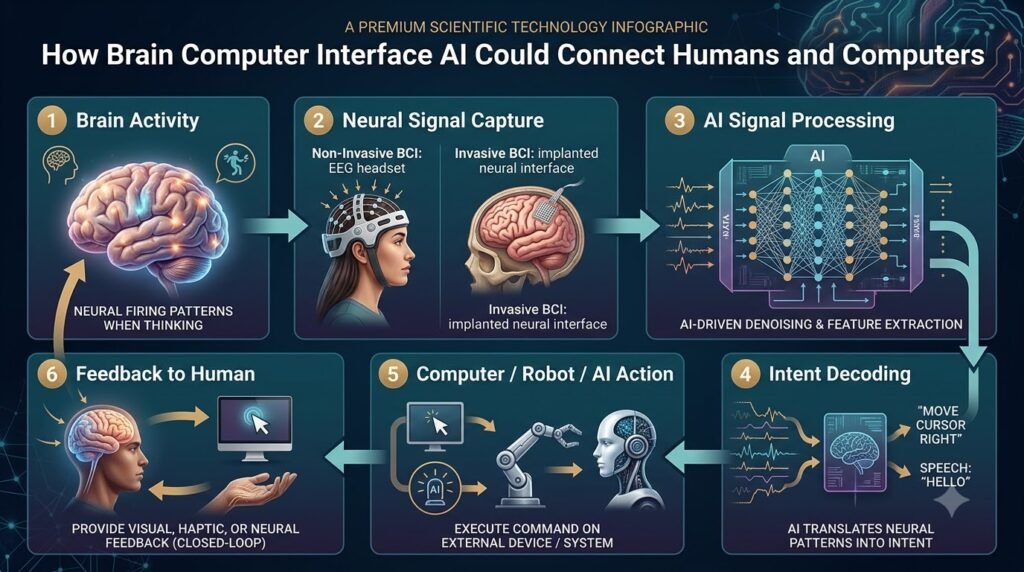
ಒಂದು simplified BCI workflow ಹೀಗಿರುತ್ತದೆ:
Step 1 — Brain Activity
ನಮ್ಮ brainನಲ್ಲಿ neurons electrical activity generate ಮಾಡುತ್ತವೆ.
Step 2 — Signal Capture
Sensors ಅಥವಾ implanted electrodes neural activity ಅನ್ನು record ಮಾಡುತ್ತವೆ.
Step 3 — Signal Processing
Raw signalನಲ್ಲಿ noise ಮತ್ತು irrelevant information ಇರುತ್ತದೆ.
System signal ಅನ್ನು clean ಮತ್ತು process ಮಾಡುತ್ತದೆ.
Step 4 — AI Decoding
Machine-learning model neural patterns ಮತ್ತು intended actions ನಡುವಿನ relationship learn ಮಾಡುತ್ತದೆ.
Step 5 — Command Generation
System decoded intention ಅನ್ನು:
- Text
- Cursor movement
- Robotic movement
- Computer command
ಆಗಿ convert ಮಾಡಬಹುದು.
Step 6 — Feedback
Userಗೆ result ಸಿಗುತ್ತದೆ.
ನಂತರ system ಮತ್ತು user ಇಬ್ಬರೂ ಈ interactionನಿಂದ adapt ಆಗಬಹುದು.
ಈ last step future Brain Computer Interface AI systemsಗೆ particularly important.
In a practical Brain Computer Interface, each stage must work accurately for the final command to be reliable.
Why Is AI Important for BCI?
Brain signals simple on/off commands ಅಲ್ಲ.
ಒಬ್ಬ person “move cursor left” ಎಂದು internally intend ಮಾಡಿದಾಗ brainನಲ್ಲಿ huge amount of neural activity ನಡೆಯುತ್ತದೆ.
BCIಗೆ challenge:
Which part of this signal represents the user’s actual intention?
ಇದನ್ನು manually decode ಮಾಡುವುದು extremely difficult.
AI models ಇಲ್ಲಿ useful.
AI:
- Neural patterns identify ಮಾಡಬಹುದು
- Noise filter ಮಾಡಲು assist ಮಾಡಬಹುದು
- User-specific patterns learn ಮಾಡಬಹುದು
- Predictions continuously update ಮಾಡಬಹುದು
- Different brain states distinguish ಮಾಡಲು help ಮಾಡಬಹುದು
2026ರ Nature Communications researchನಲ್ಲಿ adaptive machine learning ಅನ್ನು human motor learning ಜೊತೆ combine ಮಾಡಿ BCI training improve ಮಾಡುವ approach demonstrate ಮಾಡಲಾಗಿದೆ.
ಅಂದರೆ future BCI simply brain → computer system ಆಗಿರದೆ:
Brain + AI + Adaptive Learning
system ಆಗಬಹುದು.
AI makes a Brain Computer Interface more adaptable by learning patterns that may differ from one user to another.
Invasive vs Non-Invasive BCI
BCI technology broadly different signal-acquisition approaches ಹೊಂದಿದೆ.
Non-Invasive BCI
ಇಲ್ಲಿ sensors body ಹೊರಗಡೆಯೇ ಇರುತ್ತವೆ.
Common example:
EEG — Electroencephalography
Headset ಅಥವಾ electrodes ಮೂಲಕ brain electrical activity measure ಮಾಡಲಾಗುತ್ತದೆ.
Advantages
- No brain surgery
- Easier deployment
- Potentially lower medical risk
- More accessible for research
Limitations
- Signal quality can be lower
- Noise ಹೆಚ್ಚು ಇರಬಹುದು
- Precise neural decoding difficult
- Calibration required
2026ರಲ್ಲಿ published research non-invasive BCI users training ಮತ್ತು control performance improve ಮಾಡುವ adaptive approaches explore ಮಾಡುತ್ತಿದೆ.
Invasive BCI
ಇಲ್ಲಿ electrodes ಅಥವಾ neural interfaces brain tissueಗೆ closer ಅಥವಾ directly connected ಆಗಿರುತ್ತವೆ.
ಇದರ major advantage:
Higher-quality neural signal access
Potentially more precise control ಸಾಧ್ಯವಾಗಬಹುದು.
Recent Nature Medicine researchನಲ್ಲಿ an intracortical BCI was used for independent, near-daily speech and cursor control by a person with paralysis.
ಆದರೆ invasive systemsಗೆ:
- Surgery
- Medical risk
- Long-term reliability
- Device maintenance
- Regulatory approval
ಮುಂತಾದ serious challenges ಇವೆ.
ಆದ್ದರಿಂದ invasive BCI ಅನ್ನು consumer gadget ಎಂದು present ಮಾಡುವುದು ತಪ್ಪು.
The choice between invasive and non-invasive approaches is one of the most important design decisions in a Brain Computer Interface system.
What Can BCI Control Today?
BCI research already demonstrates several practical directions.
Communication
People with severe paralysisಗೆ BCI speech ಅಥವಾ text communication restore ಮಾಡಲು help ಮಾಡಬಹುದು.
Computer Cursor
Neural signals ಬಳಸಿ computer cursor control ಮಾಡುವ systems researchನಲ್ಲಿ demonstrated ಆಗಿವೆ.
Robotic Devices
BCI robotic arms ಅಥವಾ other robotic systemsಗೆ commands ನೀಡಲು ಬಳಸಬಹುದು. Recent research natural movement ಜೊತೆ robotic limb control combine ಮಾಡುವ possibilities explore ಮಾಡುತ್ತಿದೆ.
Rehabilitation
BCI-based systems motor rehabilitation ಮತ್ತು neural trainingನಲ್ಲಿ research ಆಗುತ್ತಿವೆ.
Nature Medicine — Long-term independent use of an intracortical brain-computer interface
AI + BCI: The Next Step
Traditional BCI:
Brain Signal
↓
Decoder
↓
Command
Future AI-enhanced BCI:
Brain Signal
↓
AI Signal Processing
↓
Intent Prediction
↓
Context Understanding
↓
AI Assistant
↓
Action
ಇದು major difference.
Imagine ನೀವು computerನಲ್ಲಿ:
“Open my presentation.”
ಎಂದು physically type ಮಾಡಬೇಕಾಗಿಲ್ಲ.
Future systemನಲ್ಲಿ neural activity + contextual AI potentially combine ಆಗಿ user’s intended action infer ಮಾಡಲು assist ಮಾಡಬಹುದು.
ಆದರೆ ಇದು future possibility, current mainstream capability ಅಲ್ಲ.
AI agents context ಮತ್ತು user intent ಆಧರಿಸಿ tasks ಹೇಗೆ perform ಮಾಡುತ್ತವೆ ಎಂಬುದನ್ನು ತಿಳಿಯಲು How AI Agents Work guide ಓದಿ.
Anchor: How AI Agents Work
Could BCI Let Humans Talk to AI Without Typing?
Conceptually, yes — but this needs careful explanation.
BCI research increasingly explores neural decoding for speech and communication. A 2026 systematic review specifically examined the integration of large language models with BCIs for communication and control.
Imagine:
Brain Activity
↓
BCI
↓
AI Decoder
↓
Language Model
↓
Response
ಇಲ್ಲಿ AI language model decoded intention ಅನ್ನು understand ಮಾಡಿ useful response generate ಮಾಡಬಹುದು.
For example, a user could potentially intend:
“Search for today’s meeting notes.”
BCI signal → decoded intention → AI assistant → search result.
ಆದರೆ direct thought reading ಎಂದು ಇದನ್ನು describe ಮಾಡುವುದು scientifically misleading.
A future Brain Computer Interface could potentially provide an additional communication channel between a user and an AI assistant.
Current BCI systems generally decode specific trained neural patterns or intended actions; they do not provide unrestricted access to a person’s complete thoughts.
PubMed — Large language models integrated into brain-computer interfaces
Current Reality vs Future Vision
ಈ distinction articleನಲ್ಲಿ very important.
Current BCI
Already being researched and demonstrated for:
- Communication
- Cursor control
- Assistive technology
- Rehabilitation
- Robotic control
Future BCI + AI
Potential applications:
- Hands-free AI assistants
- Faster human-computer interaction
- Adaptive digital interfaces
- Advanced prosthetics
- AI-assisted communication
- More natural control of robots
ಇವುಗಳಲ್ಲಿ ಕೆಲವು active research directions; consumer-level mind-controlled AI assistants ಇನ್ನೂ established mainstream technology ಅಲ್ಲ.
How AI Decodes Brain Signals
Human brain activity ಬಹಳ complex.
ಒಬ್ಬ ವ್ಯಕ್ತಿ cursor ಅನ್ನು left ಕಡೆ move ಮಾಡಲು intention ಮಾಡಬಹುದು. ಆದರೆ brainನಲ್ಲಿ ಅದಕ್ಕೆ ಸಂಬಂಧಿಸಿದ activity ಒಂದು simple electrical signal ಆಗಿರುವುದಿಲ್ಲ.
Multiple neurons ಮತ್ತು brain regions activity change ಆಗಬಹುದು.
BCI system ಈ raw signals ಅನ್ನು directly understand ಮಾಡುವುದಿಲ್ಲ.
Instead, process ಸಾಮಾನ್ಯವಾಗಿ:
Neural Activity
↓
Signal Processing
↓
Feature Extraction
↓
Machine Learning Model
↓
Intent Prediction
↓
Device Command
ಈ workflowನಲ್ಲಿ AI ಅಥವಾ machine-learning model repeatedly observed neural patterns ಮತ್ತು user’s intended action ನಡುವಿನ relationship learn ಮಾಡುತ್ತದೆ.
BCI Needs Personalisation
ಒಬ್ಬ ವ್ಯಕ್ತಿಯ brain signal pattern ಮತ್ತೊಬ್ಬ ವ್ಯಕ್ತಿಯ patternನಂತೆಯೇ ಇರಬೇಕೆಂದಿಲ್ಲ.
ಅದಕ್ಕಾಗಿ BCI system ಸಾಮಾನ್ಯವಾಗಿ user-specific calibration ಅಗತ್ಯಪಡಿಸಬಹುದು.
ಉದಾಹರಣೆಗೆ:
User repeatedly thinks about moving a cursor right.
↓
System records neural activity.
↓
AI identifies recurring pattern.
↓
User repeats the task.
↓
Model improves its prediction.
ಇದು ಒಂದು kind of human-machine learning loop.
2026ರ researchನಲ್ಲಿ adaptive machine learning ಮತ್ತು human motor learning ಅನ್ನು combine ಮಾಡುವ approach BCI training performance improve ಮಾಡಲು ಬಳಸಲಾಗಿದೆ.
What Is Adaptive BCI?
Traditional systemನಲ್ಲಿ model once trained ಆದ ನಂತರ fixed ಆಗಿರಬಹುದು.
ಆದರೆ brain activity time ಜೊತೆಗೆ change ಆಗಬಹುದು.
User:
- Tired ಆಗಿರಬಹುದು
- Different environmentನಲ್ಲಿ ಇರಬಹುದು
- Sensor position change ಆಗಬಹುದು
- Neural activity pattern evolve ಆಗಬಹುದು
ಅದರಿಂದ decoder continuously adapt ಆಗುವುದು useful.
Traditional BCI
Train → Use
Adaptive BCI
Train → Use → Learn → Update → Use Again
ಈ adaptive approach future Brain Computer Interface AI systemsಗೆ major capability ಆಗಬಹುದು.
BCI for Communication
BCI technologyಯ ಅತ್ಯಂತ meaningful applicationsಗಳಲ್ಲಿ communication ಒಂದು.
Severe paralysis ಅಥವಾ speech limitations ಇರುವ ವ್ಯಕ್ತಿಗೆ normal keyboard ಅಥವಾ speech-based communication difficult ಆಗಬಹುದು.
BCI neural activity decode ಮಾಡಿ intended communication ಅನ್ನು:
Text
ಅಥವಾ
Synthetic Speech
ಆಗಿ convert ಮಾಡಲು assist ಮಾಡಬಹುದು.
Recent researchನಲ್ಲಿ an intracortical BCI was used for near-daily speech and cursor control by a person with paralysis in a home environment.
ಇದು BCI technologyಯ real-world potentialಗೆ important example.
AI Can Make Communication More Natural
Traditional neural decoding:
Brain Signal
↓
Decoded Words
↓
Speech
AI-enhanced system:
Brain Signal
↓
Intent Decoding
↓
Language Model
↓
Context-Aware Sentence
↓
Speech / Text
This could make a Brain Computer Interface more useful for people who cannot communicate effectively through conventional interfaces.
ಇಲ್ಲಿ language model decoded information ಅನ್ನು contextually organise ಮಾಡಲು assist ಮಾಡಬಹುದು.
For example, if the neural decoder identifies only partial intended speech, an AI language model could potentially help predict the most likely linguistic sequence.
ಆದರೆ ಇಲ್ಲಿ ಒಂದು critical distinction ಇದೆ:
Predicting intended language is not the same as reading unrestricted thoughts.
AI system trained signals ಮತ್ತು available context ಆಧರಿಸಿ inference ಮಾಡುತ್ತದೆ.
BCI and Large Language Models
Large Language Models ಅಥವಾ LLMs BCI systemsಗೆ another layer of intelligence add ಮಾಡಬಹುದು.
ಒಂದು simplified architecture:
Brain
↓
BCI Sensors
↓
Neural Decoder
↓
LLM
↓
AI Assistant
↓
Computer / Robot / Speech
LLM:
- Language completion
- Context understanding
- Command interpretation
- Response generation
ಮುಂತಾದ tasksನಲ್ಲಿ assist ಮಾಡಬಹುದು.
2026ರ review research LLMs ಮತ್ತು BCIs ನಡುವಿನ integration ಅನ್ನು communication ಮತ್ತು control applicationsಗಾಗಿ examine ಮಾಡಿದೆ.
ಆದರೆ this field ಇನ್ನೂ rapidly evolving research area.
Could BCI Control a Robot?
Yes, this is one of the most interesting research directions.
Imagine:
User Intention
↓
BCI
↓
AI Decoder
↓
Robot Control
↓
Robot Movement
User ಕೈಯನ್ನು physically move ಮಾಡದೇ robotic systemಗೆ intended movement communicate ಮಾಡಬಹುದು.
Research has explored BCI-based robotic control and more natural movement interaction.
Potential applications include:
- Assistive robotic arms
- Prosthetic devices
- Wheelchair control
- Rehabilitation systems
- Remote robotic interfaces
ಇಲ್ಲಿ AI neural signals decode ಮಾಡುವ ಜೊತೆಗೆ movement prediction ಮತ್ತು control optimisationಲ್ಲೂ assist ಮಾಡಬಹುದು.
BCI and Prosthetic Limbs
Future Brain Computer Interface AI technology advanced prostheticsನಲ್ಲಿ major role play ಮಾಡಬಹುದು.
Traditional prosthetic:
Muscle / Physical Control
↓
Prosthetic Movement
Advanced BCI:
Brain Intention
↓
Neural Decoder
↓
AI Control
↓
Prosthetic Movement
Imagine a person intending:
“Move my hand.”
System neural activity detect ಮಾಡುತ್ತದೆ ಮತ್ತು prosthetic device appropriate movement execute ಮಾಡುತ್ತದೆ.
Future systemsನಲ್ಲಿ sensory feedback ಕೂಡ important ಆಗಬಹುದು.
ಅಂದರೆ:
Brain → Prosthetic
ಮಾತ್ರವಲ್ಲ.
Brain ↔ Prosthetic
ಎಂಬ two-way communication ಸಾಧ್ಯವಾಗಬಹುದು.
BCI and Rehabilitation
BCI research rehabilitation ಕ್ಷೇತ್ರದಲ್ಲೂ interesting possibilities create ಮಾಡುತ್ತಿದೆ.
Stroke ಅಥವಾ neurological injury ನಂತರ movement recoveryಗೆ neural feedback systems explore ಮಾಡಲಾಗುತ್ತಿದೆ.
ಒಂದು simplified rehabilitation loop:
Brain Intention
↓
BCI Detects Signal
↓
AI Decodes Intent
↓
Device Responds
↓
Brain Receives Feedback
↓
Training Repeats
Repeated feedback brain ಮತ್ತು machine ನಡುವೆ stronger coordination develop ಮಾಡಲು assist ಮಾಡಬಹುದು.
ಇದು neuroplasticity research ಜೊತೆ ಕೂಡ closely connected ಆಗಿದೆ.
Non-Invasive BCI: The Consumer-Friendly Direction
Non-invasive BCIನಲ್ಲಿ EEG headsets ಮುಂತಾದ sensors ಬಳಸಬಹುದು.
ಇದರ biggest advantage:
No brain surgery
ಆದರೆ signal quality invasive systemsಗಿಂತ lower ಆಗಿರಬಹುದು.
EEG signals:
- Noisy ಆಗಬಹುದು
- Muscle movement influence ಆಗಬಹುದು
- Eye movement interfere ಮಾಡಬಹುದು
- Sensor placement sensitive ಆಗಿರಬಹುದು
ಇಲ್ಲಿ AI signal processing particularly useful.
AI model noise ಮತ್ತು useful neural patterns ನಡುವಿನ difference identify ಮಾಡಲು assist ಮಾಡಬಹುದು.
Could We Use BCI With Smartphones?
Futureನಲ್ಲಿ possibility ಇದೆ.
Imagine:
Brain
↓
BCI Headset
↓
AI Decoder
↓
Smartphone
↓
AI Assistant
Instead of typing every command, users could potentially interact with selected functions through neural intent.
Potential examples:
- Select an item
- Move a cursor
- Control accessibility features
- Generate short commands
- Interact with assistive applications
ಆದರೆ mainstream smartphone mind control ಇನ್ನೂ reality ಅಲ್ಲ.
Current technology specific trained tasks ಮತ್ತು controlled conditionsನಲ್ಲಿ ಹೆಚ್ಚು realistic.
BCI + AI Assistants
Futureನಲ್ಲಿ BCI ಮತ್ತು AI assistant combination particularly interesting ಆಗಬಹುದು.
Traditional AI assistant:
Voice / Text
↓
AI
↓
Response
Future BCI-assisted interface:
Neural Intent
↓
BCI
↓
AI Assistant
↓
Action / Response
ಇದರಿಂದ speech ಅಥವಾ typing ಸಾಧ್ಯವಾಗದ usersಗೆ alternative interaction layer ಸಿಗಬಹುದು.
Accessibility perspectiveನಲ್ಲಿ ಇದು particularly important.
The Biggest Challenge: Accuracy
BCIನಲ್ಲಿ one wrong prediction problem ಆಗಬಹುದು.
Imagine user intends:
“Move left.”
System interprets:
“Move right.”
ಇದು simple UI error ಆಗಿರಬಹುದು.
ಆದರೆ robotic arm ಅಥವಾ medical deviceನಲ್ಲಿ wrong command serious consequences create ಮಾಡಬಹುದು.
ಅದಕ್ಕಾಗಿ high accuracy ಮಾತ್ರವಲ್ಲ:
Confidence Estimation
Error Detection
Human Override
Safety Limits
ಮುಂತಾದ features important.
AI system uncertain ಆಗಿದ್ದರೆ:
“I am not confident about this command.”
ಎಂದು action pause ಮಾಡುವ design ಹೆಚ್ಚು safe ಆಗಬಹುದು.
Privacy: Can BCI Read Your Thoughts?
ಇದು BCI ಬಗ್ಗೆ biggest concernsಗಳಲ್ಲಿ ಒಂದು.
Short answer:
Current BCI technology cannot simply read everything inside someone’s mind.
Modern systems generally specific tasks ಅಥವಾ trained neural patterns decode ಮಾಡಲು designed.
ಆದರೆ BCI technology ಹೆಚ್ಚು capable ಆಗುತ್ತಾ ಹೋದಂತೆ neural data privacy important ಆಗುತ್ತದೆ.
Brain data potentially extremely sensitive.
Future regulations ಮತ್ತು systems need to consider:
- Who owns neural data?
- Who can access it?
- Can it be stored?
- Can it be sold?
- Can AI models train on it?
- Can users delete it?
- Can employers request it?
ಇವು future Brain Computer Interface AI ecosystemನಲ್ಲಿ major ethical questions ಆಗಬಹುದು.
Security Risks
BCI connected to AI systems ಎಂದರೆ cybersecurity ಕೂಡ important.
Imagine BCI:
Brain
↓
AI System
↓
Internet
↓
Cloud
↓
External Device
ಈ chainನಲ್ಲಿ multiple attack surfaces ಇರಬಹುದು.
Potential concerns:
- Neural data theft
- Device manipulation
- Unauthorized access
- Model attacks
- Malicious commands
- Identity spoofing
ಅದಕ್ಕಾಗಿ future BCI systemsಗೆ strong authentication ಮತ್ತು security-by-design essential.
Human-AI Interaction Could Become More Natural
Today ನಾವು computersಗೆ communicate ಮಾಡಲು:
Keyboard
Mouse
Touch
Voice
ಮುಂತಾದ interfaces ಬಳಸುತ್ತೇವೆ.
BCI ಒಂದು new interface layer introduce ಮಾಡಬಹುದು:
Neural Intent
Futureನಲ್ಲಿ interaction progression ಹೀಗಿರಬಹುದು:
Keyboard → Touch → Voice → Neural Interface
ಆದರೆ ಇದು keyboard ಅಥವಾ voice completely disappear ಆಗುತ್ತದೆ ಎಂದಲ್ಲ.
Instead, different interfaces different situationsನಲ್ಲಿ useful ಆಗಬಹುದು.
What Could BCI + AI Look Like in 2030?
2030 prediction ಅನ್ನು fact ಆಗಿ ಹೇಳಲು ಸಾಧ್ಯವಿಲ್ಲ. But if current research directions continue, a possible future scenario could be:
Step 1
User wears a lightweight neural interface.
Step 2
AI continuously interprets selected neural patterns.
Step 3
User chooses an AI assistant through intentional commands.
Step 4
AI handles a digital task.
Step 5
User receives visual, audio or potentially sensory feedback.
Step 6
System adapts to the user’s changing neural patterns.
ಈ ರೀತಿಯ adaptive human-AI interface future researchನಲ್ಲಿ major direction ಆಗಬಹುದು.
What BCI Probably Will Not Become Soon
Some popular science-fiction ideas need caution.
“AI can read every thought.”
Not supported by current mainstream BCI capability.
“Everyone will control computers with thoughts soon.”
Too early to claim.
“BCI will replace keyboards.”
No evidence that this will happen universally.
“AI can access your memories directly.”
Current consumer BCI technology does not provide unrestricted access to personal memories.
Real progress ಹೆಚ್ಚು likely ಆಗುವುದು:
Specific Intent → Specific Action
ಮಾದರಿಯಲ್ಲಿ.
The Future Is More Likely Hybrid
Future computer interaction probably one interface ಮೇಲೆ depend ಆಗುವುದಿಲ್ಲ.
Instead:
Voice
Touch
Keyboard
Vision
BCI
AI
ಒಟ್ಟಿಗೆ work ಮಾಡಬಹುದು.
For example:
User thinks:
Select this document.
↓
BCI detects intent.
User says:
Summarize it.
↓
Voice provides explicit command.
AI processes the document.
↓
AI responds through screen or voice.
ಇದು multimodal human-AI interaction ಆಗಬಹುದು.
How BCI Could Change Human-AI Interaction
ಇಂದು AI ಜೊತೆ interact ಮಾಡಲು ನಾವು mainly:
- Keyboard
- Mouse
- Touchscreen
- Voice
- Camera
ಮುಂತಾದ interfaces ಬಳಸುತ್ತೇವೆ.
Futureನಲ್ಲಿ Brain Computer Interface ಮತ್ತೊಂದು interaction layer ಆಗಬಹುದು.
ಒಂದು possible workflow:
Human Intention
↓
BCI
↓
AI Decoder
↓
AI Assistant
↓
Digital Action
Imagine ನೀವು presentation open ಮಾಡಬೇಕು ಎಂದು intend ಮಾಡುತ್ತೀರಿ.
Future BCI system ನಿಮ್ಮ trained neural pattern ಅನ್ನು identify ಮಾಡಿ AI assistantಗೆ command ನೀಡಬಹುದು.
AI ನಂತರ:
Search → Open → Summarise → Present
ಮುಂತಾದ digital tasks perform ಮಾಡಬಹುದು.
ಆದರೆ ಇದು current mainstream capability ಅಲ್ಲ. ಇದು ongoing research direction.
Accessibility Could Be the Biggest Opportunity
BCI technologyಯ most meaningful application perhaps entertainment ಅಲ್ಲ — accessibility.
Hands ಅಥವಾ speech ಬಳಸಲು ಕಷ್ಟವಾಗುವ individualsಗೆ alternative communication channel ನೀಡುವುದು BCIಯ powerful use case.
Potential applications:
- Computer cursor control
- Text communication
- Speech synthesis
- Robotic assistance
- Wheelchair interfaces
- Prosthetic control
- Rehabilitation
Recent research already demonstrates BCI-based speech and cursor control in real-world settings for people with paralysis.
ಇದರಿಂದ BCI technologyಯ future impact ಅನ್ನು simply “mind-controlled computer” ಎಂದು describe ಮಾಡುವುದಕ್ಕಿಂತ assistive human-computer interface ಎಂದು ನೋಡುವುದು ಹೆಚ್ಚು accurate.
Could BCI Help People With Disabilities?
Yes, this is one of the strongest research directions.
ಒಬ್ಬ ವ್ಯಕ್ತಿಗೆ conventional computer interface ಬಳಸಲು ಸಾಧ್ಯವಾಗದಿದ್ದರೆ BCI alternative pathway ಆಗಬಹುದು.
For example:
Brain Intention
→ BCI
→ AI Decoder
→ Text
→ Speech
ಒಬ್ಬ user physically speak ಮಾಡಲಾಗದಿದ್ದರೂ neural activity ಮೂಲಕ intended communication decode ಆಗಿ synthetic speech output ಆಗುವ possibility ಇದೆ.
2026ರ clinical researchನಲ್ಲಿ near-daily speech and cursor control demonstrate ಆಗಿರುವುದು ಈ directionಗೆ important milestone.
BCI and AI Could Create Personalised Interfaces
ಪ್ರತಿಯೊಬ್ಬರ brain activity identical ಆಗಿರುವುದಿಲ್ಲ.
ಆದ್ದರಿಂದ future BCI systems:
Generic Interface
ನಿಂದ
Personalised Neural Interface
ಕಡೆಗೆ move ಆಗಬಹುದು.
AI userನ neural patterns observe ಮಾಡಿ:
- Preferred commands
- Signal characteristics
- Error patterns
- Response timing
- Changing neural states
ಮುಂತಾದ information ಆಧರಿಸಿ decoder adapt ಮಾಡಬಹುದು.
ಅಂದರೆ system userಗೆ adapt ಆಗುತ್ತದೆ.
User ಪ್ರತಿಬಾರಿಯೂ systemಗೆ manually adapt ಆಗಬೇಕಾಗಿಲ್ಲ.
The Human-Machine Learning Loop
Future BCI systemsನಲ್ಲಿ interesting concept:
Human learns the machine, and the machine learns the human.
Workflow:
User attempts action
↓
BCI records neural pattern
↓
AI predicts intention
↓
Device responds
↓
User receives feedback
↓
AI updates model
↓
User improves control
ಇದು continuous learning loop ಆಗಬಹುದು.
ಈ type of adaptive interaction BCI performance improve ಮಾಡುವ researchನಲ್ಲಿ already being explored.
BCI Could Make AI Assistants More Accessible
Voice assistants already allow hands-free interaction.
ಆದರೆ voice use ಮಾಡಲು ಸಾಧ್ಯವಿಲ್ಲದ situations ಇವೆ.
For example:
- Noisy environments
- Physical disabilities
- Speech impairments
- Silent environments
- Certain medical conditions
BCI futureನಲ್ಲಿ alternative communication channel ಆಗಬಹುದು.
Potential architecture:
BCI
↓
Intent
↓
AI Assistant
↓
Text / Voice / Action
ಇದರಿಂದ AI accessibility ಇನ್ನಷ್ಟು expand ಆಗಬಹುದು.
But BCI Has Major Limitations
Technology promising ಆಗಿದ್ದರೂ Brain Computer Interface ಇನ್ನೂ early-stage field.
1. Signal Noise
Brain signals noisy ಆಗಿರಬಹುದು.
EEG-based systemsನಲ್ಲಿ external electrical interference ಮತ್ತು body movements ಕೂಡ signal quality affect ಮಾಡಬಹುದು.
2. Calibration
Many systems user-specific training ಅಗತ್ಯಪಡಿಸುತ್ತವೆ.
ಒಬ್ಬ ಹೊಸ user system ಬಳಸಲು initial calibration time ಬೇಕಾಗಬಹುದು.
3. Accuracy
Every neural signal perfectly decode ಆಗುವುದಿಲ್ಲ.
Wrong prediction serious problem ಆಗಬಹುದು, especially robotic or medical applicationsನಲ್ಲಿ.
4. Hardware
High-performance BCI systems expensive, specialised ಅಥವಾ medically complex ಆಗಿರಬಹುದು.
5. Comfort
Headsets, sensors ಅಥವಾ implanted devices long-term useನಲ್ಲಿ comfort ಮತ್ತು maintenance issues create ಮಾಡಬಹುದು.
Invasive BCI Has Additional Challenges
Implanted BCI systems high-quality neural signals provide ಮಾಡುವ potential ಹೊಂದಿವೆ.
ಆದರೆ brain surgery itself major consideration.
Challenges include:
- Surgical risk
- Infection
- Long-term stability
- Hardware reliability
- Maintenance
- Medical supervision
- Regulatory approval
ಆದ್ದರಿಂದ invasive BCI ಅನ್ನು normal consumer electronics categoryಗೆ compare ಮಾಡುವುದು currently appropriate ಅಲ್ಲ.
Privacy Could Become a Bigger Issue
ನಾವು online data ಬಗ್ಗೆ privacy concerns already ಹೊಂದಿದ್ದೇವೆ.
Futureನಲ್ಲಿ:
Personal Data
↓
Voice Data
↓
Biometric Data
↓
Neural Data
ಎಂಬ progression imagine ಮಾಡಬಹುದು.
Neural data particularly sensitive ಆಗಬಹುದು.
Future BCI ecosystemನಲ್ಲಿ important questions:
Who owns neural data?
Userನಾ?
Companyನಾ?
Healthcare providerನಾ?
Who can access it?
How long can it be stored?
Can it be used to train AI models?
Can users delete their data?
Can companies share it?
ಈ questionsಗೆ strong privacy frameworks ಬೇಕಾಗಬಹುದು.
Can Neural Data Be Hacked?
Any connected digital system cybersecurity risks ಹೊಂದಿರುತ್ತದೆ.
BCI connected ecosystemನಲ್ಲಿ potential attack surface:
Neural Sensors
↓
Decoder
↓
AI Software
↓
Cloud / Computer
↓
External Device
Security failure ಆಗಿದ್ದರೆ data privacy ಮಾತ್ರವಲ್ಲ, device control ಕೂಡ concern ಆಗಬಹುದು.
Future BCI systemsನಲ್ಲಿ:
- Encryption
- Authentication
- Secure firmware
- Access controls
- Human override
- Fail-safe mechanisms
ಮುಂತಾದ security measures important ಆಗಬಹುದು.
The Ethics of Brain-Computer Interface AI
Technology capability ಹೆಚ್ಚಾದಂತೆ ethical questions ಕೂಡ increase ಆಗುತ್ತವೆ.
Consent
Neural data collect ಮಾಡುವ ಮೊದಲು informed consent ಅಗತ್ಯ.
Autonomy
AI user intention ಅನ್ನು interpret ಮಾಡುತ್ತಿದ್ದರೆ final control ಯಾರದು?
Transparency
AI ಒಂದು neural signal ಅನ್ನು command ಎಂದು classify ಮಾಡಿದಾಗ userಗೆ explanation ಸಿಗಬೇಕೇ?
Ownership
Neural data ಯಾರ property?
Equality
Advanced BCI systems expensive ಆಗಿದ್ದರೆ technology access rich usersಗೆ ಮಾತ್ರ ಸೀಮಿತವಾಗಬಹುದೇ?
Employment
Futureನಲ್ಲಿ employers neural interfaces ಬಳಸಲು employeesಗೆ ಕೇಳಬಹುದೇ?
ಇವು technology ಮಾತ್ರ solve ಮಾಡಬಹುದಾದ questions ಅಲ್ಲ.
Policy, law, medicine, ethics ಮತ್ತು technology together address ಮಾಡಬೇಕಾಗುತ್ತದೆ.
Could BCI Become a Consumer Technology?
Possibility ಇದೆ, ಆದರೆ timeline uncertain.
Consumer adoptionಗೆ BCI:
- Safe
- Comfortable
- Affordable
- Accurate
- Easy to use
- Privacy-preserving
ಆಗಬೇಕು.
ಒಂದು headset wear ಮಾಡುವುದು easy ಆಗಿದ್ದರೂ userಗೆ ಪ್ರತಿದಿನ 30-minute calibration ಬೇಕಾದರೆ mainstream adoption difficult.
ಅದಕ್ಕಾಗಿ future BCI successಗೆ user experience ಕೂಡ neural decoding qualityಷ್ಟೇ important.
What Could the Future BCI Ecosystem Look Like?
ಒಂದು possible future ecosystem:
Layer 1 — Neural Interface
Brain activity capture ಮಾಡುತ್ತದೆ.
Layer 2 — AI Decoder
Neural signals ಅನ್ನು intentionಗೆ translate ಮಾಡುತ್ತದೆ.
Layer 3 — Personal AI
User context ಮತ್ತು preferences understand ಮಾಡುತ್ತದೆ.
Layer 4 — Digital Systems
Computer, phone, software ಅಥವಾ cloud services ಜೊತೆ interact ಮಾಡುತ್ತದೆ.
Layer 5 — Physical Devices
Robots, prosthetics ಅಥವಾ assistive machinesಗೆ commands ನೀಡಬಹುದು.
ಇದು futureನಲ್ಲಿ:
Brain → AI → Digital World → Physical World
ಎಂಬ continuous interaction model create ಮಾಡಬಹುದು.
BCI + AI + Robotics
ಈ combination particularly powerful ಆಗಬಹುದು.
Imagine:
Human
↓
Brain Signal
↓
BCI
↓
AI
↓
Robot
↓
Physical Action
User intention ಮತ್ತು robot capability ನಡುವೆ AI translation layer ಆಗಿ work ಮಾಡಬಹುದು.
For example, raw neural signal ಅನ್ನು direct motor command ಆಗಿ ಬಳಸುವುದಕ್ಕಿಂತ AI system task-level intent understand ಮಾಡಿ robotಗೆ appropriate movement plan ಮಾಡಬಹುದು.
ಇದು future robotics researchನಲ್ಲಿ interesting direction.
BCI + AI + Education
Future educational applications ಕೂಡ imagine ಮಾಡಬಹುದು, although these remain speculative.
AI system learnerನ:
- Attention patterns
- Interaction
- Response signals
ಮುಂತಾದ information use ಮಾಡಿ adaptive interfaces develop ಮಾಡಬಹುದು.
ಆದರೆ ಇಲ್ಲಿ privacy ಮತ್ತು ethical concerns ಇನ್ನಷ್ಟು serious.
Student neural data collect ಮಾಡುವುದು high-risk area ಆಗಬಹುದು.
ಆದ್ದರಿಂದ educationನಲ್ಲಿ BCI adoptionಗೆ strong safeguards ಅಗತ್ಯ.
BCI and the Future of Work
Future workplacesನಲ್ಲಿ BCI potentially:
- Hands-free computer interaction
- Accessibility
- Assistive robotics
- Specialised professional interfaces
ಮುಂತಾದ applications support ಮಾಡಬಹುದು.
ಆದರೆ BCI ಅನ್ನು employee productivity measurement tool ಆಗಿ ಬಳಸುವುದು major ethical concern ಆಗಬಹುದು.
Neural data should not automatically become workplace surveillance data.
Will BCI Replace Keyboard and Mouse?
Most likely not in the near term.
Keyboard:
- Reliable
- Cheap
- Fast
- Precise
Mouse:
- Simple
- Familiar
- Accurate
Voice:
- Natural
- Hands-free
BCI:
- Potentially hands-free
- Potentially useful for accessibility
- Still technically challenging
ಹೀಗಾಗಿ future likely:
Keyboard + Mouse + Touch + Voice + BCI
rather than:
BCI replaces everything.
What Is the Most Realistic Future?
Science fictionನಲ್ಲಿ:
“Think anything and AI instantly understands your complete thoughts.”
Realistic research direction ಹೆಚ್ಚು narrow.
More likely:
Train the system to recognise specific neural patterns associated with specific intentions.
Then AI can use those signals to perform selected tasks.
ಅಂದರೆ future BCI:
Unlimited Mind Reading
ಗಿಂತ
Reliable Intent Decoding
ಕಡೆಗೆ ಹೆಚ್ಚು likely.
Key Takeaways
- Brain Computer Interface brain activity ಮತ್ತು external devices ನಡುವೆ communication pathway create ಮಾಡುತ್ತದೆ.
- AI neural signals ಅನ್ನು decode ಮತ್ತು classify ಮಾಡಲು important role play ಮಾಡಬಹುದು.
- BCI already communication, cursor control, rehabilitation ಮತ್ತು robotic-control researchನಲ್ಲಿ demonstrate ಆಗುತ್ತಿದೆ.
- Accessibility BCIಯ most important potential applicationsಗಳಲ್ಲಿ ಒಂದು.
- Adaptive AI models user-specific neural patternsಗೆ continuously adjust ಆಗಬಹುದು.
- LLMs future BCI systemsನಲ್ಲಿ language interpretation ಮತ್ತು AI-assistant capabilities add ಮಾಡಬಹುದು.
- Invasive BCI potentially higher-quality signals ನೀಡಬಹುದು ಆದರೆ surgery ಮತ್ತು medical risks ಹೊಂದಿದೆ.
- Non-invasive BCI safer and easier to deploy ಆಗಬಹುದು, ಆದರೆ signal quality limitations ಇವೆ.
- Neural data privacy futureನಲ್ಲಿ major concern ಆಗಬಹುದು.
- BCI-connected systemsಗೆ cybersecurity and fail-safe mechanisms essential.
- BCI near-termನಲ್ಲಿ keyboard ಮತ್ತು mouse ಅನ್ನು completely replace ಮಾಡುವ ಸಾಧ್ಯತೆ ಕಡಿಮೆ.
- Future human-AI interaction ಬಹುಶಃ Voice + Touch + Keyboard + BCI + AI ಎಂಬ multimodal model ಆಗಿರಬಹುದು.
- Direct unrestricted mind reading current mainstream BCI capability ಅಲ್ಲ.
- The realistic future is likely specific neural intent → AI interpretation → digital or physical action.
Frequently Asked Questions
1. What is a Brain Computer Interface?
Brain Computer Interface, ಅಥವಾ BCI, brain activity ಅನ್ನು detect ಮಾಡಿ external computer, software ಅಥವಾ deviceಗೆ commands ಆಗಿ translate ಮಾಡಲು ಪ್ರಯತ್ನಿಸುವ technology.
2. How does AI help BCI?
AI ಮತ್ತು machine-learning models complex neural signalsನಲ್ಲಿ patterns identify ಮಾಡಿ user’s intended action ಅಥವಾ communication ಅನ್ನು predict ಮಾಡಲು assist ಮಾಡಬಹುದು.
3. Can BCI read human thoughts?
Not unrestricted thoughts.
Current BCI systems generally specific trained neural patterns ಅಥವಾ intended actions decode ಮಾಡುತ್ತವೆ. Complete private thoughts ಅನ್ನು simply read ಮಾಡುವ technology ಎಂದು current BCI ಅನ್ನು describe ಮಾಡುವುದು incorrect.
4. Can BCI control a computer?
Yes. Research systems cursor movement ಮತ್ತು other computer-control tasks demonstrate ಮಾಡಿವೆ.
5. Can BCI control a robotic arm?
Yes. BCI-based robotic control research already exists, particularly assistive and rehabilitation applicationsಗಳಲ್ಲಿ.
6. Is BCI safe?
Safety depends on the type.
Non-invasive systems surgery avoid ಮಾಡುತ್ತವೆ, while invasive systems brain implantation involve ಮಾಡುವುದರಿಂದ additional medical risks ಇರುತ್ತವೆ.
7. Can BCI help people with paralysis?
Yes. Communication ಮತ್ತು cursor control ಸೇರಿದಂತೆ assistive applications BCI researchನ ಪ್ರಮುಖ areas.
8. Can BCI work with ChatGPT-like AI?
Potentially, yes.
A BCI could provide decoded intent to an AI system, while a language model could help interpret or respond to that information. However, this remains an evolving research area rather than mainstream consumer technology.
9. Will BCI replace smartphones?
There is no evidence that BCI will completely replace smartphones. More realistically, BCI could become another interface for selected tasks.
10. When will consumer BCI become mainstream?
There is no reliable date. Mainstream adoption depends on major improvements in safety, accuracy, comfort, affordability, privacy and regulatory approval.
Final Verdict
Brain Computer Interface AI is one of the most fascinating directions in future human-computer interaction.
ಇದರ biggest potential simply computers ಅನ್ನು “mind-controlled” ಮಾಡುವುದು ಅಲ್ಲ.
Real opportunity is creating a new communication layer between human intention, AI and digital systems.
Today:
Human → Keyboard / Mouse / Voice → Computer
Futureನಲ್ಲಿ potentially:
Human Brain → BCI → AI → Computer / Robot
AI ಇಲ್ಲಿ important because brain signals complex ಮತ್ತು noisy ಆಗಿರಬಹುದು. Intelligent decoding systems individual usersನ neural patterns learn ಮಾಡಿ more accurate interaction ಮಾಡಲು assist ಮಾಡಬಹುದು.
ಆದರೆ technologyಯ limitations ಕೂಡ equally important.
BCI ಇನ್ನೂ early-stage technology. Invasive systems medical risks ಹೊಂದಿವೆ. Non-invasive systems signal-quality challenges ಹೊಂದಿವೆ. Neural data privacy, cybersecurity ಮತ್ತು ethical questions ಇನ್ನೂ fully solved ಆಗಿಲ್ಲ.
ಆದ್ದರಿಂದ Brain Computer Interface AI ಅನ್ನು hype ಮೂಲಕ ಮಾತ್ರ ನೋಡಬಾರದು.
ಇದು assistive technology, accessibility, rehabilitation ಮತ್ತು specialised human-AI interactionನಲ್ಲಿ genuine potential ಹೊಂದಿರುವ emerging field.
Conclusion
Human-computer interaction ವರ್ಷಗಳಿಂದ evolve ಆಗುತ್ತಿದೆ.
ಮೊದಲು keyboard.
ನಂತರ mouse.
ನಂತರ touchscreen.
ನಂತರ voice assistants.
ಈಗ AI systems increasingly understand language, images ಮತ್ತು context.
ಮುಂದಿನ major interface layer ಆಗಿ Brain Computer Interface technology develop ಆಗಬಹುದು.
ಒಂದು ದಿನ humans AI ಜೊತೆ interact ಮಾಡಲು every command type ಅಥವಾ speak ಮಾಡಬೇಕಾಗದ ಸಾಧ್ಯತೆ ಇದೆ. Neural signals ಅನ್ನು AI decode ಮಾಡಿ specific intentions ಅನ್ನು digital actionsಗೆ translate ಮಾಡಬಹುದು.
ಆದರೆ ಆ futureಗೆ ಹೋಗುವ ದಾರಿ ಇನ್ನೂ long.
BCI technologyಗೆ accuracy, safety, comfort, affordability, privacy ಮತ್ತು ethical safeguards improve ಆಗಬೇಕು.
ಅದರಲ್ಲೂ AI ಮತ್ತು BCI combination particularly powerful ಆಗಬಹುದು.
Brain signals provide the input.
AI provides the interpretation.
Computers and robots provide the action.
ಇದೇ combination futureನಲ್ಲಿ human-AI interaction ಅನ್ನು fundamentally change ಮಾಡುವ ಸಾಧ್ಯತೆ ಹೊಂದಿದೆ.
Call to Action
AI Discoveries, emerging technologies ಮತ್ತು future AI developments ಅನ್ನು simple Kannada + English hybrid languageನಲ್ಲಿ ತಿಳಿದುಕೊಳ್ಳಲು AI Kannada Tech ಜೊತೆ ಮುಂದುವರಿಯಿರಿ.