

India’s Agentic Payments Revolution: How AI Agents Could Start Making UPI Payments
Introduction
Agentic Payments India ಎಂಬ concept ಭಾರತದ digital payments ecosystemನಲ್ಲಿ ಒಂದು ಹೊಸ chapterಗೆ ದಾರಿ ಮಾಡಿಕೊಡಬಹುದು.
ಇಂದು ನಾವು UPI payment ಮಾಡಲು ಸಾಮಾನ್ಯವಾಗಿ app open → person/business select → amount enter → payment authorize ಮಾಡುತ್ತೇವೆ. ಆದರೆ futureನಲ್ಲಿ AI agent ನಮ್ಮ instruction ಮತ್ತು context ಅರ್ಥಮಾಡಿಕೊಂಡು payment workflowನಲ್ಲಿ ಕೆಲವು steps handle ಮಾಡುವ ಸಾಧ್ಯತೆ ಇದೆ.
ಉದಾಹರಣೆಗೆ, ನೀವು:
“ಪ್ರತಿ ತಿಂಗಳು ನನ್ನ electricity bill due ಆದಾಗ pay ಮಾಡಲು remind ಮಾಡಿ.”
ಎಂದು AI agentಗೆ ಹೇಳಬಹುದು.
ಅಥವಾ future agentic payment systemನಲ್ಲಿ:
“ನನ್ನ approved limit ಒಳಗೆ ಈ recurring bill ಅನ್ನು automatically handle ಮಾಡಿ.”
ಎಂಬಂತಹ instruction ನೀಡುವ ಸಾಧ್ಯತೆ ಇರಬಹುದು.
ಇದು simply “AI ಮೂಲಕ payment” ಅಲ್ಲ.
ಇಲ್ಲಿ ಮುಖ್ಯವಾದ concept:
AI Agent + User Permission + Payment System + Security + Transaction
ಇವುಗಳನ್ನು ಒಂದೇ workflowನಲ್ಲಿ connect ಮಾಡುವುದು.
ಭಾರತದಲ್ಲಿ UPI already massive digital-payment infrastructure ಆಗಿರುವುದರಿಂದ, AI agents ಮತ್ತು UPI ಒಂದಕ್ಕೊಂದು connect ಆಗುವ ಸಾಧ್ಯತೆ fintechನಲ್ಲಿ ಬಹಳ interesting development ಆಗಿದೆ.
Quick Summary
Agentic Payments India ಅಂದ್ರೆ AI agents ಬಳಸಿ payment-related tasks ಅನ್ನು ಹೆಚ್ಚು intelligent ಮತ್ತು automated ರೀತಿಯಲ್ಲಿ handle ಮಾಡುವ emerging concept.
ಮುಖ್ಯವಾಗಿ:
- AI agent user instruction ಅರ್ಥಮಾಡಿಕೊಳ್ಳಬಹುದು
- Payment-related information ಹುಡುಕಬಹುದು
- Approved conditions check ಮಾಡಬಹುದು
- Transaction workflow initiate ಮಾಡಲು ಸಹಾಯ ಮಾಡಬಹುದು
- User permissions ಮತ್ತು spending limits follow ಮಾಡಬಹುದು
- UPI ecosystem ಜೊತೆ integrate ಆಗುವ ಸಾಧ್ಯತೆ ಇದೆ
- Fraud ಮತ್ತು unauthorized payments ತಡೆಯಲು strong security ಅಗತ್ಯ
- Human control ಮತ್ತು user consent ಬಹಳ important
ಮುಖ್ಯ point:
AI agentಗೆ payment ಮಾಡುವ freedom ಕೊಡುವುದಕ್ಕಿಂತ, controlled permissions ಒಳಗೆ payment assistance ನೀಡುವುದು safer approach.
Agentic Payments India ಎಂದರೇನು?
ಸರಳವಾಗಿ ಹೇಳುವುದಾದರೆ, Agentic Payments India ಎಂದರೆ AI agents payment-related tasksನಲ್ಲಿ autonomous ಅಥವಾ semi-autonomous assistance ನೀಡುವ future-oriented payment model.
ಸಾಮಾನ್ಯ UPIನಲ್ಲಿ:
User → UPI App → Payment Details → Authentication → Transaction
Agentic payment workflowನಲ್ಲಿ:
User Goal → AI Agent → Context → Permission Check → Payment Workflow → User/Policy Authorization → Transaction
ಇಲ್ಲಿ AI agent userನ goal ಅರ್ಥಮಾಡಿಕೊಳ್ಳಬಹುದು.
ಆದರೆ AI agentಗೆ unlimited payment authority ಇರಬೇಕು ಎಂದರ್ಥ ಅಲ್ಲ.
ಉದಾಹರಣೆಗೆ:
Maximum Amount: ₹2,000
Approved Merchant: Electricity Provider
Frequency: Monthly
Condition: Bill Due
ಹೀಗೆ predefined rules ಇದ್ದರೆ agent ಹೆಚ್ಚು controlled ರೀತಿಯಲ್ಲಿ ಕೆಲಸ ಮಾಡಬಹುದು.
Indiaನಲ್ಲಿ Agentic Payments ಯಾಕೆ Important?
ಭಾರತ ಈಗಾಗಲೇ UPI ಮೂಲಕ highly digital payment ecosystem ನಿರ್ಮಿಸಿದೆ.
ಆದ್ದರಿಂದ ಮುಂದಿನ evolution ಕೇವಲ:
“How can we make digital payments faster?”
ಎಂಬುದಲ್ಲ.
ಮುಂದಿನ ಪ್ರಶ್ನೆ:
“How can AI understand what the user wants to pay for and safely assist with the transaction?”
ಇದು ದೊಡ್ಡ difference.
ಒಬ್ಬ userಗೆ payment appನಲ್ಲಿ ಪ್ರತಿಯೊಂದು step manually ಮಾಡಬೇಕಾಗಬಹುದು.
Agentic modelನಲ್ಲಿ AI:
Understand → Decide within rules → Prepare → Ask/Authorize → Execute
ಎಂಬ workflowನಲ್ಲಿ assistance ನೀಡಬಹುದು.
ಇದರಿಂದ payments ಹೆಚ್ಚು context-aware ಆಗಬಹುದು.
NPCI ಮತ್ತು Agentic Payment Ecosystem
Indiaನಲ್ಲಿ UPI ecosystemನ ಪ್ರಮುಖ organization ಆದ NPCI (National Payments Corporation of India) agentic payments ಕಡೆಗೆ ಗಮನ ಹರಿಸುತ್ತಿರುವುದು ಈ topic ಅನ್ನು ಇನ್ನಷ್ಟು important ಮಾಡುತ್ತದೆ.
ನಿಮ್ಮ research angle ಪ್ರಕಾರ, NPCI AI agents ಮೂಲಕ UPI transactions conduct ಮಾಡುವ systemsಗಾಗಿ registry ಮತ್ತು verification mechanisms ಬಗ್ಗೆ ಕೆಲಸ ಮಾಡುತ್ತಿದೆ.
ಇದರ ಉದ್ದೇಶ AI agents ಯಾರು, ಅವು ಹೇಗೆ identify ಆಗುತ್ತವೆ ಮತ್ತು payment ecosystemನಲ್ಲಿ ಅವುಗಳನ್ನು ಹೇಗೆ monitor ಮಾಡಬಹುದು ಎಂಬುದನ್ನು ಹೆಚ್ಚು structured ಆಗಿ handle ಮಾಡುವುದು.
ಇದು critical ಆಗಿರುವ ಕಾರಣ, traditional user identityಗಿಂತ AI agent ಒಂದು non-human digital actor ಆಗಿ payment workflowನಲ್ಲಿ ಭಾಗವಹಿಸಬಹುದು.
ಅಂದರೆ future payment ecosystemನಲ್ಲಿ:
Human Identity + AI Agent Identity + Payment Authorization
ಮೂರೂ important ಆಗಬಹುದು.
Agentic Payments ಹೇಗೆ Work ಮಾಡಬಹುದು?
ಒಂದು simple future scenario ನೋಡೋಣ.
ನೀವು AI assistantಗೆ ಹೇಳುತ್ತೀರಿ:
“ನನ್ನ internet bill ಅನ್ನು due dateಗೆ pay ಮಾಡಲು handle ಮಾಡಿ.”
Step 1 — User Instruction
ಮೊದಲು user ತನ್ನ requirement ಅನ್ನು natural languageನಲ್ಲಿ ಹೇಳುತ್ತಾನೆ.
“Internet bill due ಆದಾಗ pay ಮಾಡಿ.”
ಇಲ್ಲಿ user amount ಅಥವಾ payment appನ ಪ್ರತಿಯೊಂದು step manually explain ಮಾಡಬೇಕಾಗಿಲ್ಲ.
Step 2 — AI Agent Understands the Goal
AI agent instructionನ meaning ಅರ್ಥಮಾಡಿಕೊಳ್ಳುತ್ತದೆ.
ಅದು:
- ಯಾವ bill?
- ಯಾವ provider?
- ಯಾವ account?
- ಯಾವ due date?
- maximum payment amount ಎಷ್ಟು?
ಎಂಬ context identify ಮಾಡಲು ಪ್ರಯತ್ನಿಸಬಹುದು.
Step 3 — Information Retrieval
Agent authorized systems ಅಥವಾ connected servicesನಿಂದ relevant payment information ಪಡೆಯಬಹುದು.
ಉದಾಹರಣೆಗೆ:
Bill Amount → ₹1,249
Due Date → 25 September
Merchant → Internet Provider
Step 4 — Permission Check
ಇದು ಅತ್ಯಂತ important step.
AI agent:
“ನನಗೆ payment initiate ಮಾಡಲು permission ಇದೆಯೇ?”
ಎಂದು system rules check ಮಾಡಬೇಕು.
ಉದಾಹರಣೆಗೆ user:
Monthly limit = ₹2,000
ಎಂದು permission ನೀಡಿದ್ದರೆ ₹1,249 payment permitted ಆಗಬಹುದು.
ಆದರೆ bill:
₹5,000
ಆಗಿದ್ದರೆ agent payment automatically complete ಮಾಡುವ ಬದಲು user confirmation ಕೇಳಬಹುದು.
Step 5 — Payment Authorization
Payment transactionಗೆ required authentication ಅಥವಾ authorization mechanism apply ಆಗಬೇಕು.
ಇಲ್ಲಿ AI agent userನ identity replace ಮಾಡುವುದು ಅಲ್ಲ.
ಅದು authorized workflowನಲ್ಲಿ user ಪರವಾಗಿ task perform ಮಾಡಲು systemಗೆ request ನೀಡಬಹುದು.
Step 6 — Transaction
Rules ಮತ್ತು authorization satisfy ಆದ ನಂತರ payment system transaction process ಮಾಡಬಹುದು.
Flow:
User Goal
↓
AI Agent
↓
Bill Information
↓
Permission Check
↓
Authorization
↓
UPI Transaction
↓
Confirmation
ಇದೇ agentic payment modelನ basic idea.
Traditional UPI vs Agentic Payments
| Feature | Traditional UPI | Agentic Payments |
|---|---|---|
| User Interaction | Manual | Natural-language instruction ಸಾಧ್ಯ |
| Payment Setup | User manually | AI-assisted |
| Context Understanding | Limited | AI-based context |
| Repetitive Payments | Manual/recurring setup | Agent-assisted automation ಸಾಧ್ಯ |
| Permission | User authorization | Rules + permissions |
| Decision Support | Limited | AI can assist |
| Automation | Basic | Potentially advanced |
| Risk | User error/fraud | AI misuse + unauthorized actions |
Agentic payment model traditional UPIಯ replacement ಆಗಬೇಕೆಂದಿಲ್ಲ.
ಇದು UPI ecosystem ಮೇಲೆ intelligent automation layer ಆಗಿ ಕೆಲಸ ಮಾಡುವ ಸಾಧ್ಯತೆ ಹೆಚ್ಚು.
Agentic Paymentsನಲ್ಲಿ AI Agent ಏನು ಮಾಡಬಹುದು?
AI agentನ role payment button click ಮಾಡುವುದಕ್ಕಿಂತ ದೊಡ್ಡದಾಗಿರಬಹುದು.
Payment Discovery
ಯಾವ payment due ಇದೆ ಎಂದು identify ಮಾಡಲು assistance.
Payment Comparison
Approved merchants ಅಥವಾ available options ಇದ್ದರೆ relevant information compare ಮಾಡುವುದು.
Budget Awareness
User-defined spending limits ಒಳಗೆ transaction ಇದೆಯೇ ಎಂದು check ಮಾಡುವುದು.
Reminder
Payment due date ಹತ್ತಿರ ಬಂದಾಗ notification ನೀಡುವುದು.
Transaction Assistance
Authorized workflowನಲ್ಲಿ payment initiate ಮಾಡಲು support.
Confirmation
Transaction success ಅಥವಾ failure ಬಗ್ಗೆ userಗೆ information ನೀಡುವುದು.
ಇಲ್ಲಿ AI Agent = Intelligent Payment Assistant ಎಂಬ model ಅನ್ನು imagine ಮಾಡಬಹುದು.
Agentic Paymentsನ 7 Potential Benefits
1. Convenience
ಪ್ರತಿ payment step manually repeat ಮಾಡುವ ಅಗತ್ಯ ಕಡಿಮೆಯಾಗಬಹುದು.
2. Automation
Recurring ಮತ್ತು rule-based paymentsನಲ್ಲಿ automation ಹೆಚ್ಚಾಗಬಹುದು.
3. Natural Language Payments
Technical payment interface ಬದಲು simple Kannada ಅಥವಾ English instruction ಮೂಲಕ task ನೀಡುವ possibility.
4. Better Context
AI agent userನ instruction ಮತ್ತು payment context ಅನ್ನು combine ಮಾಡಬಹುದು.
5. Time Saving
Repeated bill payments ಮತ್ತು payment-related information searchನಲ್ಲಿ time save ಆಗಬಹುದು.
6. Personalized Assistance
User-defined limits ಮತ್ತು preferences ಆಧರಿಸಿ payment assistance ನೀಡಬಹುದು.
7. Business Opportunities
Banks, fintech companies, merchants ಮತ್ತು AI developersಗೆ ಹೊಸ agentic commerce opportunities ಸೃಷ್ಟಿಯಾಗಬಹುದು.
Agentic Paymentsನಲ್ಲಿ ದೊಡ್ಡ Security Challenge
ಇಲ್ಲಿ convenience ಜೊತೆಗೆ ದೊಡ್ಡ question ಬರುತ್ತದೆ:
“AI agent ತಪ್ಪು payment ಮಾಡಿದರೆ?”
ಒಬ್ಬ human ತಪ್ಪಾಗಿ ₹1,000 payment ಮಾಡಿದರೆ ಅದು ಒಂದು problem.
ಆದರೆ AI agentಗೆ broad permissions ಇದ್ದು ಅದು hundreds of transactions ಮಾಡಬಹುದಾದರೆ risk ಇನ್ನಷ್ಟು ದೊಡ್ಡದಾಗಬಹುದು.
ಆದ್ದರಿಂದ agentic payment systemsನಲ್ಲಿ:
Identity
Authentication
Authorization
Transaction Limits
Monitoring
Fraud Detection
Human Override
ಇವು core security layers ಆಗಬಹುದು.
Human Control ಯಾಕೆ Important?
AI agent smart ಆಗಿರಬಹುದು.
ಆದರೆ smart ಅಂದರೆ always correct ಎಂದಲ್ಲ.
ಉದಾಹರಣೆಗೆ AI ತಪ್ಪಾಗಿ:
- Merchant identify ಮಾಡಬಹುದು
- Amount ಅರ್ಥಮಾಡಿಕೊಳ್ಳಬಹುದು
- Payment purpose interpret ಮಾಡಬಹುದು
- Fraudulent requestನಿಂದ confuse ಆಗಬಹುದು
ಆದ್ದರಿಂದ high-risk transactionನಲ್ಲಿ:
AI Suggests → User Confirms → Payment Executes
ಎಂಬ model ಹೆಚ್ಚು safe ಆಗಬಹುದು.
Low-risk recurring transactionsನಲ್ಲಿ:
Pre-approved Rule → AI Checks → Automatic Payment
ಎಂಬ controlled automation ಸಾಧ್ಯವಾಗಬಹುದು.
Agentic Payments ಮತ್ತು Fraud Risk
Traditional digital paymentsನಲ್ಲಿ fraudsters humansನನ್ನು target ಮಾಡುತ್ತಾರೆ.
Agentic ecosystemನಲ್ಲಿ attackers AI agent itself ಅನ್ನು target ಮಾಡುವ ಹೊಸ attack surface ಸೃಷ್ಟಿಯಾಗಬಹುದು.
ಉದಾಹರಣೆಗೆ malicious instruction ಅಥವಾ manipulated information agentಗೆ ತಪ್ಪು payment recommendation ನೀಡುವಂತೆ ಮಾಡಬಹುದು.
ಅದಕ್ಕಾಗಿ futureನಲ್ಲಿ payment security ಕೇವಲ:
“Is the user authentic?”
ಎಂಬ ಪ್ರಶ್ನೆಗೆ ಸೀಮಿತವಾಗದೆ:
“Is the AI agent authorized to perform this exact action?”
ಎಂಬ ಪ್ರಶ್ನೆಯನ್ನೂ ಕೇಳಬೇಕಾಗಬಹುದು.
Agentic Paymentsನಲ್ಲಿ User Control ಹೇಗೆ Work ಮಾಡಬಹುದು?
Agentic payment systemನಲ್ಲಿ ಅತ್ಯಂತ important concept permission boundaries.
AI agentಗೆ “payment ಮಾಡು” ಎಂದು unlimited authority ಕೊಡುವುದಕ್ಕಿಂತ, user ಯಾವ ರೀತಿಯ transactionಗೆ permission ನೀಡಿದ್ದಾನೆ ಎಂಬುದನ್ನು clearly define ಮಾಡುವುದು safer approach.
ಉದಾಹರಣೆಗೆ user ತನ್ನ agentಗೆ:
- ₹2,000ವರೆಗೆ payment
- Approved merchants ಮಾತ್ರ
- Monthly recurring bills ಮಾತ್ರ
- ದೊಡ್ಡ transactionಗೆ mandatory confirmation
ಎಂಬ rules set ಮಾಡಬಹುದು.
ಅಂದರೆ:
User Preference → Spending Rule → AI Agent → Permission Check → Transaction
ಈ modelನಲ್ಲಿ AI agent smart ಆಗಿದ್ದರೂ, ಅದು user set ಮಾಡಿದ boundaries ಒಳಗೆ ಕೆಲಸ ಮಾಡಬೇಕಾಗುತ್ತದೆ.
Low-Value vs High-Value Payments
ಎಲ್ಲಾ paymentsಗೂ ಒಂದೇ levelನ approval ಅಗತ್ಯವಿರಬೇಕೆಂದಿಲ್ಲ.
Low-Value Payment
ಉದಾಹರಣೆಗೆ ₹500 recurring subscription.
User ಮೊದಲೇ approval ನೀಡಿದ್ದರೆ automated workflow ಸಾಧ್ಯವಾಗಬಹುದು.
Pre-approved → Rule Check → Payment
High-Value Payment
ಉದಾಹರಣೆಗೆ ₹75,000 purchase.
ಇಲ್ಲಿ AI agent direct payment ಮಾಡುವ ಬದಲು:
AI Recommendation → User Confirmation → Authentication → Payment
ಎಂಬ additional security layer ಇರಬಹುದು.
ಇದರಿಂದ convenience ಮತ್ತು security ನಡುವೆ balance maintain ಮಾಡಲು ಸಾಧ್ಯವಾಗುತ್ತದೆ.
AI Agentಗೆ Payment Permission ಹೇಗೆ ಕೊಡಬಹುದು?
Future agentic payment ecosystemನಲ್ಲಿ permission management ಒಂದು major technology layer ಆಗಬಹುದು.
ಒಬ್ಬ user agentಗೆ ಕೆಳಗಿನ ರೀತಿಯ permissions ನೀಡಬಹುದು:
| Permission | Example |
|---|---|
| Spending Limit | ₹5,000/month |
| Merchant Limit | Approved merchants only |
| Frequency | Once per month |
| Transaction Type | Utility bills |
| Confirmation | Above ₹2,000 |
| Time Restriction | Specific dates/times |
| Emergency Stop | User can disable agent |
ಇದನ್ನು ಒಂದು digital payment contract ರೀತಿಯಲ್ಲಿ imagine ಮಾಡಬಹುದು.
User:
“ನನ್ನ electricity, water ಮತ್ತು internet bills ಅನ್ನು ₹3,000 monthly limit ಒಳಗೆ handle ಮಾಡಿ. ಅದಕ್ಕಿಂತ ಹೆಚ್ಚು ಇದ್ದರೆ ನನಗೆ ಕೇಳಿ.”
AI agent:
“Rule understood.”
ಇಂತಹ natural-language instructions futureನಲ್ಲಿ structured permissions ಆಗಿ convert ಆಗುವ ಸಾಧ್ಯತೆ ಇದೆ.
Agentic Payments ಮತ್ತು UPI Ecosystem
UPI already ಭಾರತದಲ್ಲಿ everyday digital transactionsಗೆ ಪ್ರಮುಖ infrastructure ಆಗಿದೆ.
Agentic payments ಬಂದರೆ ಹೊಸ payment network create ಮಾಡುವುದಕ್ಕಿಂತ existing UPI infrastructure ಮೇಲೆ AI-driven interaction layer ನಿರ್ಮಿಸುವ ಸಾಧ್ಯತೆ ಹೆಚ್ಚು interesting.
ಅಂದರೆ userಗೆ:
AI Assistant
↓
Payment Intent
↓
UPI Ecosystem
↓
Bank / PSP
↓
Merchant
ಎಂಬ architecture ಕಾಣಬಹುದು.
ಇಲ್ಲಿ AI agent payment infrastructureಗೆ replacement ಆಗುವುದಿಲ್ಲ.
ಅದು payment intent ಮತ್ತು user interaction layer ಆಗಿ ಕೆಲಸ ಮಾಡುವ ಸಾಧ್ಯತೆ ಇದೆ.
Official UPI information from NPCI
“Payment Intent” ಯಾಕೆ Important?
Agentic paymentsನಲ್ಲಿ ಒಂದು key concept payment intent.
ಸಾಮಾನ್ಯ paymentನಲ್ಲಿ user directly transaction details enter ಮಾಡುತ್ತಾನೆ.
Agentic modelನಲ್ಲಿ user ಮೊದಲು ತನ್ನ intention ಹೇಳಬಹುದು.
ಉದಾಹರಣೆಗೆ:
“ನನ್ನ broadband bill due dateಗೆ ಮುಂಚೆ pay ಮಾಡು.”
ಇದು transaction instructionಗಿಂತ high-level intent.
AI agent ಆ intent ಅನ್ನು structured payment requirement ಆಗಿ ಅರ್ಥಮಾಡಿಕೊಳ್ಳಬಹುದು:
Intent
→ Broadband bill
→ Correct account
→ Current bill
→ Amount
→ Due date
→ User permission
→ Payment authorization
ಈ conversion ಸರಿಯಾಗಿ ಆಗುವುದು agentic payment systemನ ಪ್ರಮುಖ technical challenge ಆಗಬಹುದು.
Agentic Commerce ಎಂದರೇನು?
Agentic payments ಮುಂದೆ ಹೋದಂತೆ Agentic Commerce ಎಂಬ broader concept ಕೂಡ ಬೆಳೆಯಬಹುದು.
ಇಲ್ಲಿ AI agent ಕೇವಲ payment ಮಾಡುವುದಲ್ಲ.
ಅದು:
Discover → Compare → Select → Purchase → Pay → Track
ಎಂಬ complete shopping journeyನಲ್ಲಿ assistance ನೀಡಬಹುದು.
ಉದಾಹರಣೆಗೆ user:
“ನನ್ನ budget ₹30,000 ಒಳಗೆ ಒಂದು laptop ಹುಡುಕಿ, good battery ಮತ್ತು AI features ಇರುವ model select ಮಾಡಿ.”
ಎಂದು ಹೇಳಬಹುದು.
Future agent:
- Products ಹುಡುಕಬಹುದು
- Specifications compare ಮಾಡಬಹುದು
- Price check ಮಾಡಬಹುದು
- User preferences match ಮಾಡಬಹುದು
- Best option recommend ಮಾಡಬಹುದು
- User permission ಇದ್ದರೆ purchase workflow initiate ಮಾಡಬಹುದು
ಇಲ್ಲಿ AI + Commerce + Payments ಒಂದೇ workflowನಲ್ಲಿ connect ಆಗುತ್ತದೆ.
Businessesಗೆ Agentic Payments ಏಕೆ Interesting?
Agentic payments consumersಗೆ ಮಾತ್ರ ಅಲ್ಲ; businessesಗೂ ಹೊಸ opportunities ತರಬಹುದು.
E-commerce
AI agents customer shopping journeyನಲ್ಲಿ purchase assistance ನೀಡಬಹುದು.
Banking
Banks AI-powered financial assistants develop ಮಾಡಬಹುದು.
FinTech
FinTech companies agent identity, payment authorization ಮತ್ತು fraud detection solutions develop ಮಾಡಬಹುದು.
Merchants
Merchants AI agents ಜೊತೆ interact ಮಾಡಲು payment infrastructure optimize ಮಾಡಬೇಕಾಗಬಹುದು.
Subscription Businesses
Recurring payments ಅನ್ನು intelligent rules ಜೊತೆ manage ಮಾಡುವ possibilities ಹೆಚ್ಚಾಗಬಹುದು.
Small Businessesಗೆ ಇದರ Impact
ಒಂದು small business owner ಪ್ರತಿದಿನ:
- Supplier payments
- Utility bills
- Software subscriptions
- Employee expenses
- Customer refunds
ಮುಂತಾದ transactions handle ಮಾಡಬೇಕಾಗಬಹುದು.
Futureನಲ್ಲಿ approved rules ಆಧಾರಿತ AI assistant ಕೆಲವು repetitive payment workflowsನಲ್ಲಿ help ಮಾಡಬಹುದು.
ಉದಾಹರಣೆಗೆ:
“Approved supplier invoices ₹10,000 ಒಳಗೆ ಇದ್ದರೆ paymentಗೆ prepare ಮಾಡಿ. ₹10,000ಗಿಂತ ಹೆಚ್ಚು ಇದ್ದರೆ approval ಕೇಳಿ.”
ಇದು AI + Business Rules + Payment Automation combination.
ಆದರೆ invoice verification ಮತ್ತು payment authorization ಸರಿಯಾಗಿ configure ಮಾಡುವುದು essential.
Agentic Paymentsನಲ್ಲಿ AI ಮತ್ತು Fraud Detection
AI agent payment ಮಾಡುವ systemನಲ್ಲಿ security ಒಂದೇ layer ಆಗಿರಬಾರದು.
Transaction ನಡೆಯುವ ಮೊದಲು ಹಲವು signals evaluate ಮಾಡಬಹುದು:
User Identity
↓
Agent Identity
↓
Transaction Amount
↓
Merchant
↓
Location / Context
↓
User Rules
↓
Risk Score
↓
Approval / Block
ಇಂತಹ multi-layer approach suspicious transactions detect ಮಾಡಲು ಸಹಾಯ ಮಾಡಬಹುದು.
ಉದಾಹರಣೆಗೆ ಸಾಮಾನ್ಯವಾಗಿ ₹1,000–₹2,000 payments ಮಾಡುವ user accountನಲ್ಲಿ suddenly ₹2 lakh transaction request ಬಂದರೆ system additional verification ಕೇಳಬಹುದು.
AI Agent Identity ಯಾಕೆ ಬೇಕಾಗಬಹುದು?
ಇದು future payment ecosystemನ ಅತ್ಯಂತ interesting questionsಗಳಲ್ಲಿ ಒಂದು.
ಒಬ್ಬ human userಗೆ identity ಇದೆ.
ಆದರೆ payment instruction AI agent ಮೂಲಕ ಬಂದರೆ:
“ಈ transaction request ನಿಜವಾಗಿಯೂ authorized AI agentನಿಂದ ಬಂದಿದೆಯೇ?”
ಎಂಬ ಪ್ರಶ್ನೆ ಉದ್ಭವಿಸುತ್ತದೆ.
ಆದ್ದರಿಂದ futureನಲ್ಲಿ AI agentsಗೂ identifiable digital credentials ಅಥವಾ identity mechanisms ಅಗತ್ಯವಾಗಬಹುದು.
ಅಂದರೆ:
Human Identity
Agent Identity
Transaction Authorization
=
Trusted Agentic Payment
ಇದು traditional username/password modelಗಿಂತ ಹೆಚ್ಚು sophisticated security architecture ಆಗಬಹುದು.
Agentic Paymentsನಲ್ಲಿ Userಗೆ ಏನು ಬದಲಾಗಬಹುದು?
ಇಂದು payment experience:
Open App → Search → Enter Amount → Pay
Future agentic experience:
Tell AI → Review → Approve → Pay
ಅಥವಾ pre-approved low-risk transactionನಲ್ಲಿ:
Set Rule → AI Detects Payment → Checks Rules → Pays
ಇದರಿಂದ payment interfaceಗಿಂತ conversation ಮತ್ತು intent ಹೆಚ್ಚು important ಆಗಬಹುದು.
Kannada Usersಗೆ Agentic Payments ಹೇಗೆ Useful ಆಗಬಹುದು?
Agentic paymentsನ ಒಂದು interesting possibility natural-language interaction.
Futureನಲ್ಲಿ user:
“ಈ ತಿಂಗಳ electricity bill pay ಮಾಡು.”
ಅಥವಾ:
“ನನ್ನ approved budget ಒಳಗೆ ಈ bill handle ಮಾಡು.”
ಎಂದು simple languageನಲ್ಲಿ instruction ನೀಡಬಹುದು.
ಅದರಲ್ಲೂ Kannada ಅಥವಾ regional-language interfaces ಉತ್ತಮವಾಗಿ develop ಆದರೆ digital payments ಬಳಸುವ ಹೊಸ usersಗೆ technology ಇನ್ನಷ್ಟು accessible ಆಗಬಹುದು.
ಆದರೆ natural-language instruction ಅರ್ಥಮಾಡಿಕೊಳ್ಳುವಲ್ಲಿ ambiguity ಇದ್ದರೆ payment ತಪ್ಪಾಗುವ risk ಇರುವುದರಿಂದ confirmation mechanisms important.
Agentic Paymentsನ ದೊಡ್ಡ Challenge: Trust
Technology technically work ಮಾಡುವುದು ಮಾತ್ರ ಸಾಕಾಗುವುದಿಲ್ಲ.
User ತನ್ನ moneyಗೆ AI agentಗೆ permission ಕೊಡಲು trust ಮಾಡಬೇಕು.
ಒಬ್ಬ user:
“AI ನನ್ನ behalfನಲ್ಲಿ payment ಮಾಡುತ್ತಿದೆ.”
ಎಂದು comfortable ಆಗಬೇಕಾದರೆ system clearly explain ಮಾಡಬೇಕು:
- ಏನು payment ಆಗುತ್ತಿದೆ?
- ಯಾರಿಗೆ payment ಆಗುತ್ತಿದೆ?
- ಎಷ್ಟು amount?
- ಯಾವ rule ಅಡಿಯಲ್ಲಿ payment ಆಗುತ್ತಿದೆ?
- AIಗೆ ಎಷ್ಟು permission ಇದೆ?
- Transaction ಅನ್ನು ಹೇಗೆ stop ಮಾಡಬಹುದು?
Transparency → Trust → Adoption
ಈ three factors agentic paymentsನ successಗೆ critical ಆಗಬಹುದು.
What If AI Makes a Mistake?
AI agent ತಪ್ಪಾಗಿ merchant identify ಮಾಡಿದರೆ?
ಅಥವಾ bill amount ತಪ್ಪಾಗಿ ಅರ್ಥಮಾಡಿಕೊಂಡರೆ?
ಅಥವಾ malicious informationನಿಂದ manipulate ಆದರೆ?
ಇಂತಹ scenariosಗಾಗಿ fail-safe mechanisms ಅಗತ್ಯ.
ಒಂದು robust systemನಲ್ಲಿ:
AI Error Detection
↓
Risk Check
↓
Transaction Pause
↓
User Confirmation
ಇರಬಹುದು.
ಅಂದರೆ payment systemನ goal “AIಗೆ maximum freedom” ಆಗಿರಬಾರದು.
Goal:
“AIಗೆ useful freedom, ಆದರೆ controlled boundaries.”
Agentic Payments: Convenience vs Control
| Convenience | Control |
|---|---|
| Faster payments | Spending limits |
| Less manual work | User permissions |
| Natural language | Authentication |
| Automated bills | Transaction monitoring |
| AI recommendations | Human confirmation |
| Personalized experience | Emergency stop |
Agentic payment ecosystemನಲ್ಲಿ convenience ಮಾತ್ರ maximize ಮಾಡುವುದು dangerous.
ಅದೇ ಸಮಯದಲ್ಲಿ securityಗಾಗಿ ಪ್ರತಿಯೊಂದು ₹100 transactionಗೂ multiple confirmations ಕೇಳಿದರೆ user experience poor ಆಗಬಹುದು.
ಆದ್ದರಿಂದ right balance ಮುಖ್ಯ.
Indiaನಲ್ಲಿ Future Payment Experience ಹೇಗಿರಬಹುದು?
ಒಂದು future scenario imagine ಮಾಡೋಣ.
ಬೆಳಿಗ್ಗೆ AI assistant ಹೇಳುತ್ತದೆ:
“ನಿಮ್ಮ electricity bill ₹1,840 due ಇದೆ. ನಿಮ್ಮ monthly rule ₹3,000ವರೆಗೆ ಇದೆ. Payment ಮಾಡಲು ready ಇದೆ.”
User:
“Pay it.”
AI:
Permission verified → Authentication → UPI Payment → Success
ಇದು ಇಂದು ನಾವು manually ಮಾಡುವ ಹಲವು steps ಅನ್ನು ಕಡಿಮೆ ಮಾಡಬಹುದು.
ಮುಂದೆ:
“ನನ್ನ monthly essential bills ಎಲ್ಲಾ manage ಮಾಡಿ.”
ಎಂಬ high-level instruction ಕೂಡ possible ಆಗಬಹುದು.
ಆದರೆ ಈ levelನ automationಗೆ strong identity, authorization, monitoring ಮತ್ತು user controls ಅಗತ್ಯವಾಗುತ್ತದೆ.
Practical Example: A Future AI-Powered UPI Day
ಒಬ್ಬ userನ ದಿನವನ್ನು imagine ಮಾಡೋಣ.
Morning
AI:
“Electricity bill due tomorrow — ₹1,840.”
User:
“Approved limit ಒಳಗೆ pay ಮಾಡಿ.”
Afternoon
AI:
“Your mobile recharge expires today. ₹299 plan available.”
User:
“Renew.”
Evening
AI:
“A new merchant is requesting ₹8,500. This exceeds your approved limit. Confirmation required.”
User transaction details ಪರಿಶೀಲಿಸಿ decide ಮಾಡಬಹುದು.
ಇಲ್ಲಿ AI userನ payment assistant ಆಗಿ ಕೆಲಸ ಮಾಡುತ್ತದೆ.
ಆದರೆ final control user ಮತ್ತು payment systemನ authorization rules ಬಳಿ ಇರಬಹುದು.
Agentic Payments India: Consumersಗೆ ಏನು ಬದಲಾವಣೆ?
Agentic Payments India mature ಆಗಲು ಶುರುವಾದರೆ, ಸಾಮಾನ್ಯ usersನ payment experience ಹೆಚ್ಚು conversational, personalized ಮತ್ತು automated ಆಗಬಹುದು.
ಇಂದು userಗೆ payment ಮಾಡುವಾಗ appನಲ್ಲಿ ಹಲವು screens navigate ಮಾಡಬೇಕಾಗುತ್ತದೆ. Futureನಲ್ಲಿ user ತನ್ನ requirement ಅನ್ನು natural languageನಲ್ಲಿ ಹೇಳಿ, AI assistant ಮೂಲಕ payment workflow handle ಮಾಡಿಸಿಕೊಳ್ಳುವ ಸಾಧ್ಯತೆ ಇದೆ.
ಉದಾಹರಣೆಗೆ:
“ನನ್ನ monthly bills ₹5,000 ಒಳಗೆ ಇದ್ದರೆ manage ಮಾಡಿ. Amount ಹೆಚ್ಚಿದ್ದರೆ ನನಗೆ ಕೇಳಿ.”
ಇಂತಹ instructionನಲ್ಲಿ user ಪ್ರತಿಯೊಂದು billನನ್ನು manually track ಮಾಡುವ ಅಗತ್ಯ ಕಡಿಮೆಯಾಗಬಹುದು.
ಆದರೆ ಇಲ್ಲಿ AI convenienceಗಿಂತ user control ಮುಖ್ಯ.
Agentic Payments India: Businessesಗೆ ಹೊಸ Opportunities
Agentic payment ecosystem ಬೆಳೆಯುವುದರಿಂದ businesses ಮತ್ತು fintech companiesಗೆ ಹೊಸ product opportunities ಸೃಷ್ಟಿಯಾಗಬಹುದು.
Banks
Banks ತಮ್ಮ customersಗೆ AI-powered financial assistants ನೀಡಬಹುದು.
ಉದಾಹರಣೆಗೆ:
“ನನ್ನ recurring payments ಯಾವುವು?”
ಅಥವಾ:
“ಈ ತಿಂಗಳು ನನ್ನ spending ಹೇಗಿದೆ?”
ಎಂಬ ಪ್ರಶ್ನೆಗಳಿಗೆ assistant personalized information ನೀಡಬಹುದು.
FinTech Companies
FinTech startups:
- AI payment assistants
- Agent identity systems
- Fraud detection
- Payment authorization
- Spending-control tools
ಮುಂತಾದ solutions develop ಮಾಡಬಹುದು.
E-commerce
Shoppingನಲ್ಲಿ AI agent product discoveryಯಿಂದ paymentವರೆಗೆ customerಗೆ assistance ನೀಡಬಹುದು.
ಇದರಿಂದ:
Search → Compare → Decide → Purchase → Payment
ಎಂಬ entire journey ಹೆಚ್ಚು intelligent ಆಗಬಹುದು.
UPI ecosystem statistics ಮತ್ತು latest transaction data
Agentic Payments ಮತ್ತು Small Businesses
Small business ownersಗೂ agentic payments useful ಆಗುವ ಸಾಧ್ಯತೆ ಇದೆ.
ಒಬ್ಬ shop ownerಗೆ ದಿನವೂ ಹಲವು supplier invoices ಬರುತ್ತವೆ ಎಂದುಕೊಳ್ಳಿ.
AI system:
Invoice Received
↓
Supplier Verified
↓
Amount Checked
↓
Business Rule Checked
↓
Payment Prepared
↓
Owner Approval
ಎಂಬ workflowನಲ್ಲಿ assistance ನೀಡಬಹುದು.
ಇದರಿಂದ repetitive payment administration ಕಡಿಮೆಯಾಗಬಹುದು.
ಆದರೆ invoice verification ಮತ್ತು final authorization ಅನ್ನು completely ignore ಮಾಡುವುದು safe ಅಲ್ಲ.
AI Tools for Small Business Growth: Small Businessesಗಾಗಿ Powerful AI Tools Guide (2026)
Agentic Paymentsನಲ್ಲಿ ಪ್ರಮುಖ Risks
AIಗೆ financial transactionsನಲ್ಲಿ ಹೆಚ್ಚು responsibility ಸಿಕ್ಕಂತೆ ಹೊಸ risks ಕೂಡ ಬರುತ್ತವೆ.
1. Wrong Payment
AI ತಪ್ಪಾಗಿ amount ಅಥವಾ recipient ಅರ್ಥಮಾಡಿಕೊಂಡರೆ unwanted transaction ಆಗಬಹುದು.
2. Prompt Manipulation
Malicious instructions ಅಥವಾ manipulated data AI agentನ decision-making ಮೇಲೆ ಪರಿಣಾಮ ಬೀರುವ ಸಾಧ್ಯತೆ ಇದೆ.
3. Account Takeover
User ಅಥವಾ agent credentials compromise ಆದರೆ attacker payment workflow ದುರುಪಯೋಗಪಡಿಸಿಕೊಳ್ಳಬಹುದು.
4. Excessive Permissions
Agentಗೆ ಅಗತ್ಯಕ್ಕಿಂತ ಹೆಚ್ಚು payment authority ನೀಡಿದರೆ potential loss ದೊಡ್ಡದಾಗಬಹುದು.
5. Automation Risk
ಒಂದು ತಪ್ಪು rule ಸಾವಿರಾರು recurring transactionsಗೆ apply ಆದರೆ impact ದೊಡ್ಡದಾಗಬಹುದು.
ಆದ್ದರಿಂದ agentic paymentsನಲ್ಲಿ least privilege principle ಬಹಳ important.
AIಗೆ ಬೇಕಾದಷ್ಟು permission ಮಾತ್ರ ಕೊಡಿ; ಅದಕ್ಕಿಂತ ಹೆಚ್ಚು ಅಲ್ಲ.
Agentic Paymentsಗಾಗಿ 7 Smart Safety Rules
1. Spending Limit Set ಮಾಡಿ
AI agentಗೆ unlimited payment authority ಕೊಡಬೇಡಿ.
ಉದಾಹರಣೆಗೆ:
Maximum = ₹5,000
ಎಂಬ limit ಇರಬಹುದು.
2. High-Value Paymentಗೆ Confirmation ಇಡಿ
₹10,000ಕ್ಕಿಂತ ಹೆಚ್ಚಿನ transactionಗೆ manual approval ಬೇಕು ಎಂಬ rule ಇಡಬಹುದು.
3. Approved Merchants ಮಾತ್ರ Allow ಮಾಡಿ
Known utility providers ಅಥವಾ trusted merchantsಗೆ ಮಾತ್ರ automated payment permission ನೀಡಬಹುದು.
4. Notifications Enable ಮಾಡಿ
ಪ್ರತಿಯೊಂದು agent-initiated transactionಗೆ immediate notification ಸಿಗುವಂತೆ configuration ಇರುವುದು useful.
5. Agent Activity Review ಮಾಡಿ
ಯಾವ payments AI agent initiate ಮಾಡಿದೆ ಎಂಬುದನ್ನು periodically check ಮಾಡಬೇಕು.
6. Emergency Stop ಇರಬೇಕು
Suspicious activity ಕಂಡರೆ userಗೆ agent permissions ಅನ್ನು quickly disable ಮಾಡುವ option ಇರಬೇಕು.
7. Important Transactions Manually Verify ಮಾಡಿ
Large purchases, unfamiliar merchants ಮತ್ತು unusual transactionsನಲ್ಲಿ human confirmation ಇರಿಸುವುದು safer.
UPI safety ಮತ್ತು UPI-PIN security guidelines
AI Tools ಬಳಸುವಾಗ ಸಾಮಾನ್ಯವಾಗಿ ಆಗುವ Mistakes ಯಾವುವು? Beginners ಹೇಗೆ ತಪ್ಪಿಸಿಕೊಳ್ಳಬಹುದು?
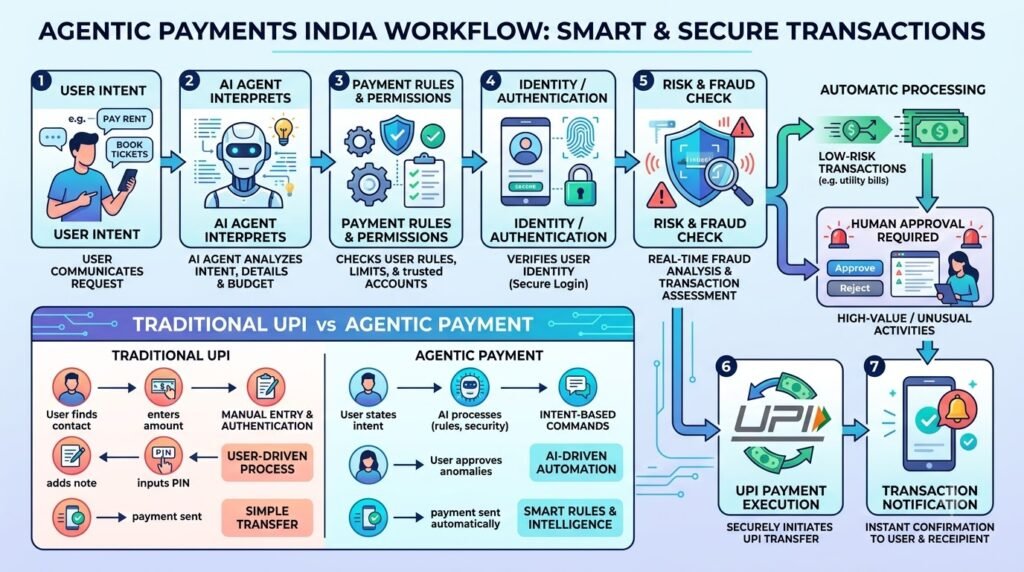
Agentic Payments vs Traditional Digital Payments
| ವಿಷಯ | Traditional Payment | Agentic Payment |
|---|---|---|
| User Role | Active manual interaction | Goal-based instruction |
| Interface | App / screens | AI conversation ಸಾಧ್ಯ |
| Automation | Limited | Potentially higher |
| Context | User provides details | AI may interpret context |
| Permissions | Transaction-based | Rule-based possibilities |
| Decision Support | Limited | AI-assisted |
| Risk Control | Existing payment security | Payment + AI security |
| Human Control | Direct | Must remain configurable |
ಇದರಿಂದ agentic payment traditional payment ಅನ್ನು replace ಮಾಡುತ್ತದೆ ಎಂದು ಹೇಳಲು ಆಗುವುದಿಲ್ಲ.
ಹೆಚ್ಚು realistic model:
Traditional Payment Infrastructure + AI Interaction Layer
ಎಂಬುದು.
Agentic Paymentsನಲ್ಲಿ Trust ಯಾಕೆ Critical?
Money-related systemನಲ್ಲಿ user trust ಇಲ್ಲದಿದ್ದರೆ technology adoption ಆಗುವುದಿಲ್ಲ.
ಒಬ್ಬ user AIಗೆ ತನ್ನ payment permission ನೀಡುವ ಮೊದಲು system clearly explain ಮಾಡಬೇಕು:
ಯಾರಿಗೆ pay ಮಾಡುತ್ತದೆ?
ಎಷ್ಟು amount?
ಯಾವ reasonಗಾಗಿ?
ಯಾವ permission ಅಡಿಯಲ್ಲಿ?
Payment stop ಮಾಡಬಹುದೇ?
ಈ transparency userಗೆ confidence ನೀಡುತ್ತದೆ.
ಅದಕ್ಕಾಗಿ future agentic payment systemನಲ್ಲಿ:
Transparency → Control → Trust → Adoption
ಎಂಬ sequence ಬಹಳ important ಆಗಬಹುದು.
UPI circulars ಮತ್ತು official ecosystem updates
Indiaನಲ್ಲಿ Agentic Payments ಯಾವ ರೀತಿಯಲ್ಲಿ Grow ಆಗಬಹುದು?
Agentic payment adoption ಒಂದು ದಿನದಲ್ಲಿ complete ಆಗುವುದಿಲ್ಲ.
ಅದು ಹಂತ ಹಂತವಾಗಿ ಬೆಳೆಯುವ ಸಾಧ್ಯತೆ ಹೆಚ್ಚು.
Stage 1 — AI Payment Assistant
AI bills ಮತ್ತು payment information identify ಮಾಡುತ್ತದೆ.
Stage 2 — Assisted Payments
AI transaction prepare ಮಾಡುತ್ತದೆ; user approve ಮಾಡುತ್ತಾನೆ.
Stage 3 — Rule-Based Automation
Pre-approved low-risk payments automatically process ಆಗಬಹುದು.
Stage 4 — Agentic Commerce
AI products discover ಮಾಡಿ, compare ಮಾಡಿ purchase workflowನಲ್ಲಿ assistance ನೀಡಬಹುದು.
Stage 5 — Autonomous but Controlled Agents
AI agents multiple business ಮತ್ತು payment stepsನಲ್ಲಿ ಕೆಲಸ ಮಾಡಬಹುದು, ಆದರೆ strong permissions ಮತ್ತು governance ಅಡಿಯಲ್ಲಿ.
Agentic Paymentsನ Future ಹೇಗಿರಬಹುದು?
Future payment experience app-centric ಆಗಿರುವುದಕ್ಕಿಂತ intent-centric ಆಗುವ ಸಾಧ್ಯತೆ ಇದೆ.
ಇಂದು:
“ನಾನು ₹2,000 payment ಮಾಡಬೇಕು.”
ಎಂದು user manually transaction complete ಮಾಡುತ್ತಾನೆ.
Futureನಲ್ಲಿ:
“ನನ್ನ monthly household expenses manage ಮಾಡಿ, ಆದರೆ ₹5,000ಗಿಂತ ಹೆಚ್ಚು paymentಗೆ ನನ್ನ approval ಬೇಕು.”
ಎಂದು high-level instruction ನೀಡಬಹುದು.
AI agent ನಂತರ approved rules ಒಳಗೆ relevant tasks identify ಮಾಡಬಹುದು.
ಇದರಿಂದ payment → automation → personal AI assistant → agentic commerce ಎಂಬ evolution ಸಾಧ್ಯವಾಗಬಹುದು.
AI Agents ನಂತರ ಏನು? AI Systems future ಹೇಗೆ ಕೆಲಸ ಮಾಡುತ್ತವೆ?
Agentic Payments India: ಒಂದು Simple Future Scenario
ಒಬ್ಬ user ತನ್ನ AI assistantಗೆ ಹೇಳುತ್ತಾನೆ:
“ನನ್ನ essential bills ಎಲ್ಲಾ manage ಮಾಡಿ. ಪ್ರತಿಯೊಂದು payment ₹3,000 ಒಳಗೆ ಇದ್ದರೆ automatically handle ಮಾಡಿ. ಹೊಸ merchant ಅಥವಾ higher amount ಇದ್ದರೆ ಮೊದಲು ಕೇಳಿ.”
ಮುಂದಿನ ದಿನ AI:
Electricity — ₹1,820
→ Rule matched
→ Payment permitted
ನಂತರ:
Internet — ₹1,299
→ Rule matched
→ Payment permitted
ಮತ್ತೊಂದು transaction:
New Merchant — ₹7,500
→ Limit exceeded
→ Payment paused
→ User confirmation requested
ಇಲ್ಲಿ AI completely uncontrolled ಆಗಿಲ್ಲ.
ಅದು user-defined rules ಒಳಗೆ intelligent assistance ನೀಡುತ್ತಿದೆ.
NPCI’s FiMI: AI model built for India’s payments ecosystem
What This Means for India’s Digital Payment Future
India already has a strong digital-payment culture. ಮುಂದಿನ evolution payment adoption ಹೆಚ್ಚಿಸುವುದಕ್ಕಿಂತ payment experience ಅನ್ನು intelligent ಮಾಡುವುದರಲ್ಲಿ ಇರಬಹುದು.
AI agents mature ಆದರೆ users:
- Payment instructions natural languageನಲ್ಲಿ ನೀಡಬಹುದು
- Recurring expenses automate ಮಾಡಬಹುದು
- Spending rules define ಮಾಡಬಹುದು
- Transactions ಬಗ್ಗೆ AI explanations ಪಡೆಯಬಹುದು
- Shopping decisionsನಲ್ಲಿ assistance ಪಡೆಯಬಹುದು
Businesses ಕೂಡ customer journeyನಲ್ಲಿ AI agents ಅನ್ನು integrate ಮಾಡಬಹುದು.
ಆದರೆ ಈ futureಗೆ trustworthy AI + secure identity + strong payment authorization + clear regulation ಅಗತ್ಯ.
AI Agents ಮತ್ತು Chatbots ನಡುವಿನ ವ್ಯತ್ಯಾಸ ಏನು?
Did You Know?
Futureನಲ್ಲಿ AI agentಗೆ payment permission ನೀಡುವುದು ಒಂದು simple “Allow” button ಆಗಿರದೇ, fine-grained permission system ಆಗುವ ಸಾಧ್ಯತೆ ಇದೆ.
ಉದಾಹರಣೆಗೆ:
“Utility billsಗೆ ₹3,000ವರೆಗೆ permission ಇದೆ, ಆದರೆ new merchantsಗೆ automatic payment ಬೇಡ.”
ಇಂತಹ granular rules AI agentsಗೆ controlled autonomy ನೀಡಲು ಸಹಾಯ ಮಾಡಬಹುದು.
Practical Tips for Users
Agentic payment features futureನಲ್ಲಿ ಸಾಮಾನ್ಯ usersಗೆ available ಆದಾಗ, ಈ habits useful ಆಗಬಹುದು:
Tip 1
Unlimited payment permission avoid ಮಾಡಿ.
Tip 2
Spending limits clearly define ಮಾಡಿ.
Tip 3
Unknown merchantsಗೆ automatic payment disable ಮಾಡಿ.
Tip 4
Large transactionsಗೆ manual confirmation ಇಡಿ.
Tip 5
Transaction notifications ignore ಮಾಡಬೇಡಿ.
Tip 6
AI recommendation ಮತ್ತು actual payment ನಡುವೆ difference ಅರ್ಥಮಾಡಿಕೊಳ್ಳಿ.
Tip 7
Suspicious agent activity ಕಂಡರೆ immediately permissions review ಮಾಡಿ.
Key Takeaways
- Agentic Payments India UPI ecosystemನಲ್ಲಿ emerging AI-powered payment model ಆಗಬಹುದು.
- AI agents userನ payment intent ಅರ್ಥಮಾಡಿಕೊಂಡು payment workflowsನಲ್ಲಿ assistance ನೀಡುವ ಸಾಧ್ಯತೆ ಇದೆ.
- Futureನಲ್ಲಿ natural-language payment instructions ಹೆಚ್ಚು common ಆಗಬಹುದು.
- User permissions ಮತ್ತು spending limits agentic paymentsನ foundation ಆಗಬಹುದು.
- High-value ಮತ್ತು unusual transactionsಗೆ human confirmation important.
- AI agentsಗೆ identity ಮತ್ತು authorization mechanisms ಅಗತ್ಯವಾಗಬಹುದು.
- Agentic commerceನಲ್ಲಿ AI payment ಮಾತ್ರವಲ್ಲದೆ discover → compare → purchase → pay journeyಯಲ್ಲೂ assistance ನೀಡಬಹುದು.
- Convenience ಹೆಚ್ಚಾದಂತೆ fraud, manipulation, excessive permissions ಮತ್ತು automation risks ಕೂಡ ಹೆಚ್ಚಾಗಬಹುದು.
- Indiaಯ strong digital-payment ecosystem agentic payment adoptionಗೆ useful foundation ಆಗಬಹುದು.
- Future model ಬಹುಶಃ AI Assistance + UPI + Security + Human Control ಆಗಿರಬಹುದು.
In This Article You Learned
ಈ articleನಲ್ಲಿ Agentic Payments India concept ಅನ್ನು beginner-friendly ರೀತಿಯಲ್ಲಿ ನೋಡಿದೆವು.
ಮೊದಲು agentic payment traditional UPIಗಿಂತ ಹೇಗೆ different ಆಗಬಹುದು ಎಂದು ಅರ್ಥಮಾಡಿಕೊಂಡೆವು. ನಂತರ user permissions, payment intent, agent identity, fraud prevention ಮತ್ತು business applications ಬಗ್ಗೆ ನೋಡಿದೆವು.
ನಂತರ AI agents:
Understand → Check Rules → Assess Risk → Request Authorization → Assist with Payment
ಎಂಬ workflowನಲ್ಲಿ ಹೇಗೆ ಕೆಲಸ ಮಾಡಬಹುದು ಎಂಬುದನ್ನು practical examples ಮೂಲಕ ನೋಡಿದೆವು.
ಅದೇ ಸಮಯದಲ್ಲಿ agentic commerce, banking, fintech ಮತ್ತು small-business opportunities ಬಗ್ಗೆ ತಿಳಿದುಕೊಂಡೆವು.
ಅಂತಿಮವಾಗಿ ಒಂದು ಪ್ರಮುಖ lesson:
AIಗೆ ಹೆಚ್ಚು autonomy ಕೊಡುವುದೇ future ಅಲ್ಲ; useful autonomy ಅನ್ನು strong human control ಜೊತೆ combine ಮಾಡುವುದು future.
Final Article Summary
Agentic Payments India ಭಾರತದ digital payment ecosystemನ potential next evolution ಅನ್ನು represent ಮಾಡುತ್ತದೆ.
UPI already usersಗೆ fast digital payments ನೀಡಿದೆ. AI agents ಅದಕ್ಕೆ context, intelligence ಮತ್ತು automation ಸೇರಿಸುವ ಸಾಧ್ಯತೆಯನ್ನು ತರುತ್ತವೆ.
ಒಬ್ಬ user futureನಲ್ಲಿ payment appನ ಪ್ರತಿಯೊಂದು step manually perform ಮಾಡುವ ಬದಲು ತನ್ನ intent ಅನ್ನು AIಗೆ ಹೇಳಬಹುದು.
ಆದರೆ financial transactionsನಲ್ಲಿ convenience ಮಾತ್ರ ಸಾಕಾಗುವುದಿಲ್ಲ.
Identity + Authentication + Permission + Risk Detection + Human Oversight
ಈ layers strong ಆಗಿದ್ದಾಗ ಮಾತ್ರ users AI agentsಗೆ financial trust ನೀಡುವ ಸಾಧ್ಯತೆ ಹೆಚ್ಚುತ್ತದೆ.
ಆದ್ದರಿಂದ agentic paymentsನ future ಅನ್ನು:
“AI will pay everything automatically”
ಎಂದು ನೋಡುವುದಕ್ಕಿಂತ,
“AI will help users manage payments within clearly defined boundaries”
ಎಂದು ನೋಡುವುದು ಹೆಚ್ಚು practical.
Conclusion
Agentic Payments India ಇನ್ನೂ evolving concept ಆಗಿದ್ದರೂ, ಇದು AI ಮತ್ತು India’s digital-payment ecosystem ಹೇಗೆ ಒಂದಾಗಬಹುದು ಎಂಬುದನ್ನು ತೋರಿಸುವ interesting development.
UPIಯ ಮೊದಲ revolution cashless payments ಅನ್ನು mainstream ಮಾಡಿತು.
ಮುಂದಿನ possible revolution intent-driven payments ಆಗಿರಬಹುದು.
ಅಂದರೆ user:
“ನಾನು payment ಹೇಗೆ ಮಾಡಲಿ?”
ಎಂದು ಯೋಚಿಸುವ ಬದಲು:
“ನನಗೆ ಯಾವ payment ಬೇಕು?”
ಎಂದು ಹೇಳುತ್ತಾನೆ — ಮತ್ತು AI assistant ಆ requirement ಅನ್ನು payment workflow ಆಗಿ translate ಮಾಡಲು ಸಹಾಯ ಮಾಡಬಹುದು.
ಆದರೆ money-related decisionsನಲ್ಲಿ AIಗೆ complete uncontrolled freedom ನೀಡುವುದು safe approach ಅಲ್ಲ.
Future successful model:
Human Intent → AI Assistance → Permission → Security Check → Payment
ಆಗಿರಬಹುದು.
Indiaನಲ್ಲಿ UPI, fintech innovation ಮತ್ತು AI agents ಒಟ್ಟಿಗೆ evolve ಆದಂತೆ Agentic Payments India digital commerceನ ಹೊಸ chapter ಆಗುವ ಸಾಧ್ಯತೆ ಇದೆ.
FAQs
Agentic Payments India ಎಂದರೇನು?
Agentic Payments India ಅಂದ್ರೆ AI agents payment-related tasks ಮತ್ತು workflowsನಲ್ಲಿ userಗೆ intelligent ಅಥವಾ automated assistance ನೀಡುವ emerging concept.
AI Agent ಸ್ವತಃ UPI payment ಮಾಡುತ್ತದೆಯೇ?
Future implementationsನಲ್ಲಿ ಕೆಲವು pre-approved payment workflows automate ಆಗುವ ಸಾಧ್ಯತೆ ಇದೆ. ಆದರೆ actual authorization, permissions ಮತ್ತು security controls system design ಮೇಲೆ depend ಆಗುತ್ತವೆ.
Agentic Payments safe ಆಗಿವೆಯೇ?
Safety implementation ಮೇಲೆ depend ಆಗುತ್ತದೆ. Strong authentication, permissions, spending limits, monitoring ಮತ್ತು human controls ಇದ್ದರೆ risks ಅನ್ನು ಕಡಿಮೆ ಮಾಡಬಹುದು.
Agentic Payments ಮತ್ತು UPI ಒಂದೇನಾ?
ಇಲ್ಲ. UPI payment infrastructure ಆಗಿದ್ದರೆ, agentic payments AI agents ಮತ್ತು intelligent interfaces ಬಳಸಿ payment workflows ಅನ್ನು manage ಮಾಡುವ approach ಆಗಬಹುದು.
AI Agentಗೆ unlimited payment permission ಕೊಡಬಹುದೇ?
ಕೊಡಬಾರದು. Practical safety approach ಎಂದರೆ least privilege — agentಗೆ ಅಗತ್ಯವಿರುವ permissions ಮಾತ್ರ ನೀಡುವುದು.
Agentic Payments businessesಗೆ ಹೇಗೆ ಸಹಾಯ ಮಾಡಬಹುದು?
Customer purchases, recurring payments, invoice workflows, financial assistance ಮತ್ತು commerce journeysನಲ್ಲಿ automation ಮತ್ತು intelligent assistance ನೀಡುವ ಸಾಧ್ಯತೆ ಇದೆ.
Agentic Commerce ಎಂದರೇನು?
AI agent customerಗಾಗಿ product discovery → comparison → selection → purchase → payment ಮುಂತಾದ multiple commerce stepsನಲ್ಲಿ assistance ನೀಡುವ model ಅನ್ನು agentic commerce ಎಂದು ಕರೆಯಬಹುದು.
Continue Learning
Agentic Payments ಬಗ್ಗೆ ತಿಳಿದುಕೊಂಡ ನಂತರ ಈ topics ಅನ್ನು ಮುಂದುವರಿಸಿ:
AI Agents → Agentic AI → AI Workflow Automation → Enterprise AI Agents → Multi-Agent AI Systems → AI Security → AI Governance
ಈ concepts ಒಂದಕ್ಕೊಂದು ಹೇಗೆ connect ಆಗುತ್ತವೆ ಎಂಬುದು ಅರ್ಥವಾದರೆ, future AI-powered digital economy ಇನ್ನಷ್ಟು clearly ಅರ್ಥವಾಗುತ್ತದೆ.
CTA
ನಿಮಗೆ AI Agents, UPI, FinTech ಮತ್ತು future digital payments ಬಗ್ಗೆ ಇನ್ನಷ್ಟು Kannada + English hybrid guides ಬೇಕಿದ್ದರೆ, AI Kannada Techನಲ್ಲಿ ಮುಂದಿನ AI ಮತ್ತು technology articles continue learning ಮಾಡಿ.