AI Weather Forecasting Explained: How AI Is Changing Weather Prediction and Climate Research
Introduction
ನಾಳೆ ಮಳೆ ಬರುತ್ತದೆಯೇ? ಮುಂದಿನ ವಾರ cyclone ಯಾವ directionನಲ್ಲಿ move ಆಗಬಹುದು? ಒಂದು ಪ್ರದೇಶದಲ್ಲಿ heavy rainfall ಎಷ್ಟು ಸಾಧ್ಯತೆ ಇದೆ? ಮುಂದಿನ ಕೆಲವು ವಾರಗಳಲ್ಲಿ temperature pattern ಹೇಗೆ ಬದಲಾಗಬಹುದು?
ಈ ಪ್ರಶ್ನೆಗಳಿಗೆ ಉತ್ತರ ಹುಡುಕಲು scientists ಹಲವು ದಶಕಗಳಿಂದ satellites, weather stations, radar systems, ocean observations ಮತ್ತು powerful supercomputers ಬಳಸುತ್ತಿದ್ದಾರೆ. ಈಗ ಈ forecasting systemಗೆ ಮತ್ತೊಂದು powerful technology ಸೇರಿದೆ: AI Weather Prediction.
Artificial Intelligence ಮತ್ತು Machine Learning weather prediction ಕ್ಷೇತ್ರವನ್ನು fundamentally ಬದಲಾಯಿಸುತ್ತಿವೆ. Traditional Numerical Weather Prediction ಅಥವಾ NWP systems atmosphereನ physical laws ಅನ್ನು equations ಮೂಲಕ simulate ಮಾಡುತ್ತವೆ. AI-based systems meanwhile, enormous amounts of historical weather data ಮತ್ತು model outputsನಿಂದ patterns ಕಲಿತು future atmospheric states predict ಮಾಡಲು ಪ್ರಯತ್ನಿಸುತ್ತವೆ.
ಇದರ ದೊಡ್ಡ advantage speed. Google DeepMindನ GraphCast research model 10-day global forecast ಅನ್ನು single TPUನಲ್ಲಿ ಒಂದು ನಿಮಿಷಕ್ಕಿಂತ ಕಡಿಮೆ ಸಮಯದಲ್ಲಿ generate ಮಾಡಬಹುದೆಂದು ತೋರಿಸಿತ್ತು.
ಆದರೆ AI Weather Forecasting ಎಂದರೆ traditional weather science ಮುಗಿಯಿತು ಎಂದಲ್ಲ. ಬದಲಾಗಿ ಎರಡು approaches increasingly complement ಆಗುತ್ತಿವೆ. ECMWF ಈಗ ತನ್ನ physics-based Integrated Forecasting System ಜೊತೆಗೆ Artificial Intelligence Forecasting System ಅಥವಾ AIFS ಅನ್ನು operational forecastingನಲ್ಲಿ ಬಳಸುತ್ತಿದೆ. AIFS v2 ಕೂಡ May 2026ರಲ್ಲಿ operational ಆಗಿದೆ.
ಇದರ ಪರಿಣಾಮ weather prediction ಮಾತ್ರವಲ್ಲ. Flood forecasting, cyclone tracking, rainfall nowcasting, agriculture, renewable energy planning ಮತ್ತು climate research ಕೂಡ AIಯಿಂದ ಬದಲಾಗುತ್ತಿವೆ.
ಈ articleನಲ್ಲಿ AI Weather Prediction ಹೇಗೆ ಕೆಲಸ ಮಾಡುತ್ತದೆ, traditional forecastingನಿಂದ ಅದು ಹೇಗೆ different, GraphCast ಮತ್ತು ECMWF AIFS ರೀತಿಯ systems ಏನು ಮಾಡುತ್ತವೆ, AI climate researchಗೆ ಹೇಗೆ ಸಹಾಯ ಮಾಡಬಹುದು ಮತ್ತು ಇದರ limitations ಯಾವುವು ಎಂಬುದನ್ನು Kannada Hybrid languageನಲ್ಲಿ practical ಆಗಿ ನೋಡೋಣ.
AI Weather Prediction ಎಂದರೇನು?
AI Weather Prediction ಎಂದರೆ Artificial Intelligence ಮತ್ತು Machine Learning models ಬಳಸಿಕೊಂಡು weather conditions ಅಥವಾ atmospheric variablesನ future state predict ಮಾಡುವ ವಿಧಾನ.
ಇಲ್ಲಿ AIಗೆ “ಮಳೆ ಬರುತ್ತದೆಯೇ?” ಎಂದು ಸಾಮಾನ್ಯ question ಕೇಳುವುದಿಲ್ಲ.
Instead, modelಗೆ huge amounts of structured weather data ನೀಡಲಾಗುತ್ತದೆ.
ಈ dataನಲ್ಲಿ:
- Temperature
- Atmospheric pressure
- Wind speed
- Wind direction
- Humidity
- Precipitation
- Cloud-related information
- Ocean conditions
- Satellite observations
- Radar observations
- Historical weather records
- Numerical weather model outputs
ಮುಂತಾದ information ಇರಬಹುದು.
Machine Learning model ಈ dataನಲ್ಲಿ recurring patterns ಕಲಿಯುತ್ತದೆ.
ಉದಾಹರಣೆಗೆ, ಕಳೆದ ಹಲವು ದಶಕಗಳಲ್ಲಿ ಒಂದು particular atmospheric pattern ಬಂದಾಗ ಅದರ ನಂತರ temperature, pressure ಮತ್ತು wind ಹೇಗೆ ಬದಲಾಗಿವೆ ಎಂಬ relationship ಅನ್ನು model learn ಮಾಡಬಹುದು.
ಹೊಸ atmospheric state input ಆಗಿ ಬಂದಾಗ, learned relationships ಆಧರಿಸಿ ಮುಂದಿನ weather state predict ಮಾಡಲು model ಪ್ರಯತ್ನಿಸುತ್ತದೆ.
ಇದು ಒಂದು important difference:
Traditional NWP:
Physics equations → numerical simulation → forecast
AI Weather Prediction:
Historical/observational data → learned patterns → forecast
ಆದರೆ real-world forecasting systemನಲ್ಲಿ ಈ two approaches completely separate ಆಗಿರಬೇಕೆಂದಿಲ್ಲ. Current research increasingly hybrid directionನಲ್ಲಿ ಸಾಗುತ್ತಿದೆ.
Traditional Weather Prediction ಹೇಗೆ ಕೆಲಸ ಮಾಡುತ್ತದೆ?
AI Weather Prediction ಅರ್ಥಮಾಡಿಕೊಳ್ಳಲು ಮೊದಲು traditional system ತಿಳಿದುಕೊಳ್ಳುವುದು useful.
Numerical Weather Prediction ಅಥವಾ NWPನಲ್ಲಿ atmosphere ಅನ್ನು enormous three-dimensional computational grid ಆಗಿ represent ಮಾಡಲಾಗುತ್ತದೆ.
ಪ್ರತಿ grid pointನಲ್ಲಿ atmosphereನ variables calculate ಮಾಡಲಾಗುತ್ತದೆ.
Scientists fluid dynamics, thermodynamics, radiation, cloud physics ಮತ್ತು atmospheric chemistryಗೆ ಸಂಬಂಧಿಸಿದ equations ಬಳಸುತ್ತಾರೆ.
Weather satellites, radar, weather stations, aircraft ಮತ್ತು ocean observations current atmospheric state ಬಗ್ಗೆ data collect ಮಾಡುತ್ತವೆ.
ಈ observations ಅನ್ನು data assimilation process ಮೂಲಕ numerical modelಗೆ ಸೇರಿಸಲಾಗುತ್ತದೆ.
ನಂತರ supercomputers atmospheric equations ಅನ್ನು repeatedly solve ಮಾಡಿ future states simulate ಮಾಡುತ್ತವೆ.
ಇದು extremely sophisticated process.
ಆದರೆ ಒಂದು limitation ಇದೆ: atmosphereನಲ್ಲಿ enormous number of interactions ಇವೆ. High-resolution forecast ಬೇಕಾದರೆ computational requirement ಬಹಳ ಹೆಚ್ಚಾಗುತ್ತದೆ.
ಅದಕ್ಕಾಗಿಯೇ AI interesting ಆಗುತ್ತದೆ.
Machine Learning model once trained ಆದ ನಂತರ forecast generation stageನಲ್ಲಿ traditional numerical simulationಗಿಂತ considerably faster ಆಗಿರಬಹುದು.
ECMWF ಪ್ರಕಾರ, its machine-learning forecast models 10-day forecast ಅನ್ನು approximately one minuteನಲ್ಲಿ generate ಮಾಡಬಹುದು.
ಇದರಿಂದ frequent forecasting ಮತ್ತು large-scale ensemble generationಗೆ ಹೊಸ possibilities ಸಿಗುತ್ತವೆ.
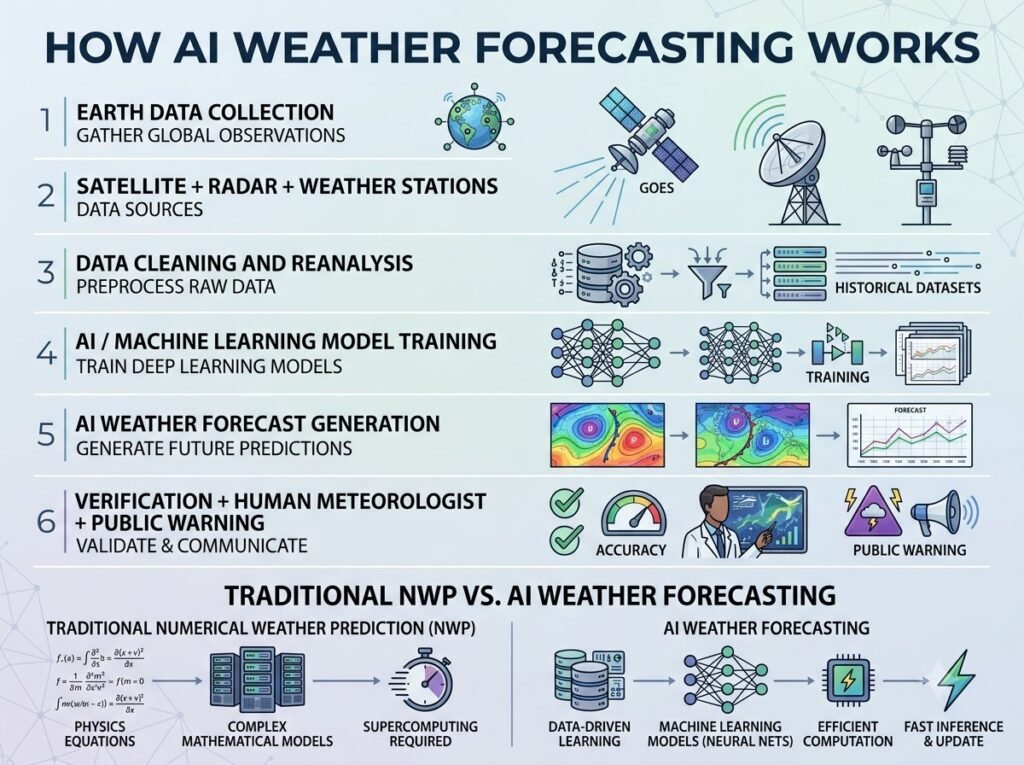
AI Weather Prediction ಹೇಗೆ ಕೆಲಸ ಮಾಡುತ್ತದೆ?
AI Weather Prediction ಅನ್ನು simple five-stage pipeline ಆಗಿ ಅರ್ಥಮಾಡಿಕೊಳ್ಳಬಹುದು.
1. Earth Data Collection
ಮೊದಲು enormous amount of Earth-system data collect ಮಾಡಲಾಗುತ್ತದೆ.
Satellites atmosphere ಮತ್ತು clouds ಬಗ್ಗೆ information ನೀಡುತ್ತವೆ.
Weather stations surface temperature, pressure, humidity ಮತ್ತು wind measure ಮಾಡುತ್ತವೆ.
Radar systems precipitation ಮತ್ತು storm structures track ಮಾಡುತ್ತವೆ.
Ocean buoys ಮತ್ತು ships ocean temperature, pressure ಮತ್ತು wave conditions ಬಗ್ಗೆ information ಕೊಡುತ್ತವೆ.
ಈ data ಒಟ್ಟಿಗೆ Earth systemನ ಒಂದು huge digital picture ರೂಪಿಸುತ್ತದೆ.
2. Data Cleaning ಮತ್ತು Reanalysis
Raw weather observations perfect ಆಗಿರುವುದಿಲ್ಲ.
ಕೆಲವು stations missing data ಹೊಂದಿರಬಹುದು. Different instruments different measurement characteristics ಹೊಂದಿರಬಹುದು. ಕೆಲವು historical records incomplete ಆಗಿರಬಹುದು.
ಆದ್ದರಿಂದ scientists data quality control ಮತ್ತು reanalysis processes ಬಳಸುತ್ತಾರೆ.
ಇಲ್ಲಿ ERA5 ಬಹಳ important dataset.
ECMWF ಪ್ರಕಾರ, ERA5 ಅನ್ನು worldwide data-driven weather models train ಮಾಡಲು extensively ಬಳಸಲಾಗಿದೆ. ಇದು historical Earth-system informationನ ಒಂದು ರೀತಿಯ “memory” ಆಗಿ ಕೆಲಸ ಮಾಡುತ್ತದೆ.
AI modelಗೆ high-quality training data ಎಷ್ಟು important ಎಂಬುದಕ್ಕೆ ಇದು ಒಂದು ದೊಡ್ಡ example.
3. Model Training
ಈ cleaned historical data ಅನ್ನು Machine Learning modelಗೆ ನೀಡಲಾಗುತ್ತದೆ.
Model past atmospheric states ಮತ್ತು future states ನಡುವಿನ relationships learn ಮಾಡುತ್ತದೆ.
ಇದು ಸಾಮಾನ್ಯ software programmingನಂತೆ “ಈ condition ಬಂದರೆ ಈ answer ಕೊಡು” ಎಂದು manually rules ಬರೆಯುವುದಲ್ಲ.
Instead, model parameters training processನಲ್ಲಿ automatically adjust ಆಗುತ್ತವೆ.
GraphCast ಉದಾಹರಣೆಯಲ್ಲಿ, Google DeepMind decades of ERA5 reanalysis data ಬಳಸಿಕೊಂಡು model train ಮಾಡಿತು. Graph Neural Network architecture ಮೂಲಕ spatial relationships ಅನ್ನು model ಮಾಡಲಾಗುತ್ತದೆ.
4. Forecast Generation
Training complete ಆದ ನಂತರ current weather state modelಗೆ input ಆಗುತ್ತದೆ.
Model next atmospheric state predict ಮಾಡುತ್ತದೆ.
ಆ prediction ಮುಂದಿನ timestepಗೆ input ಆಗಬಹುದು.
ಈ process repeatedly roll forward ಆಗಿ multi-day forecast generate ಮಾಡಬಹುದು.
GraphCast six-hour incrementsನಲ್ಲಿ forecast state predict ಮಾಡುವ autoregressive approach ಬಳಸುತ್ತದೆ ಮತ್ತು up to 10 days forecast generate ಮಾಡುತ್ತದೆ.
ಇಲ್ಲಿ AIಯ speed advantage ಸ್ಪಷ್ಟವಾಗುತ್ತದೆ.
5. Forecast Verification
ಇದು ಅತ್ಯಂತ important stage.
AI output ಬಂದ ತಕ್ಷಣ “forecast correct” ಎಂದು assume ಮಾಡಲಾಗುವುದಿಲ್ಲ.
Actual observations ಜೊತೆ prediction compare ಮಾಡಬೇಕು.
Temperature ಎಷ್ಟು accurate?
Rainfall timing ಹೇಗಿತ್ತು?
Cyclone track ಎಷ್ಟು close?
Wind prediction ಹೇಗಿತ್ತು?
Extreme eventsನಲ್ಲಿ model ಹೇಗೆ perform ಮಾಡಿತು?
ಇಂತಹ metrics ಬಳಸಿ model verify ಮಾಡಲಾಗುತ್ತದೆ.
WMO ಕೂಡ AI weather systemsಗೆ rigorous verification ಅಗತ್ಯ ಎಂದು ಹೇಳುತ್ತದೆ. AI-based, physics-based ಮತ್ತು hybrid systems ಅನ್ನು fair benchmarks ಮೂಲಕ compare ಮಾಡುವುದು important.
GraphCast: AI Weather Predictionನಲ್ಲಿ ಒಂದು ಪ್ರಮುಖ Milestone
AI Weather Prediction ಬಗ್ಗೆ ಮಾತನಾಡುವಾಗ GraphCast ಅನ್ನು ignore ಮಾಡಲು ಸಾಧ್ಯವಿಲ್ಲ.
Google DeepMind 2023ರಲ್ಲಿ GraphCast ಅನ್ನು ಪರಿಚಯಿಸಿತು. ಇದು Graph Neural Network ಆಧಾರಿತ global weather forecasting system.
GraphCast ಸುಮಾರು 0.25-degree latitude-longitude gridನಲ್ಲಿ forecast ಮಾಡುತ್ತದೆ. ಅದು atmosphere ಮತ್ತು surfaceನ ಹಲವಾರು variables predict ಮಾಡುತ್ತದೆ.
Google DeepMindನ published evaluationನಲ್ಲಿ GraphCast traditional ECMWF HRES deterministic forecasting systemಗಿಂತ evaluated variables ಮತ್ತು lead timesನ 89.3%ನಲ್ಲಿ better performance ತೋರಿಸಿತು.
ಇನ್ನೊಂದು remarkable point speed.
GraphCast 10-day forecast ಅನ್ನು Cloud TPU hardwareನಲ್ಲಿ under 60 secondsನಲ್ಲಿ generate ಮಾಡಬಹುದು ಎಂದು research paper ವಿವರಿಸುತ್ತದೆ.
ಆದರೆ GraphCastನ importance ಕೇವಲ “AI traditional modelಗಿಂತ faster” ಎಂಬುದಲ್ಲ.
ಇದು data-driven weather Prediction practically powerful ಆಗಬಹುದು ಎಂಬುದಕ್ಕೆ major demonstration.
ಆದರೆ scientific forecastingನಲ್ಲಿ ಒಂದು model benchmarkನಲ್ಲಿ ಉತ್ತಮ perform ಮಾಡಿದೆ ಎಂದರೆ ಪ್ರತಿಯೊಂದು weather situationನಲ್ಲಿ ಅದು automatically best ಆಗುತ್ತದೆ ಎಂದಲ್ಲ.
Weather Predictionನಲ್ಲಿ region, variable, forecast horizon ಮತ್ತು extreme-event behaviour ಎಲ್ಲವೂ matter ಆಗುತ್ತವೆ.
ಆದ್ದರಿಂದ operational meteorologyನಲ್ಲಿ continuous verification ಅಗತ್ಯ.
Google DeepMind's GraphCast research
ECMWF AIFS: AI Weather Prediction ಈಗ Operational ಆಗುತ್ತಿದೆ
Research models laboratoryಯಿಂದ ಹೊರಗೆ operational forecasting systemಗೆ ಬರುತ್ತಿರುವುದು ಈ fieldನ ದೊಡ್ಡ development.
ECMWF ತನ್ನ Artificial Intelligence Forecasting System (AIFS) ಅನ್ನು February 2025ರಿಂದ operational forecastingನಲ್ಲಿ run ಮಾಡುತ್ತಿದೆ. ಇದು traditional physics-based IFS ಜೊತೆ side-by-side ಬಳಸಲಾಗುತ್ತಿದೆ.
May 2026ರಲ್ಲಿ ECMWF AIFS v2ಗೆ upgrade ಮಾಡಿತು. AIFS v2ನಲ್ಲಿ deterministic AIFS Single ಮತ್ತು ensemble AIFS ENS systems ಸೇರಿವೆ.
ಇಲ್ಲಿ “ensemble” ಎಂಬ concept important.
ECMWF AIFS v2
ECMWF — IFS Cycle 50r1 and AIFS v2
Weather forecastನಲ್ಲಿ ಒಂದೇ future outcome assume ಮಾಡುವುದು risky.
Instead, slightly different initial conditions ಅಥವಾ model variations ಬಳಸಿ multiple forecasts generate ಮಾಡಬಹುದು.
ಇವುಗಳ spread ನೋಡಿ uncertainty estimate ಮಾಡಬಹುದು.
AI models fast ಆಗಿರುವುದರಿಂದ large ensembles generate ಮಾಡುವ possibilities ಹೆಚ್ಚುತ್ತವೆ.
ECMWF ಹೇಳುವಂತೆ, Machine Learning weather prediction systems reliable ensembles ಮತ್ತು faster forecasts generate ಮಾಡಲು potential ಹೊಂದಿವೆ.
ಅಂದರೆ future weather forecastingನಲ್ಲಿ AIಯ biggest contribution simply “ಒಂದು forecast faster ಮಾಡುವುದು” ಅಲ್ಲ.
More forecasts + faster computation + uncertainty information ಕೂಡ major advantage ಆಗಬಹುದು.
ECMWF Artificial Intelligence Forecasting System
ECMWF — Artificial Intelligence Forecasting System
AI Weather Prediction ಯಾಕೆ Faster ಆಗಬಹುದು?
Traditional NWPನಲ್ಲಿ atmospheric equations ಅನ್ನು enormous computational grids ಮೇಲೆ solve ಮಾಡಬೇಕು.
ಇದು computationally expensive.
AI model training ಕೂಡ expensive.
ಆದರೆ ಒಂದು crucial distinction ಇದೆ:
Training cost ಮತ್ತು forecast inference cost ಒಂದೇ ಅಲ್ಲ.
Model trainingಗೆ huge datasets, GPUs/TPUs ಮತ್ತು considerable compute ಬೇಕಾಗಬಹುದು.
ಆದರೆ model once trained ಆದ ನಂತರ ಹೊಸ forecast generate ಮಾಡುವುದು comparatively cheap ಮತ್ತು fast ಆಗಿರಬಹುದು.
ECMWF AI forecasting systemsನ key advantagesಗಳಲ್ಲಿ speed ಮತ್ತು lower inference cost ಅನ್ನು highlight ಮಾಡುತ್ತದೆ.
ಇದರ practical benefit ಏನು?
ಒಂದು meteorological centreಗೆ ಹೆಚ್ಚು frequent forecasts ಬೇಕಾದರೆ AI potentially useful.
Multiple scenarios run ಮಾಡಬೇಕಾದರೆ AI useful.
High-resolution downscaling ಬೇಕಾದರೆ AI useful.
Specific regionಗೆ tailored forecast ಬೇಕಾದರೂ Machine Learning models ಉಪಯೋಗಿಸಬಹುದು.
ಆದರೆ inference cheap ಎಂದರೆ entire AI system cheap ಎಂದರ್ಥ ಅಲ್ಲ.
Training datasets maintain ಮಾಡಬೇಕು.
Hardware infrastructure ಬೇಕು.
Model validation ಮಾಡಬೇಕು.
Operational monitoring ಬೇಕು.
Experts ಬೇಕು.
ಆದ್ದರಿಂದ AI weather forecastingನ economics ಅನ್ನು complete system levelನಲ್ಲಿ ನೋಡಬೇಕು.
AI ಮತ್ತು Traditional Weather Models: ಯಾರು Better?
ಇದು ಅತ್ಯಂತ common question.
ಆದರೆ practical answer:
AI vs Traditional ಎಂಬುದು always either-or choice ಅಲ್ಲ.
Current scientific direction increasingly AI + Physics ಕಡೆಗೆ ಸಾಗುತ್ತಿದೆ.
ECMWF AIFS ಅನ್ನು traditional IFS ಜೊತೆ operationally run ಮಾಡುತ್ತಿದೆ. ಈ side-by-side approach ಮೂಲಕ strengths ಮತ್ತು limitations evaluate ಮಾಡಬಹುದು.
Traditional modelsನ strength physics.
ಅವು atmospheric processes ಅನ್ನು physical laws ಮತ್ತು equations ಆಧರಿಸಿ represent ಮಾಡುತ್ತವೆ.
AI modelsನ strength data-driven pattern recognition ಮತ್ತು computational speed.
Hybrid systemನಲ್ಲಿ ಎರಡರ strengths combine ಮಾಡಬಹುದು.
ಉದಾಹರಣೆಗೆ:
Observations → Physics-based analysis → AI forecast → Physics/consistency checks → Human forecaster
ಅಥವಾ:
Traditional forecast → AI post-processing → Higher-resolution local forecast
ಇಂತಹ architectures practical ಆಗಬಹುದು.
ECMWF researchನಲ್ಲಿ Machine Learning models existing forecasts ಅನ್ನು spatial ಮತ್ತು temporal downscaling ಮಾಡಲು ಬಳಸುವ work ಕೂಡ ನಡೆಯುತ್ತಿದೆ.
ಅಂದರೆ AI traditional weather science ಅನ್ನು replace ಮಾಡುವುದಕ್ಕಿಂತ ಅದರ capability expand ಮಾಡುವ layer ಆಗಬಹುದು.
WMO Artificial Intelligence and weather forecasting
World Meteorological Organization — Artificial Intelligence
AI Weather Predictionನಲ್ಲಿ Nowcasting ಯಾಕೆ Important?
Weather predictionನಲ್ಲಿ “next 10 days” ಮಾತ್ರ important ಅಲ್ಲ.
ಕೆಲವೊಮ್ಮೆ next 30 minutes ಅಥವಾ next 2 hours ಹೆಚ್ಚು important.
ಇದನ್ನು Nowcasting ಎಂದು ಕರೆಯಲಾಗುತ್ತದೆ.
ಉದಾಹರಣೆಗೆ:
- Heavy rainfall
- Thunderstorms
- Lightning
- Strong wind
- Hail
- Flash flooding
ಇವು rapidly develop ಆಗಬಹುದು.
ಈ ಸಂದರ್ಭ satellite images, radar data ಮತ್ತು local observations ಅನ್ನು real timeನಲ್ಲಿ process ಮಾಡಬೇಕಾಗುತ್ತದೆ.
AI ಇಲ್ಲಿ particularly useful.
WMO ಪ್ರಕಾರ, deep-learning methods radar, satellite ಮತ್ತು local meteorological/hydrological observations combine ಮಾಡಿ short-term precipitation ಮತ್ತು other hazards nowcastingಗೆ support ಮಾಡಬಹುದು.
ಇದರ practical impact ದೊಡ್ಡದು.
ಒಂದು cityನಲ್ಲಿ ಮುಂದಿನ 60–90 minutesನಲ್ಲಿ intense rainfall probability ಹೆಚ್ಚಾಗಿದೆ ಎಂದು system early signal ನೀಡಿದರೆ emergency services, transport authorities ಮತ್ತು citizens ಹೆಚ್ಚು timely action ತೆಗೆದುಕೊಳ್ಳಬಹುದು.
ಆದರೆ extreme-weather warningನಲ್ಲಿ false alarms ಮತ್ತು missed events ಎರಡೂ serious issues.
ಆದ್ದರಿಂದ AI nowcasting ಕೂಡ rigorous verification ಮತ್ತು official meteorological oversight ಅಡಿಯಲ್ಲಿ ಇರಬೇಕು.
Cyclone ಮತ್ತು Extreme Weather Predictionನಲ್ಲಿ AIಯ Role
Cyclone prediction ಒಂದು challenging problem.
ಒಂದು cycloneನ track ಮಾತ್ರವಲ್ಲದೆ intensity, wind field, rainfall distribution ಮತ್ತು landfall timing ಕೂಡ important.
AI models historical atmospheric patternsನಿಂದ cyclone behaviour ಸಂಬಂಧಿಸಿದ patterns learn ಮಾಡಬಹುದು.
GraphCast researchನಲ್ಲಿ tropical cyclone tracks ಸೇರಿದಂತೆ extreme weather forecasting capabilities ಬಗ್ಗೆ results report ಮಾಡಲಾಗಿದೆ.
ECMWF ಕೂಡ AIFS operational systemನಲ್ಲಿ tropical cyclone forecasting performance improvements ಬಗ್ಗೆ reports ಮಾಡಿದೆ.
ಆದರೆ cyclone forecastingನಲ್ಲಿ “AI ಎಲ್ಲವನ್ನೂ solve ಮಾಡಿದೆ” ಎನ್ನುವುದು ತಪ್ಪು.
Small errors in initial atmospheric conditions future track ಮತ್ತು intensityನಲ್ಲಿ ದೊಡ್ಡ difference ಉಂಟುಮಾಡಬಹುದು.
ಅದಕ್ಕಾಗಿಯೇ ensemble forecasts ಮತ್ತು uncertainty estimates important.
Future AI systemsನಲ್ಲಿ usersಗೆ “cyclone will hit this exact location” ಎನ್ನುವುದಕ್ಕಿಂತ probability range ಮತ್ತು uncertainty information ಹೆಚ್ಚು useful ಆಗಬಹುದು.
AI Weather Prediction ಮತ್ತು Climate Research ನಡುವಿನ Connection
Weather ಮತ್ತು climate ಎರಡು separate concepts.
Weather ಸಾಮಾನ್ಯವಾಗಿ hours, days ಅಥವಾ weeks scaleನಲ್ಲಿ atmospheric conditions ಬಗ್ಗೆ ಮಾತನಾಡುತ್ತದೆ.
Climate longer-term patterns ಮತ್ತು statistical behaviour ಬಗ್ಗೆ ಮಾತನಾಡುತ್ತದೆ.
ಆದರೆ AI ಎರಡರ boundaryಯನ್ನು ಕೆಲವು research areasನಲ್ಲಿ connect ಮಾಡಲು ಸಹಾಯ ಮಾಡುತ್ತಿದೆ.
Nature Communicationsನಲ್ಲಿ 2026ರಲ್ಲಿ ಪ್ರಕಟವಾದ research perspective ಪ್ರಕಾರ, AI weather ಮತ್ತು climate science ನಡುವಿನ divide ಅನ್ನು reduce ಮಾಡುವ potential ಹೊಂದಿದೆ. Earth observationsನಿಂದ learn ಮಾಡುವ systems short-term weather prediction ಮತ್ತು longer-term climate-related modelling ನಡುವೆ connections create ಮಾಡಬಹುದು.
ಇದು ಏಕೆ important?
Climate researchನಲ್ಲಿ scientists future scenarios simulate ಮಾಡಬೇಕು.
Long climate simulations computationally expensive ಆಗಬಹುದು.
AI-based emulators ಕೆಲವು complex Earth-system processes ಅನ್ನು faster approximate ಮಾಡಲು ಸಾಧ್ಯವಾದರೆ researchers ಹೆಚ್ಚು scenarios explore ಮಾಡಬಹುದು.
ECMWF ಕೂಡ AI Earth-system components ಮತ್ತು climate emulators ಅಭಿವೃದ್ಧಿಪಡಿಸುತ್ತಿದೆ ಎಂದು ವಿವರಿಸಿದೆ.
ಇದರ practical use:
Climate scenario → AI model → Many simulations → Risk analysis → Planning
ಇಂತಹ workflows futureನಲ್ಲಿ disaster planning, agriculture, water management ಮತ್ತು infrastructure designಗೆ useful ಆಗಬಹುದು.
AI Climate Researchನಲ್ಲಿ Downscaling ಯಾಕೆ ಮುಖ್ಯ?
Global climate models large-scale patterns capture ಮಾಡುತ್ತವೆ.
ಆದರೆ local decision-makingಗೆ finer resolution ಬೇಕಾಗುತ್ತದೆ.
ಉದಾಹರಣೆಗೆ, ಒಂದು countryನಲ್ಲಿ average rainfall change ತಿಳಿದಿರುವುದು ಮಾತ್ರ ಸಾಕಾಗುವುದಿಲ್ಲ.
ಒಂದು districtನಲ್ಲಿ:
- Rainfall intensity ಹೇಗೆ ಬದಲಾಗಬಹುದು?
- Heatwave days ಎಷ್ಟು ಹೆಚ್ಚಾಗಬಹುದು?
- Flood risk ಯಾವ ಪ್ರದೇಶದಲ್ಲಿ ಹೆಚ್ಚು?
- Water availability ಹೇಗೆ ಬದಲಾಗಬಹುದು?
ಎಂಬ local questions ಬೇಕಾಗುತ್ತವೆ.
ಇದಕ್ಕಾಗಿ downscaling ಬಳಸಲಾಗುತ್ತದೆ.
AI models coarse-resolution informationನಿಂದ fine-scale atmospheric patterns generate ಮಾಡಲು ಸಹಾಯ ಮಾಡಬಹುದು.
ECMWF September 2026 researchನಲ್ಲಿ Anemoi-D² ರೀತಿಯ spatial downscaling models ಮತ್ತು temporal downscaling approaches ಬಗ್ಗೆ ವಿವರಿಸಿದೆ. ಇವು coarse forecastsನಿಂದ finer spatial ಮತ್ತು temporal information derive ಮಾಡುವ directionನಲ್ಲಿ ಕೆಲಸ ಮಾಡುತ್ತಿವೆ.
ಇದರ meaning simple:
Global model → AI downscaling → Local information
ಇದು climate adaptation planningನಲ್ಲಿ ಬಹಳ valuable ಆಗಬಹುದು.
AI Weather Prediction Agricultureಗೆ ಹೇಗೆ ಸಹಾಯ ಮಾಡಬಹುದು?
Agriculture weather-sensitive industry.
Farmerಗೆ monthly average temperatureಗಿಂತ next few daysನಲ್ಲಿ rain timing ಹೆಚ್ಚು important ಆಗಬಹುದು.
AI-enhanced weather systems:
- Rainfall prediction
- Temperature forecasting
- Heat stress
- Soil moisture estimation
- Irrigation planning
- Crop risk assessment
- Extreme-weather warnings
ಮುಂತಾದ areasನಲ್ಲಿ support ಮಾಡಬಹುದು.
ಉದಾಹರಣೆಗೆ, ಒಂದು cropಗೆ flowering stageನಲ್ಲಿ heavy rain risk ಇದೆ ಎಂದು forecast signal ಬಂದರೆ farmer irrigation, spraying ಅಥವಾ harvesting schedule adjust ಮಾಡಬಹುದು.
ಆದರೆ AI forecast ಅನ್ನು blind decision system ಆಗಿ ಬಳಸಬಾರದು.
Local soil conditions, crop variety, farm microclimate ಮತ್ತು actual field observations ಕೂಡ important.
ಅದಕ್ಕಾಗಿ future agriculture systemsನಲ್ಲಿ:
Weather AI + Farm Data + Satellite Data + Human/Local Knowledge
ಒಟ್ಟಿಗೆ ಬಳಸುವುದು ಹೆಚ್ಚು useful.
Renewable Energyಗೆ AI Weather Prediction ಯಾಕೆ Important?
Solar ಮತ್ತು wind energy production weather ಮೇಲೆ heavily depend ಆಗುತ್ತದೆ.
Solar power generationಗೆ cloud cover, sunlight intensity ಮತ್ತು temperature matter.
Wind energyಗೆ wind speed ಮತ್ತು direction critical.
Power-grid operatorsಗೆ ಮುಂದಿನ hours ಅಥವಾ daysನಲ್ಲಿ renewable generation ಎಷ್ಟು ಇರಬಹುದು ಎಂಬುದು ತಿಳಿದಿದ್ದರೆ electricity balancing easier ಆಗುತ್ತದೆ.
AI weather models faster forecasts ನೀಡಬಲ್ಲವು ಎಂಬ ಕಾರಣದಿಂದ renewable-energy forecastingಗೆ potential ಇದೆ.
ಉದಾಹರಣೆಗೆ, solar farmಗೆ afternoon cloud cover probability ಹೆಚ್ಚಿದೆ ಎಂದು forecast ಬಂದರೆ grid operator generation planning adjust ಮಾಡಬಹುದು.
ಇದು weather prediction ಮತ್ತು energy infrastructure ನಡುವಿನ connection.
AI Weather Predictionನಲ್ಲಿ Biggest Limitation ಏನು?
AI models powerful ಆಗಿದ್ದರೂ limitations ಇವೆ.
1. Training Data Dependency
Model quality largely training data ಮೇಲೆ depend ಆಗುತ್ತದೆ.
Bad data → bad learning.
ECMWF ಕೂಡ AI/ML modelsಗೆ high-quality reanalysis ಮತ್ತು observationsನ importance repeatedly emphasize ಮಾಡುತ್ತದೆ.
2. Rare Events
Machine Learning model common patternsನಲ್ಲಿ strong ಆಗಿರಬಹುದು.
ಆದರೆ extremely rare weather eventನಲ್ಲಿ sufficient historical examples ಇರದೇ ಇರಬಹುದು.
ಅಂತಹ ಸಂದರ್ಭಗಳಲ್ಲಿ model uncertainty ಹೆಚ್ಚಾಗಬಹುದು.
3. Physical Consistency
AI model statistically plausible output ನೀಡಬಹುದು.
ಆದರೆ ಪ್ರತಿಯೊಂದು output physical lawsಗೆ fully consistent ಆಗಿದೆ ಎಂದು assume ಮಾಡಬಾರದು.
ಇದಕ್ಕಾಗಿ physical verification ಮತ್ತು hybrid methods important.
4. Distribution Shift
Climate change ಕಾರಣ historical weather distribution itself change ಆಗುತ್ತಿದೆ.
ಹಿಂದಿನ dataನಲ್ಲಿ rarely seen conditions futureನಲ್ಲಿ ಹೆಚ್ಚು common ಆಗಬಹುದು.
ಹೀಗಾಗಿ model historical patterns ಮೇಲೆ over-rely ಮಾಡಿದರೆ generalization problem ಉಂಟಾಗಬಹುದು.
5. Explainability
Traditional physical modelನಲ್ಲಿ equations ಮತ್ತು physical processes trace ಮಾಡಬಹುದು.
Deep Learning modelನಲ್ಲಿ prediction ಹೇಗೆ ಬಂದಿತು ಎಂಬುದು sometimes difficult to explain.
Emergency warning systemsನಲ್ಲಿ trust ಮತ್ತು explainability important.
AI model performanceನಲ್ಲಿ data quality ಮತ್ತು reliability ಬಹಳ important. AI systemsನಲ್ಲಿ data quality ಅನ್ನು ಹೇಗೆ monitor ಮಾಡಬಹುದು ಎಂಬುದನ್ನು ನಮ್ಮ AI Data Observability guideನಲ್ಲಿ deeper ಆಗಿ ನೋಡಬಹುದು.
AI Weather Predictionನಲ್ಲಿ Human Forecaster Role ಮುಗಿಯುತ್ತದೆಯೇ?
ಇಲ್ಲ.
AI forecasting systems powerful ಆಗುತ್ತಿದ್ದರೂ human meteorologistsನ role disappear ಆಗುವುದಿಲ್ಲ.
WMO ಸ್ಪಷ್ಟವಾಗಿ AI traditional forecasting systems ಮತ್ತು human expertise ಅನ್ನು complement ಮಾಡಬೇಕು ಎಂದು ಹೇಳುತ್ತದೆ. National Meteorological and Hydrological Services public warningsಗೆ authoritative role ಹೊಂದಿರಬೇಕು ಎಂದು WMO emphasizes ಮಾಡುತ್ತದೆ.
Human forecaster AI output ಅನ್ನು:
- Validate
- Compare
- Interpret
- Contextualize
- Communicate
ಮಾಡಬಹುದು.
ಒಂದು AI model heavy rainfall probability 70% ಎಂದು ಹೇಳಬಹುದು.
ಆದರೆ publicಗೆ ಅದನ್ನು ಹೇಗೆ communicate ಮಾಡಬೇಕು? ಯಾವ ಪ್ರದೇಶಗಳಿಗೆ impact ಹೆಚ್ಚು? Existing observations ಏನು ಹೇಳುತ್ತಿವೆ? Local geography effect ಏನು?
ಇವುಗಳಲ್ಲಿ expert judgement ಇನ್ನೂ important.
Future weather forecastingನಲ್ಲಿ best model ಬಹುಶಃ:
AI speed + Physics + Human expertise
ಎಂಬ combination ಆಗಿರಬಹುದು.
AI Weather Predictionನ Next Phase ಹೇಗಿರಬಹುದು?
ಮುಂದಿನ ಹಂತದಲ್ಲಿ AI weather Prediction ಇನ್ನಷ್ಟು integrated ಆಗುವ ಸಾಧ್ಯತೆ ಇದೆ.
ಮೊದಲ stage:
AI generates forecast
ಮುಂದಿನ stage:
AI generates multiple forecasts + uncertainty
ನಂತರ:
AI combines satellite + radar + weather stations + models
ಮುಂದೆ:
AI produces high-resolution local forecast
ಅದಾದ ನಂತರ:
AI converts forecast into impact information
ಅಂದರೆ userಗೆ “rainfall 40 mm” ಎಂದು ಹೇಳುವುದಕ್ಕಿಂತ:
“ಈ rainfall levelನಲ್ಲಿ ಈ low-lying areasನಲ್ಲಿ flooding risk ಹೆಚ್ಚಾಗಬಹುದು”
ಎಂಬ actionable information ಸಿಗಬಹುದು.
WMO ಕೂಡ AI ಅನ್ನು hazard monitoringನಿಂದ forecasting, impact assessment, warning dissemination ಮತ್ತು preparednessವರೆಗೆ entire early-warning value chainನಲ್ಲಿ ಬಳಸುವ possibilities ಬಗ್ಗೆ ವಿವರಿಸುತ್ತದೆ.
ಇದು weather AIಯ real future.
Future AI systems satellite, radar, weather stations ಮತ್ತು other data services ಜೊತೆ interact ಮಾಡುವಾಗ AI ಮತ್ತು external tools ನಡುವಿನ connection ಕೂಡ important ಆಗುತ್ತದೆ. ಈ conceptಗೆ Model Context Protocol (MCP) Explained guide useful introduction ನೀಡುತ್ತದೆ.
AI Weather Prediction ಏಕೆ ಒಂದು ದೊಡ್ಡ AI Discovery?
AI ಬಗ್ಗೆ ಮಾತನಾಡುವಾಗ ಸಾಮಾನ್ಯವಾಗಿ chatbots, image generation ಅಥವಾ coding models ಹೆಚ್ಚು attention ಪಡೆಯುತ್ತವೆ.
ಆದರೆ weather Prediction ಒಂದು completely different challenge.
ಇಲ್ಲಿ AIಗೆ language generate ಮಾಡುವುದು ಮಾತ್ರವಲ್ಲ.
ಇದು:
Earth system + Physics + Huge datasets + Time + Space + Uncertainty
ಇವೆಲ್ಲವನ್ನೂ handle ಮಾಡಬೇಕು.
ಅದಕ್ಕಾಗಿ weather AI research ಒಂದು important example.
ಇದು AI ಅನ್ನು digital content generationನಿಂದ physical-world modelling ಕಡೆಗೆ ತೆಗೆದುಕೊಂಡು ಹೋಗುತ್ತದೆ.
ಒಂದು chatbot sentence generate ಮಾಡುತ್ತದೆ.
ಒಂದು weather model atmosphereನ future state predict ಮಾಡಲು ಪ್ರಯತ್ನಿಸುತ್ತದೆ.
ಈ difference AI researchನ breadth ಎಷ್ಟು ದೊಡ್ಡದು ಎಂಬುದನ್ನು ತೋರಿಸುತ್ತದೆ.
AI weather research ಕೂಡ Artificial Intelligence scientific discovery ಮತ್ತು complex research workflowsನಲ್ಲಿ ಹೇಗೆ ಬಳಸಲಾಗುತ್ತಿದೆ ಎಂಬುದಕ್ಕೆ ಒಂದು important example. ಇದರ broader scientific impact ಬಗ್ಗೆ ನಮ್ಮ AI Scientific Discovery: How the New BLAZE Framework Could Change Scientific Research articleನಲ್ಲಿ ಇನ್ನಷ್ಟು ಓದಬಹುದು.
AI Weather Prediction: Simple Workflow
ಒಟ್ಟಾರೆ process ಅನ್ನು ಹೀಗೆ ನೆನಪಿಟ್ಟುಕೊಳ್ಳಬಹುದು:
Earth Observations
↓
Satellite + Radar + Stations + Historical Data
↓
Data Cleaning & Reanalysis
↓
AI / ML Model Training
↓
Current Atmospheric State
↓
AI Forecast
↓
Verification + Physics Checks
↓
Human Meteorologist
↓
Weather Warning / Public Forecast / Industry Decision
ಈ workflowನಲ್ಲಿ AI ಒಂದು important component.
ಆದರೆ complete forecasting ecosystem ಅಲ್ಲ.
AI systems information provide ಮಾಡುವುದರಿಂದ ಮುಂದೆ action-oriented workflows ಕಡೆಗೆ ಸಾಗುತ್ತಿರುವುದನ್ನು ಅರ್ಥಮಾಡಿಕೊಳ್ಳಲು How to Create Your Own Personal AI Assistant Without Coding guide ಕೂಡ useful ಆಗಬಹುದು.
Final Takeaways
AI Weather Forecasting weather scienceನಲ್ಲಿ ಒಂದು significant technological shift.
GraphCast research data-driven models global weather forecasts ಅನ್ನು very quickly generate ಮಾಡಬಹುದೆಂದು ತೋರಿಸಿತು. ECMWF ಈಗ AIFS ಅನ್ನು operational forecasting environmentನಲ್ಲಿ ಬಳಸುತ್ತಿದೆ. WMO ಕೂಡ AI ಅನ್ನು weather, climate, water ಮತ್ತು environmental forecasting systemsನಲ್ಲಿ responsibly integrate ಮಾಡುವ directionನಲ್ಲಿ ಕೆಲಸ ಮಾಡುತ್ತಿದೆ.
ಆದರೆ ಇದರ biggest lesson “AI traditional weather models ಅನ್ನು replace ಮಾಡುತ್ತದೆ” ಎಂಬುದಲ್ಲ.
More accurate lesson:
AI traditional weather scienceಗೆ ಒಂದು powerful new layer ಆಗುತ್ತಿದೆ.
AI speed computationally expensive forecasting workflows ಅನ್ನು accelerate ಮಾಡಬಹುದು. Ensemble generation, downscaling, nowcasting ಮತ್ತು climate emulationನಲ್ಲಿ ಹೊಸ opportunities ತೆರೆದುಕೊಳ್ಳಬಹುದು.
ಆದರೆ data quality, rare events, physical consistency, uncertainty ಮತ್ತು explainability ಇನ್ನೂ important challenges.
ಆದ್ದರಿಂದ future weather forecasting likely ಒಂದು hybrid ecosystem ಆಗಿರುತ್ತದೆ:
Physics + AI + Observations + Supercomputing + Human Expertise
ಇದರ final goal technology showcase ಅಲ್ಲ.
ಮುಖ್ಯ goal ಎಂದರೆ peopleಗೆ earlier, faster, more useful ಮತ್ತು scientifically trustworthy warnings ನೀಡುವುದು.
Frequently Asked Questions
AI Weather Prediction ಎಂದರೇನು?
AI Weather Forecasting ಎಂದರೆ historical weather data, observations ಮತ್ತು model outputsನಿಂದ Machine Learning patterns ಕಲಿತು future weather conditions predict ಮಾಡುವ ವಿಧಾನ.
AI weather prediction traditional forecastingಗಿಂತ faster ಆಗಿದೆಯೇ?
ಕೆಲವು AI forecasting systems forecast generationನಲ್ಲಿ significantly faster ಆಗಿವೆ. ECMWF ಪ್ರಕಾರ ಕೆಲವು ML systems 10-day forecast ಅನ್ನು approximately one minuteನಲ್ಲಿ generate ಮಾಡಬಹುದು. ಆದರೆ training, data preparation ಮತ್ತು operational infrastructure ಕೂಡ total system costನಲ್ಲಿ ಸೇರಬೇಕು.
GraphCast ಎಂದರೇನು?
GraphCast Google DeepMind ಅಭಿವೃದ್ಧಿಪಡಿಸಿದ Machine Learning weather forecasting model. ಇದು global medium-range weather forecastingಗಾಗಿ Graph Neural Network architecture ಬಳಸುತ್ತದೆ ಮತ್ತು 10-day forecasts generate ಮಾಡಬಹುದು.
ECMWF AIFS ಎಂದರೇನು?
AIFS ಎಂದರೆ Artificial Intelligence Forecasting System. ECMWF ಇದನ್ನು traditional physics-based IFS ಜೊತೆಗೆ operational forecastingನಲ್ಲಿ ಬಳಸುತ್ತಿದೆ. AIFS v2 May 2026ರಲ್ಲಿ operational ಆಗಿದೆ.
AI weather Prediction climate change researchಗೆ ಹೇಗೆ ಸಹಾಯ ಮಾಡುತ್ತದೆ?
AI climate modelsಗೆ faster emulation, downscaling, scenario exploration ಮತ್ತು Earth-system modellingನಲ್ಲಿ support ಮಾಡಬಹುದು. ಆದರೆ long-term climate modellingನಲ್ಲಿ physical consistency ಮತ್ತು robust validation ಇನ್ನೂ essential.
AI weather Prediction completely traditional weather models ಅನ್ನು replace ಮಾಡುತ್ತದೆಯೇ?
ಈಗಿರುವ scientific direction replacementಗಿಂತ complementarity ಕಡೆ ಇದೆ. AI systems traditional physics-based models, observations ಮತ್ತು human meteorological expertise ಜೊತೆ combine ಆಗುತ್ತಿವೆ.
AI weather Prediction ಅನ್ನು 100% accurate ಎಂದು ನಂಬಬಹುದೇ?
ಇಲ್ಲ. ಯಾವುದೇ weather forecastನಲ್ಲಿ uncertainty ಇರುತ್ತದೆ. AI models ಕೂಡ training data limitations, rare events, distribution shifts ಮತ್ತು physical-consistency challenges ಹೊಂದಿವೆ. ಆದ್ದರಿಂದ forecast verification ಮತ್ತು official meteorological guidance ಮುಖ್ಯ.
Conclusion
Weather forecasting humanityಗೆ ಅತ್ಯಂತ practical scientific applicationsಗಳಲ್ಲಿ ಒಂದು.
ಈಗ Artificial Intelligence ಅದೇ fieldನಲ್ಲಿ ಹೊಸ possibilities ತೆರೆದಿದೆ.
AI models enormous weather datasetsನಿಂದ patterns learn ಮಾಡಬಹುದು, forecasts ಅನ್ನು ವೇಗವಾಗಿ generate ಮಾಡಬಹುದು, high-resolution informationಗೆ support ಮಾಡಬಹುದು ಮತ್ತು extreme-weather early warning systemsಗೆ ಹೊಸ capabilities ನೀಡಬಹುದು.
GraphCast ಮತ್ತು ECMWF AIFS ರೀತಿಯ systems ಈ transition researchನಿಂದ operational forecasting ಕಡೆಗೆ ಸಾಗುತ್ತಿರುವುದನ್ನು ತೋರಿಸುತ್ತವೆ.
ಆದರೆ AI Weather Predictionನ future ಕೇವಲ bigger models ಅಥವಾ faster GPUsನಲ್ಲಿ ಇಲ್ಲ.
Future success depend ಆಗುವುದು:
Better observations + Better data + Better AI + Physics + Verification + Human expertise
ಇವುಗಳನ್ನು ಎಷ್ಟು effectively combine ಮಾಡುತ್ತೇವೆ ಎಂಬುದರ ಮೇಲೆ.
Weather ಒಂದು complex physical system. ಅದನ್ನು predict ಮಾಡಲು AI powerful tool ಆಗಬಹುದು, ಆದರೆ scientific disciplineಗೆ replacement ಅಲ್ಲ.
ಮುಂದಿನ ವರ್ಷಗಳಲ್ಲಿ AI weather Prediction ಹೆಚ್ಚು local, faster, probabilistic ಮತ್ತು impact-focused ಆಗುವ ಸಾಧ್ಯತೆ ಇದೆ.
ಅಂದರೆ future weather forecast ಕೇವಲ:
“ನಾಳೆ ಮಳೆ ಬರುತ್ತದೆ.”
ಎಂದು ಹೇಳುವುದಕ್ಕಿಂತ,
“ಎಲ್ಲಿ, ಯಾವಾಗ, ಎಷ್ಟು rainfall risk ಇದೆ ಮತ್ತು ಅದರ impact ಏನಾಗಬಹುದು?”
ಎಂಬ ಹೆಚ್ಚು useful information ನೀಡುವ directionನಲ್ಲಿ ಸಾಗಬಹುದು.
ಅದೇ AI Weather Predictionನ ನಿಜವಾದ potential.